




CrimeAug 04, 2026
Crew of Thieves Break Into Indiana Jeweler’s HomeFour men were charged in connection with the break-in and accused of stealing $365,000 in cash, jewelry, and designer goods.


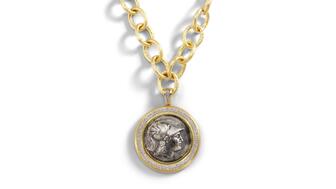
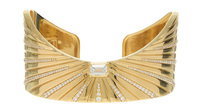




Seattle-based designer Gina Pankowski’s geometric pieces are “made to move” and that they do, with links that expand and contract and rings built to have gems rotating around each other.
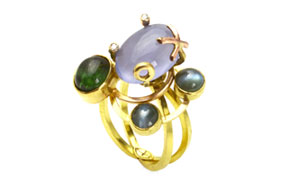
Based out of Seattle, Pankowski’s geometric pieces are “made to move,” as she advertises it, and they do: her sterling silver and 18- and sometimes 22-karat yellow gold designs feature links that expand and contract, as well as rings built to have gems rotating around each other.
“I love the relationship between jewelry and the body. Jewelry is an intimate thing, so it’s more expressive when it moves--it’s a dynamic of expression,” Pankowski said Tuesday at the show.
Her gemstones also have optical effects, such as a cat’s eye tourmaline.
The majority of her pieces are made in silver, as Pankowski said she likes to create statement pieces. She also creates “lighter” looks, including a collection of silver station necklaces.
The designer’s newer line, made of silver and gold pieces, ranges from $120 to $380 retail to reach the “accessible” market, she said.
Overall, Pankowski’s silver pieces cost less than $1,000 retail and her more traditional work, the large openwork statement and gold pieces, fall between $200 and $15,000.
Additional information on the designer can be found on the Gina Pankowski website.


Four men were charged in connection with the break-in and accused of stealing $365,000 in cash, jewelry, and designer goods.

André Branch has more than 25 years of experience with various brands, most recently serving as CEO of Ariana Grande’s cosmetics company.

New York-based atelier Gemlok is best known for creating the innovative “bridge” setting that became popular in the bridal market.

Retailers are seeking new ways to attract customers, increase traffic, and create revenue – Estate buying events are a popular solution.


Santana Now's debut collection, “Unidad,” features symbolic motifs as well as pieces of wood from the Woodstock stage.


The 50-year-old man pleaded guilty earlier this year to robbing two jewelry stores and a pawn shop of more than $700,000 in merchandise.

The watch’s dial features an original design by Marvel comics illustrator Adam Kubert.
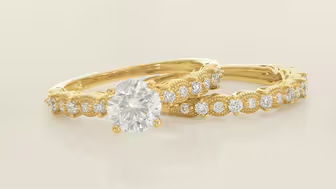
Colored gemstones, artisan finishes, mixed metals, and meaningful details are shaping demand in bridal jewelry.


The new collection of lab-grown diamond and colored gemstone jewelry provides a “fresh perspective” on the category, Chatham said.

The massive billboard has been in the same spot on the department store’s Herald Square flagship store for decades.

The miner’s ruby and emerald auctions brought in a combined $102.9 million.

The goal is for the De Beers sale to be finished by the second half of 2026, with the subsequent approvals process expected to take a year.

David Bonaparte, along with Tim Haake and Ronnie VanderLinden, continue to lobby for tariff exemptions for diamonds, gemstones, and pearls.

Survey respondents were concerned about the rising prices of food and groceries as well as unemployment.

The trade show, slated for Sept. 4-8 in Vicenza, Italy, will feature sessions on trends, AI, gemology, and manufacturing.

The public shopping event featuring art, jewelry, watches, and rare collectibles, will take place in Santa Clara, California, this fall.

Endiama Commercial Director Elton Escrivão knows people have a lot of misperceptions about Angola. He wants to change that.

Reilly has been with PGI USA for the last 20 years, leading partnership development and professional education.

Boucheron reached record sales while Pomellato found success in its signature collections.


She was one of more than 120 American designers who created flags for the “United Flags of Fashion” project led by CFDA and Vogue.

Smith reveals the method The Retail Smiths use to help retailers and vendors write better job postings.

LVMH’s jewelry and watch brands outperformed the company’s other divisions in an environment the company described as “disrupted.”

“Sacred Heart” features symbols like crosses, angel wings, the Star of David, and the evil eye as a representation of coexistence.
The scholarships will go to early-career professionals looking to study gemology, bench work and jewelry design, or store operations.

Bain & Company delved into the trends shaping the luxury market, the impact of AI, and more in its recent study.

The exhibition reveals the gemology, geology, and cultural history of the iconic red gemstone.

The new sweeping slate of tariffs impacts 60 countries, including India, China, Thailand, Hong Kong, and the United Arab Emirates.



This site uses cookies to give you the best online experience. By continuing to use & browse this site, we assume you agree to our Privacy Policy