






GradingAug 31, 2026
GIA, Gübelin Gem Lab Confirm New Paraíba Tourmaline Deposit in EthiopiaThe labs’ separate investigations each determined that the East African country is producing copper-bearing tourmaline.





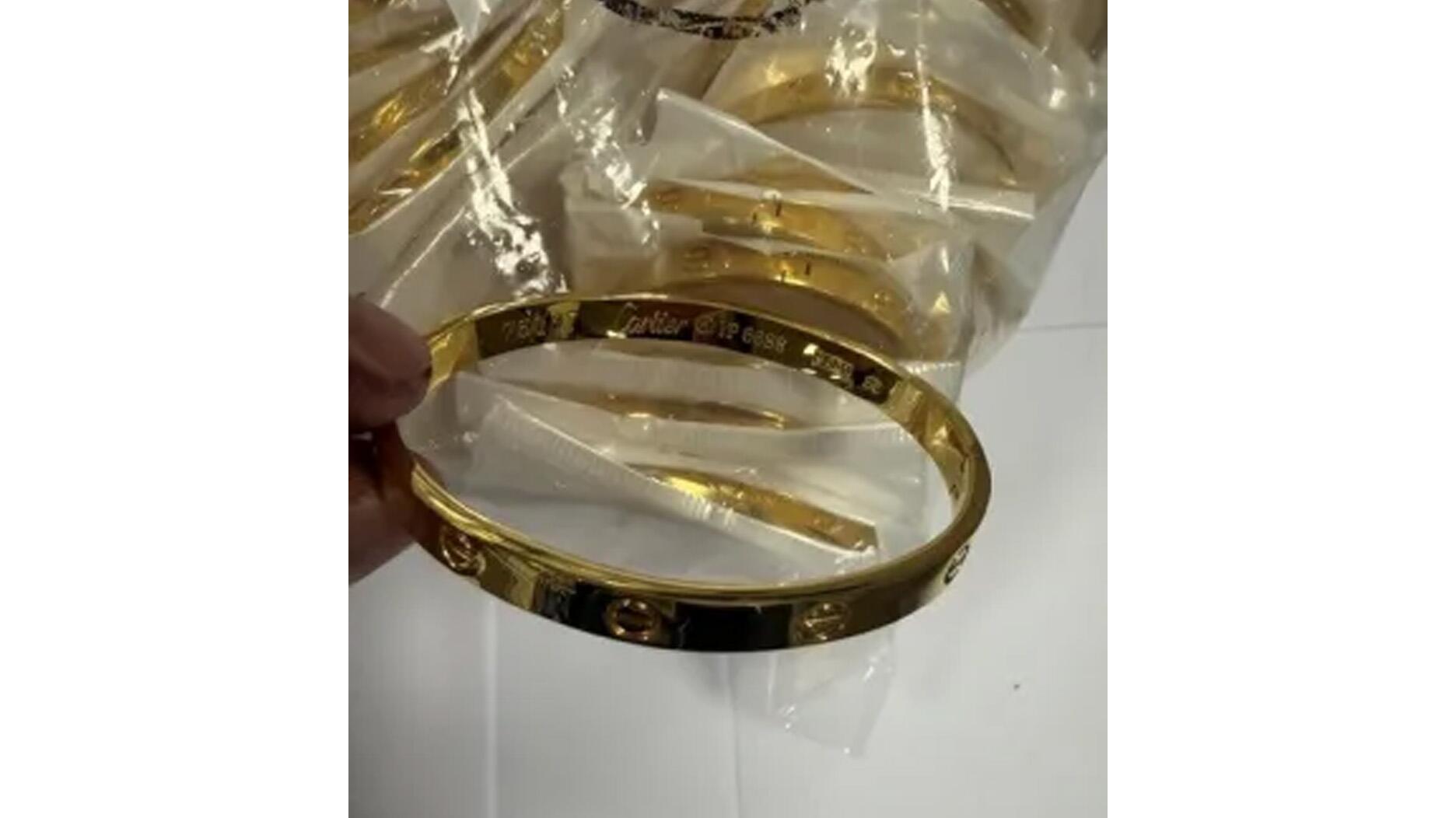
The perpetrators are mining information from company websites and Facebook in order to appear legitimate when placing fraudulent orders for high-end items, the JSA warns.

New York--A group of perpetrators are calling jewelry companies and faking their identities in order to trick them into shipping out high-end items, the Jewelers Security Alliance said in a special alert issued late last week.
JSA President John J. Kennedy said that while the exact number of perpetrators is unknown, the shipping scam is the work one of one fairly large singular group believed to be operating in the United States and targeting jewelry firms in the Northeast and Southeast.
He said that both suppliers and retailers are potential victims, with the perpetrators using what’s called social engineering to try to fool their victims into shipping out high-end merchandise.
Social engineering is defined as the use of deception to manipulate individuals to divulge confidential or personal information that may be used for fraudulent purposes. In May of this year, the FBI released a public service announcement about social engineering being used in business email compromise attacks, which cost businesses globally more than $5 billion between October 2013 and December 2016.
But, electronic contact is not part of the current scam that’s impacting jewelers and suppliers, Kennedy said.
Instead, the perpetrators are using the phone, calling suppliers pretending to be jewelers, or targeting multi-store retail chains posing as a store manager or employee of another branch.
They will contact the retail store or supplier with a great deal of knowledge about the company, like names of employees, shipping procedures, inventory in stock and SKU numbers.
While some of the information is obtained via phone calls made prior, much is mined from the internet, including the store’s website and the social media profiles of the business owner and his or her employees.
Then the perpetrator will ask for the supplier or store to ship certain high-end items--Kennedy said mainly large diamonds and high-value watches--overnight, with the goal of diverting the package en route by changing the shipping address to an address of their choice.
Sometimes when the fraud is being committed at a multi-store retail chain, the perpetrator will give an address that he or she claims belongs to a customer or salesperson and asks for the item to be sent there instead of the store.
Kennedy said while he has seen this type of fraud before, he has never seen it happening at the level it is right now.
There have been about a dozen attempts in the last two weeks

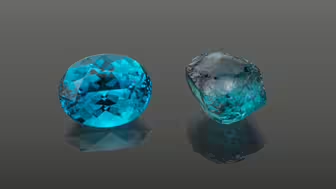
The labs’ separate investigations each determined that the East African country is producing copper-bearing tourmaline.

“Chicago Collects: Jewelry in Perspective” at the Oshkosh Public Museum will feature works by Fabergé, Lalique, and Louis Comfort Tiffany.

The “Worn Well” collection is Catbird's take on classic men's jewelry.
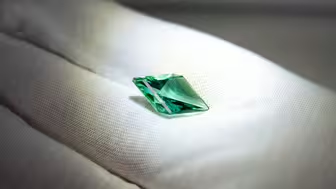
Submit your pieces for a chance to win in this year's competition.

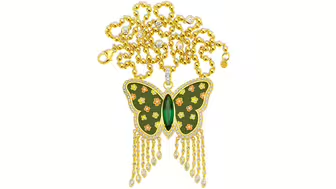
This Buddha Mama butterfly is our Piece of the Week honoring the legend, who embraced the beautiful insect as her symbol.


The former De Beers CEO, and perhaps its next owner, will be a featured speaker at the event, slated for Sept. 4-7 in Italy.

The employee-owned jeweler was named a “Best Place to Work” in Maine, New Hampshire, and for women.

Retailers are seeking new ways to attract customers, increase traffic, and create revenue – Estate buying events are a popular solution.


The second iteration of the jewelry collection was inspired by the zodiac and the four elements: earth, water, air and fire.

General License 104B supersedes General License 104A, which was set to expire on Sept. 1.

The new location in Costa Mesa, California, marks the brand’s second store in the United States and fourth standalone location worldwide.

The fashion watch category was once threatened by the Apple Watch, but consumers are now opting for new wearables, said Movado’s CEO.
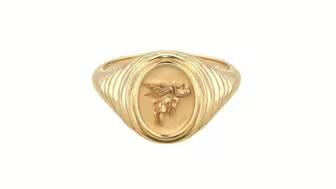
The report delves into trending styles, the most popular jewelry brands by city, and why Belle Époque jewelry could be the next big thing.
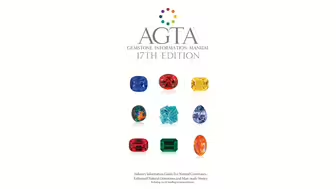
The association added the requirement to its revised "Code of Ethics" and released the 17th edition of its “Gemstone Information Manual.”

Respondents were concerned about the future of the labor market and their income as well as the rising prices of gas and groceries.

The campaign highlights the asymmetrical high jewelry necklace style that the jeweler first created in 1879.

It will explore the life of “The King of Diamonds” and showcase more than 165 creations from the brand.

Two suspects have been arrested in connection with the complex phone scam.

In her first column for National Jeweler, Jennifer Shaheen asks jewelers if they know how to connect with the next generation of consumers.

The annual awards cover tuition for an on-site educational course at the Swiss lab, as well as flights and lodging.
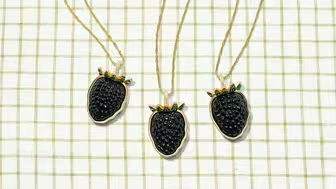
The jeweler partnered with the Tennessee resort to honor its 50th anniversary with limited-edition blackberry pendants and earrings.

The third-generation jeweler shared how the North Carolina retailer is celebrating this milestone and the love story that started it all.
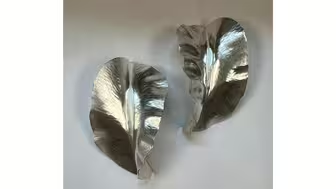
The class, led by renowned metalsmith Cynthia Eid, highlighted Argentium silver as an alternative to gold amid high prices.

The show is slated for Oct. 16-19 at the Miami Beach Convention Center.

The “Empresses” capsule uses 19th-century medals depicting Napoleon, Joséphine, and Marie-Louise across five one-of-a-kind pieces.

The retailers at the top of the list offer affordable products and fun, discovery-fueled experiences.

Daniel Bing was formerly the marketing director for the Americas at Vacheron Constantin.



This site uses cookies to give you the best online experience. By continuing to use & browse this site, we assume you agree to our Privacy Policy