



The deal closed this week, which means Instore will produce the JA NY show slated to take place this fall.
6 Trends and Observations from the 2020 Tucson Gem Shows
Gauging buying at the shows, the stones and shapes we heard about nonstop, and other considerations from the desert.

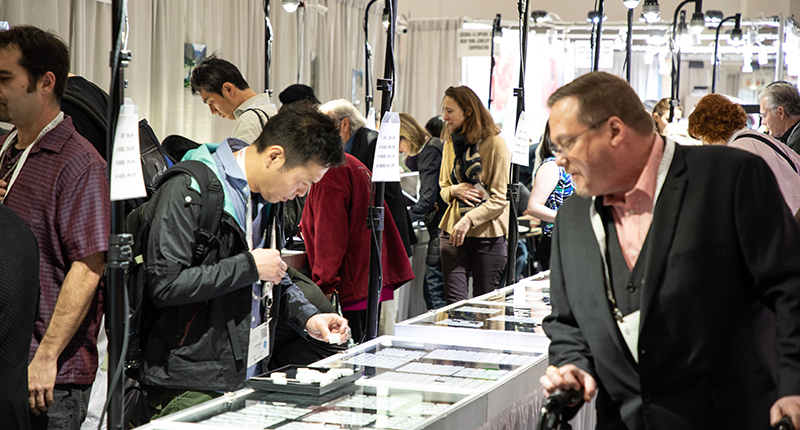
The sheer amount of material and members of the trade gathered together in one small city is incomparable, as is the desert in the middle of the wintertime.
This year, a decent holiday season seemed to roll into a great start to the year for many; the 2020 shows had plenty of activity and discussion.
Here are six things I noticed while walking the show floors and tents, attending education seminars and sessions, and talking with members of the industry.
1. The shows went well, and buying was strong.
Ahead of the shows, I seemed to hear a lot of variations on one phrase—“cautious optimism.”
It’s a phrase we hear a lot at National Jeweler from industry members when we’re trying to gauge the months, or even year, ahead.
And yet even with the positivity ahead of time, the 2020 Tucson shows seemed to do better than expected.
Almost everyone I talked to near the end of the week said this year had been good for them, with a few even noting it had been their best, or one of their best, years ever.
2. In faceted stones, the trends were pretty much what I expected.
The beauty of Tucson is that you can see just about any colored gemstone while you’re out there.
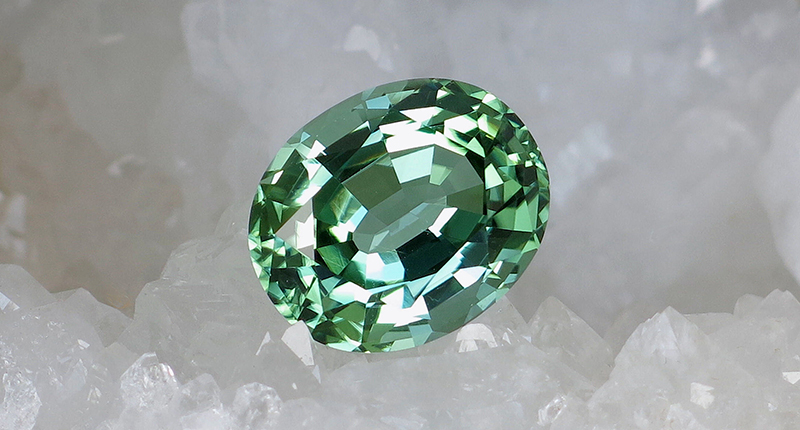
But as I was walking around AGTA and GJX toward the end of the week and talking to exhibitors about what was hot, there were a few stones I kept hearing about again and again: spinel, sapphires and garnets.
This falls in line with what a number of exhibitors predicted ahead of the shows.
In spinel, the story was all about the grays and icy shades. For sapphires, purples and pinks were hot, but the real star of the shows appeared to be Montana sapphires.
Purple and pink garnets were hot too, but the stone overall is really finding its footing and currently holds the title of “trade darling.”
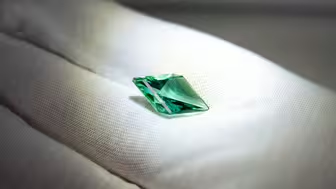
There was also a lot of talk about hexagon cuts, kite shapes and other geometric cuts in stones that offer an updated, modern look to a gem.
3. Freeforms and freeform rose cuts were prevalent.
These unusual shapes didn’t make up a large portion of inventory at the booths, but I saw little selections here and there all over—freeforms, natural shapes, slices and the like.
They’re perfect for the jeweler who’s looking for something unique and different.
Quality cutting has always been desirable, for obvious reasons, when it comes to fine stones.
But the past few years have shown that more attention also is being paid to the faces behind the stones, especially for cutters creating one-of-a-kind designs.
There is an increasing number of cutters whose names we now know and whose work we sometimes even recognize, just as you would a jewelry designer.
More and more, they’re marketing themselves as such. I think the trend has a lot to do with social media; being able to have an Instagram presence, for example, to showcase their work.
On the afternoon of Saturday, Feb. 8, I went to the Somewhere in the Rainbow booth at AGTA to meet baby Jenova and take a picture of all the cutters involved in the baby mobile project called Grace, which I think is also a perfect showcase of this evolution in the market.
Nearly all 20 cutters showed up, and what struck me was not only how friendly and happy they all were to be there, but also how the project showcased their importance in the market today.
5. There is a lot of conversation around, and focus on, countries of origin and their development.
This shouldn’t be surprising, given the importance origin plays in the sales of colored stones in the market today.
Yet it felt like there was even more talk about important source regions this year.
Education sessions at AGTA GemFair, for example, included an update on sapphires from Madagascar, as well as a session from GIA on rubies from Mozambique.
I also learned some industry members were organizing a gem exhibition and conference this summer in Zambia, in the same vein as the Kenya Gem and Jewellery Fair. (I’m working on gathering all pertinent details and hope to have a more formal story on the launch soon.)
There also were numerous conversations throughout the week about expanding programs to travel to the source and discussing developments in source countries affecting the market.
I’m happy to see the emphasis in this area.
Ethical sourcing and sustainability are among the industry’s most important topics these days, and I don’t think that conversation can fully happen without members of the trade ensuring they understand how these markets are developing and how those playing a vital role abroad are faring.
6. The time is right for colored stones.
The past few years have paved the way for colored stones to continue to emerge as a solid option for jewelers. They offer margin, they offer something different, and they provide a story.
Combined with the strong buying activity and enthusiasm I saw for the sector in Tucson this year, I’d say there’s nothing but upside for colored gems.
I look forward to watching the market develop.
The Latest

The company’s jewelry sales were up in Q4 and the fiscal year, with Richemont raising prices in part because of the cost of gold.

The “Bauble” capsule collection of colorful one-of-a-kinds includes our Piece of the Week, the “Bauble” earrings, featuring rose zircon.

As gold prices rise, today’s retailers are looking for alternatives at prices that will appeal to wider audiences.

The updated catalog has a newly dedicated section for gift wrapping.


Everett covers colored stones’ surging popularity, the mellow return of the “Mellon Blue,” and his “The Devil Wears Prada” doppelgänger.

Fourth-generation CEO Lilly Mullen wants to emphasize experience, connection, and personalized service.

With the trade and customer trust in mind, GIA® developed NextGem™ – on-demand training designed specifically for retail.

The new award, created in partnership with Henne Jewelers, honors the late designer’s legacy through supporting jewelry education.

The addition of the diamond-producing countries as nation affiliated members broadens the federation’s global representation, WFDB said.

The NYPD is warning elderly New Yorkers to keep their jewelry hidden when walking outside to avoid being a target.

Designer Viviana Langhoff has realized her dream of owning a space for her Chicago jewelry store that looks and feels like her brand.

The sessions will run from Friday, May 29, to Sunday, May 31, with one being a live taping of an episode of Couture’s podcast.

Former Stephanie Gottlieb Fine Jewelry executive Morgan P. Richardson is joining the lab-grown diamond jewelry brand.

The $400 pocket watch is a blend of Audemars Piguet’s iconic eight-sided Royal Oak and Swatch’s unserious Pop watches from the ‘80s.

With gold prices on the rise, the “Modern Electrum” collection uses an alternative, non-tarnishing metal alloy composed of gold and silver.

Fruchtman Marketing has new owners, Erin Moyer-Carballea and Manuel Carballea, and will relocate to Miami.

In a column for the 2026 State of the Majors issue, Smith lists 10 time-tested principles about sales that still ring true.

In a column for the 2026 State of the Majors issue, Golan spells out how the growing economic divide in the U.S. is reshaping the market.

The “Limitless Expansion of Joy and Hope” collection evokes summer through colored gemstones and motifs of butterflies and florals.

The jewel, circa 1890, is from the late Victorian era and was owned by descendants of the last high king of Ireland.

This is what the nine recipients plan to do with the funds.

The Western star’s 14-karat gold signet ring sold for six times its low estimate following a bidding war at U.K. auction house Elmwood’s.

The discussion, "Rebuilding the Jewelry Workforce," will take place on Saturday, May 16, in Troy, Michigan.

The jewelry industry is reassessing its positioning as Gen Z reshapes the retail landscape and lab grown continues to gain market share.

A matching pair of 18.38-carat, D-color diamonds from Botswana’s Jwaneng mine sold for $3.3 million, the top lot of the jewelry auction.

Sponsored by A Diamond Is Forever