



TrendsFeb 07, 2018
The History Behind … The Squash Blossom NecklaceTrendsFeb 29, 2016
The History Behind … 1970s Style
With the big, bold yellow gold jewelry of the ‘70s making a comeback, National Jeweler takes a look back at the social and cultural forces that originally shaped this decade of design.

New York--The 1970s is a decade that never seems to go out of style.
This fall, the fashion runways in New York were full of fringe, suede and flares plus plenty of autumnal colors, and jewelry is following suit.
This fall, the fashion runways in New York were full of fringe, suede and flares plus plenty of autumnal colors, and jewelry is following suit.
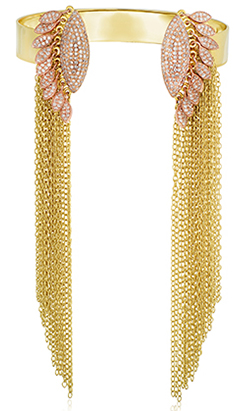
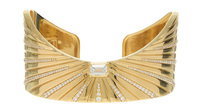
This 18-karat yellow gold and diamond pavé cuff by New York designer Fern Freeman is a modern piece but contains two elements oft-used in ‘70s style: yellow gold and fringe.
Yellow gold is back in a big way--illustrated by both large, gold links and more delicate pieces with fringe--turquoise can been seen in a lot of pieces and there’s a definite penchant for layering, even if the price of gold today has dramatically reduced the size of chains and pendants for most people.
Patricia Faber, who co-owns New York City’s Aaron Faber Gallery with her husband, took the time to tell us about one very fun era in fashion.
What shaped the aesthetic of jewelry in the 1970s?
“I think it was driven by counterculture,” Faber said, meaning: Woodstock, LSD, rock music and people protesting against the war and pushing for civil rights.
“Counterculture people, the rock stars, were not buying high fashion, but high fashion started to look like what they were wearing. They were influencing [it].”
Yes, there was still bridal jewelry and traditional fine jewelry being made, but in the early 1970s there was also the mainstream acceptance of the youth movement, the hippie subculture, that began in isolated pockets in the mid-1960s.
For example, Chanel came out with a long, flowy printed dress that looked like what hippies wore to the beach or to outdoor concerts like Woodstock.
As the decade wore on, clothing became more tailored but there were still bold color combinations, flared pants and loud prints (perhaps due in part to the LSD); think Pucci and the patterns on Diane Von Furstenberg’s then-new creation, the wrap dress.
Jewelry had to be bold to stand out against all the styles of this era, resulting in thick yellow gold chains worn in layers, brightly colored gemstones like turquoise and long beaded necklaces.
What else was popular during this era?
Faber said the 1970s was also a time when jewelry artists were creating really large pieces.
“Nobody,” she said, “was afraid to be bold.”
David Webb and his outstanding animal cuffs were popular alongside well-known brands like Boucheron and Bulgari.
There were also the big rings of London-based designer Andrew Grima, Cartier’s Aldo Cipullo creating chunky necklaces set with stones like jade and carnelian alongside the smaller gold pieces he’s so well known for, and Vivianna Torun making giant pieces under the Georg Jensen brand.
Donning big, bold jewels--including extremely oversized pieces of body jewelry--was a way of expressing oneself and experimenting with body decoration, much in the way that tattoos are used today.
“In jewelry, there were a lot of really wild pieces that were designed and made” in the 1970s, Faber said.
What gemstones and metals were popular?
People wanted big, bold gemstones to stand out against their flowy outfits and loud prints, and that’s what they got.
Turquoise was widely used, as were malachite and lapis lazuli, with Faber noting, “When you are working in a large scale, something that is less expensive is desirable.”
As for metals, the decade was all about yellow gold, as the metal enjoyed continued popularity from the ‘60s. Faber said the warm hue fit in with the autumnal colors, the oranges and the browns, that dominated interior design in that era.
The popularity of gold in that era also had a more practical aspect: It was relatively inexpensive in the early years of the decade.
Before 1971, when President Richard Nixon took the United States off the gold standard, the price of gold was fixed at $35 an ounce. In today’s terms, this would be the equivalent of gold costing about $220 an ounce.
On average, the gold price stayed below $100 an ounce until about 1974, before it began rising in earnest toward the end of the decade, topping $600 an ounce on average by 1980, historical data from Kitco.com shows.
“So much of jewelry style comes from, can you get it? And, do you have the technology to work with it?” Faber observed.
Should retailers dive into the ‘70s resurgence and/or add some 1970s-era estate pieces to their inventory?
Faber said it depends on the retailer and their customer because, like the Retro Modern (1940s) period, the design is very bold. It isn’t for everyone.
For those retailers who feel a connection to the era--and have a customer who would too--Faber suggested they buy a few 1970s estate pieces to mix in with the modern ‘70s-inspired looks.
This way, they can showcase the old alongside the new and have a story to tell customers: Here is an actual piece from the era contrasted with a modern designer’s take on that look today.
“It wasn’t necessarily an easy time,” Faber said of the 1970s. “But … it was a really fun period.”


The Latest

SourcingOct 27, 2026
De Beers Celebrates the Holidays With New ‘Desert Diamonds’ CampaignThe “Icons” holiday campaign spotlights four classic diamond jewelry styles reimagined in “Desert Diamond” tones.


IndependentsOct 27, 2026
Solomon Brothers Acquires Mervis Diamond ImportersSolomon Brothers, which has three stores in the Metro Atlanta area, said it may continue to acquire other independent jewelers.


IndependentsOct 27, 2026
Gabriel & Co. Supports Charity Partner DKMS With Gala, New JewelsThe fine jewelry brand raised $2.3 million at its annual gala that supports the nonprofit’s fight against blood cancer and blood disorders.
Brought to you by
A Diamond Is Forever Launches 2026 Holiday Campaign Championing Natural DiamondsA Diamond Is Forever's holiday campaign reimagines natural diamond icons for a new generation celebrating individuality.


Events & AwardsOct 27, 2026
JFC Announces 2027 ‘Facets’ HonoreesThe annual fundraising event is slated for June 6, 2027, at The Venetian Resort in Las Vegas.
Weekly QuizOct 22, 2026
This Week’s QuizTest your jewelry news knowledge by answering these questions.


CollectionsOct 26, 2026
Bliss Lau’s ‘Vantage’ Point Is the Hawaiian HorizonIn her “Vantage” collection, Lau explores heritage, identity, and inner strength through designs featuring blue-green Guatemalan jade.

MajorsOct 26, 2026
Tiffany & Co. Takes Consumers Behind the ScenesThe jeweler gave the public backstage tours of its flagship store and its design and innovation workshop as part of LVMH’s open house.
Brought to you by
Open an Account, Get $50 Off Your First Order. No Code Needed.Built on Relationships. Refined by Craft.


Events & AwardsOct 26, 2026
Support JFC’s ‘Monster Mash Challenge,’ If You DareVote for which jewelry professional should dress up as a monster to support Jewelers for Children’s annual Halloween fundraiser.

MajorsOct 23, 2026
PGI USA Set to Close at Year’s EndThe closure is part of a global restructuring that also includes PGI winding down its operations in Japan, South Korea, and Hong Kong.

SourcingOct 23, 2026
Rachel Chalchinsky’s ‘Survivor Tribute’ RingThe ring, our Piece of the Week, was designed by eight-year breast cancer survivor Rachel Chalchinsky of Color Source Gems.

TechnologyOct 23, 2026
JA Unveils New Website, LogoThe website offers enhanced member benefit access, industry directories, educational resources, a job board, and access to the MJSA Journal.


FinancialsOct 23, 2026
Kering’s Jewelry Sales Up Double Digits in Q3Boucheron and Pomellato had a strong third quarter, with Kering looking at jewelry as an increasingly important part of its portfolio.

CrimeOct 22, 2026
Jeweler Shot and Killed in His Suburban Cincinnati Store Tara Sinchuri was the owner of Everest Jewels in Fairfield, Ohio, and a father of three. He was found dead in his store on Tuesday.

MajorsOct 22, 2026
Neiman Marcus Has Gifts for the Jewelry Lover Who Has EverythingBespoke experiences from Buccellati and Verdura are on the retailer’s 2026 “Fantasy Gifts” list.

Events & AwardsOct 22, 2026
JIS Fall 2026 Reports Record-Breaking Attendance The number of participants at the fall show was up 12 percent.

CollectionsOct 22, 2026
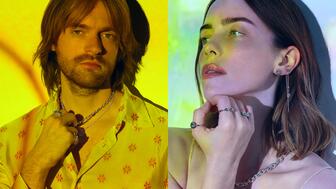
Billie Eilish, Finneas Co-Design Collection for John HardyThe Academy and Grammy award-winning siblings have collaborated with John Hardy on a new jewelry line inspired by their personal style.

PodcastsOct 21, 2026
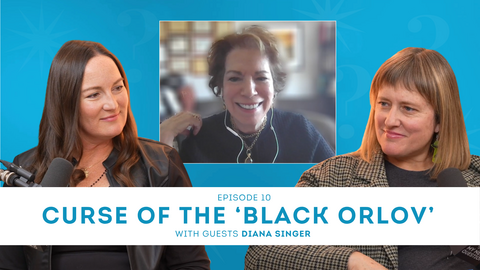
Episode 10: This Episode Is Haunted Diana Singer shared the stories of two “cursed” diamonds on this month’s podcast, which was inexplicably riddled with technical issues.

IndependentsOct 21, 2026
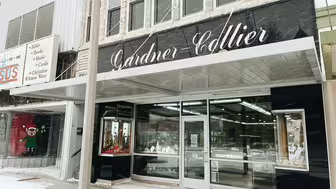
Gardner-Collier Jewelry to Close After 9 Decades in BusinessThe family-owned jeweler has three locations across Missouri and Iowa.

SourcingOct 21, 2026
Venetia Mines Final Carats Ahead of 2-Year ShutdownThe De Beers-owned diamond mine in South Africa is being put on ice as part of a round of previously announced cost-cutting measures.

CollectionsOct 21, 2026
Helzberg, Nordstrom Carrying New Jewelry Collection From Off-WhiteThe collection centers designs with clean geometric lines, chunky sculptural pieces, and recognizable details from the luxury fashion brand.
SourcingOct 21, 2026
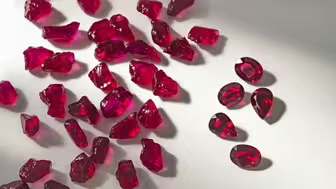
Gemfields’ Mixed-Quality Ruby Auction Earns $52MThe miner said it saw particularly strong prices for larger, fine-quality rubies at the sale.

CrimeOct 20, 2026
Security Guard Charged With Murder in Shooting at Texas MallThe guard opened fire on a man who was smashing a jewelry display case at La Gran Plaza in Fort Worth last week, police said.
IndependentsOct 20, 2026
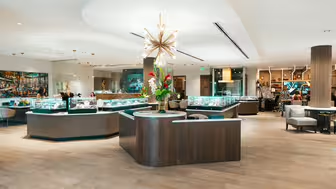
David Gardner’s Jewelers Unveils Newly Expanded, Revamped ShowroomThe Texas jeweler added 2,000 square feet to its reimagined showroom, complete with a new design studio and an event space.
SourcingOct 20, 2026
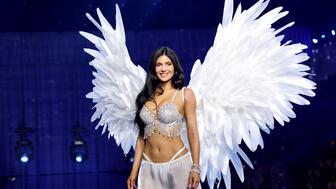
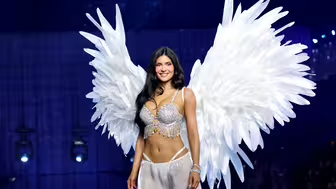
The $50M Victoria’s Secret ‘Fantasy Bra’ By The NumbersJacob & Co.'s diamond masterpiece is the most expensive Fantasy Bra ever worn on the Victoria’s Secret Fashion Show runway.

CollectionsOct 20, 2026
Mignon Faget’s Collection Chooses Handmade Over AIThe “Atelier” collection was inspired by the tools, rituals, and objects in an artist’s studio as a quiet rebuttal to an automated world.
MajorsOct 19, 2026
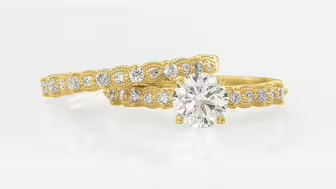
The Knot to Acquire Rival Wedding Planning Platform ZolaThe pending acquisition is an “exciting opportunity” for wedding vendors to grow their business, said The Knot Worldwide’s CEO.