


Events & AwardsOct 27, 2026
JFC Announces 2027 ‘Facets’ HonoreesThe annual fundraising event is slated for June 6, 2027, at The Venetian Resort in Las Vegas.


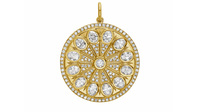
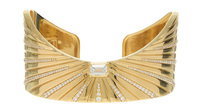



The latest in National Jeweler’s The History Behind series explores one of the most popular and influential periods in jewelry design, the Art Deco era.

New York--It’s a period that’s so popular, and has enjoyed so many revivals, that the term Art Deco is used loosely to refer to jewelry, architecture and furniture from many different decades.

For this installment of The History Behind, National Jeweler turned to two antique experts--Janet Levy, of antique jewelry company The DeYoung Collection, and Patricia Faber of the Aaron Faber Gallery--to learn more about the origins of the era’s clean aesthetic.
When did Art Deco jewelry first appear on the market? Both Levy and Faber agree that there are no firm dates for any period of jewelry design; one movement simply blends into the one that follows.
“There’s not this kind of wall that divides anything,” Levy said. “It’s very fluid.”
While a touring exhibition put together by the Victoria & Albert Museum in London defines the period as 1910 to 1939, Levy said in her mind, the earliest Art Deco pieces date from about 1918 or 1919, with interest in the movement waning in the 1940s.
Why it is called Art Deco and what influenced the design of the period? Art Deco took its name from the Exposition Internationale des Arts Décoratifs et Industriels Modernes (the International Exposition of Modern Decorative and Industrial Arts). It took place in Paris in 1925 and is said to have done more to advance the worldwide popularity of Art Deco design than any other exposition of its time.
Like most movements in design, Art Deco was a rejection of the soft, curvy forms of the period that preceded it, Art Nouveau.
It was after World War I, and “People needed an escapist, happy expression coming out of that horrible war,” Levy said.
Women enjoyed a period of liberation in terms of their hairstyles, lifestyles and clothing--think how little the flapper girls of the era wore--and wanted new, fresh-looking jewelry to go with it.
They could have it, thanks to the growing use of machines, which could produce jewelry with clean lines, and produce it in greater amounts than was possible in the past.
Art Deco also was
How would you describe the aesthetics of Art Deco jewelry? Art Deco is, as Faber so perfectly described it, graphic, linear and geometric. To see these traits on a large scale, one merely has to look at some of New York City’s most iconic buildings, the Chrysler and Rockefeller Center.
Levy noted that there are two forces at play in any Art Deco piece. There’s the very strong, geometric structure and then the expression taking place within that structure.
Think: the floral or pyramid-like patterns visible in the beautiful, clean diamond and colored gemstone-set bracelets, brooches and earrings from houses such as Boucheron, Van Cleef & Arpels and Cartier and, in the United States, Raymond Yard.
Art Deco also was the era that Cartier’s artisans came up with the Tutti Frutti design, which featured diamond and carved, colored gemstones, influenced by the Mughal period in India.
What materials were popular? Platinum was the most widely used metal of the era.
Gemstone-wise, it was diamonds and colored stones, particularly the big three: sapphires, emeralds and rubies. Levy said there also were a lot of fancy cuts used during the period, including fancy cuts in color.
Is Art Deco the most influential period in jewelry design? Both Levy and Faber said yes.
“Etruscan and Scythian jewelry shows up most often throughout (history) but I think Art Deco in the modern era is strongest, and I think it’s the most popular,” Faber said.
It’s enjoyed a number of revivals throughout history, including in the late 1980s and early ‘90s, and influences the geometric designs that are en vogue today.
The clean lines continue to appeal.
“You never get tired of it,” Faber said. “I never get tired of looking at the Chrysler Building and jewelry has a lot of the same visual appeal. There’s always something new to see in the design.”
How can retailers add authentic Art Deco pieces to their estate jewelry inventory? Levy said jewelers need to be pro-active in order to snag pieces from this still-popular era.
She recommended attending estate jewelry shows--one example is Lueur, which is coming up at end of October in New York--as well as visiting reputable dealers to look at jewelry, analyze its quality and compare prices.
Price points for Art Deco jewelry start as low as $2,000 for a simple bar pin and can climb to $10,000 to $20,000 for bracelets that aren’t signed, which Levy considers a good deal. More elaborate signed pieces, meanwhile, can sell for upwards of $1 million at auction.
Faber also recommended the auction houses as good sources for retailers, as they edit their offerings carefully. “You’d be less likely to find authentic Art Deco privately,” she said.

The annual fundraising event is slated for June 6, 2027, at The Venetian Resort in Las Vegas.

In her “Vantage” collection, Lau explores heritage, identity, and inner strength through designs featuring blue-green Guatemalan jade.

The jeweler gave the public backstage tours of its flagship store and its design and innovation workshop as part of LVMH’s open house.
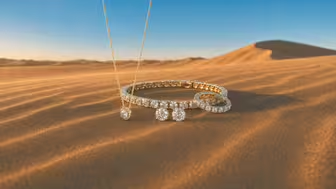
A Diamond Is Forever's holiday campaign reimagines natural diamond icons for a new generation celebrating individuality.


Vote for which jewelry professional should dress up as a monster to support Jewelers for Children’s annual Halloween fundraiser.


The closure is part of a global restructuring that also includes PGI winding down its operations in Japan, South Korea, and Hong Kong.

The ring, our Piece of the Week, was designed by eight-year breast cancer survivor Rachel Chalchinsky of Color Source Gems.
Built on Relationships. Refined by Craft.


The website offers enhanced member benefit access, industry directories, educational resources, a job board, and access to the MJSA Journal.

Boucheron and Pomellato had a strong third quarter, with Kering looking at jewelry as an increasingly important part of its portfolio.

Tara Sinchuri was the owner of Everest Jewels in Fairfield, Ohio, and a father of three. He was found dead in his store on Tuesday.

Bespoke experiences from Buccellati and Verdura are on the retailer’s 2026 “Fantasy Gifts” list.

The number of participants at the fall show was up 12 percent.

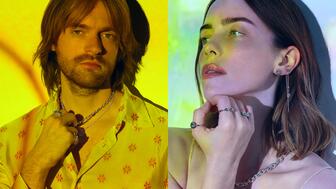
The Academy and Grammy award-winning siblings have collaborated with John Hardy on a new jewelry line inspired by their personal style.


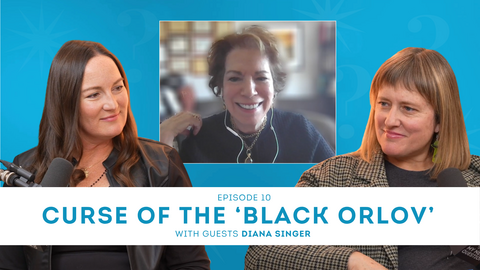
Diana Singer shared the stories of two “cursed” diamonds on this month’s podcast, which was inexplicably riddled with technical issues.

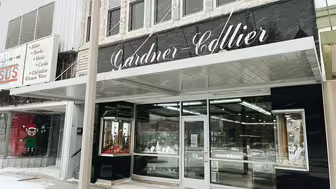
The family-owned jeweler has three locations across Missouri and Iowa.

The De Beers-owned diamond mine in South Africa is being put on ice as part of a round of previously announced cost-cutting measures.

The collection centers designs with clean geometric lines, chunky sculptural pieces, and recognizable details from the luxury fashion brand.
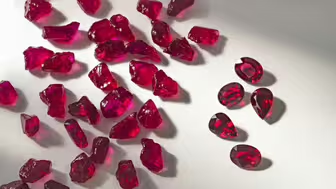
The miner said it saw particularly strong prices for larger, fine-quality rubies at the sale.

The guard opened fire on a man who was smashing a jewelry display case at La Gran Plaza in Fort Worth last week, police said.
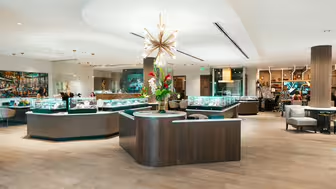
The Texas jeweler added 2,000 square feet to its reimagined showroom, complete with a new design studio and an event space.

Jacob & Co.'s diamond masterpiece is the most expensive Fantasy Bra ever worn on the Victoria’s Secret Fashion Show runway.

The “Atelier” collection was inspired by the tools, rituals, and objects in an artist’s studio as a quiet rebuttal to an automated world.
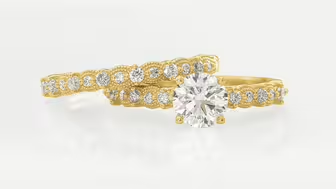
The pending acquisition is an “exciting opportunity” for wedding vendors to grow their business, said The Knot Worldwide’s CEO.

"The Secret Gems" features eight Thai jewelry brands paired with a team of young craftspeople who create jewelry together to win challenges.

The brand’s “Modern Talisman” capsule collection introduces pendants inspired by the mythology, natural world, and spiritual ethos of Bali.
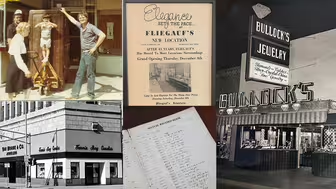
Independent jewelers from New Mexico to New Jersey answer the question: What has kept your store in business for 100 years?



This site uses cookies to give you the best online experience. By continuing to use & browse this site, we assume you agree to our Privacy Policy