

CollectionsSep 28, 2026
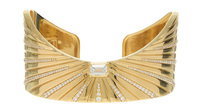
De Beers London Drops Water-Inspired High Jewelry Collection“Vibrations” features several firsts for De Beers’ high jewelry, including the use of chalcedony and diamonds sourced from artisanal miners.



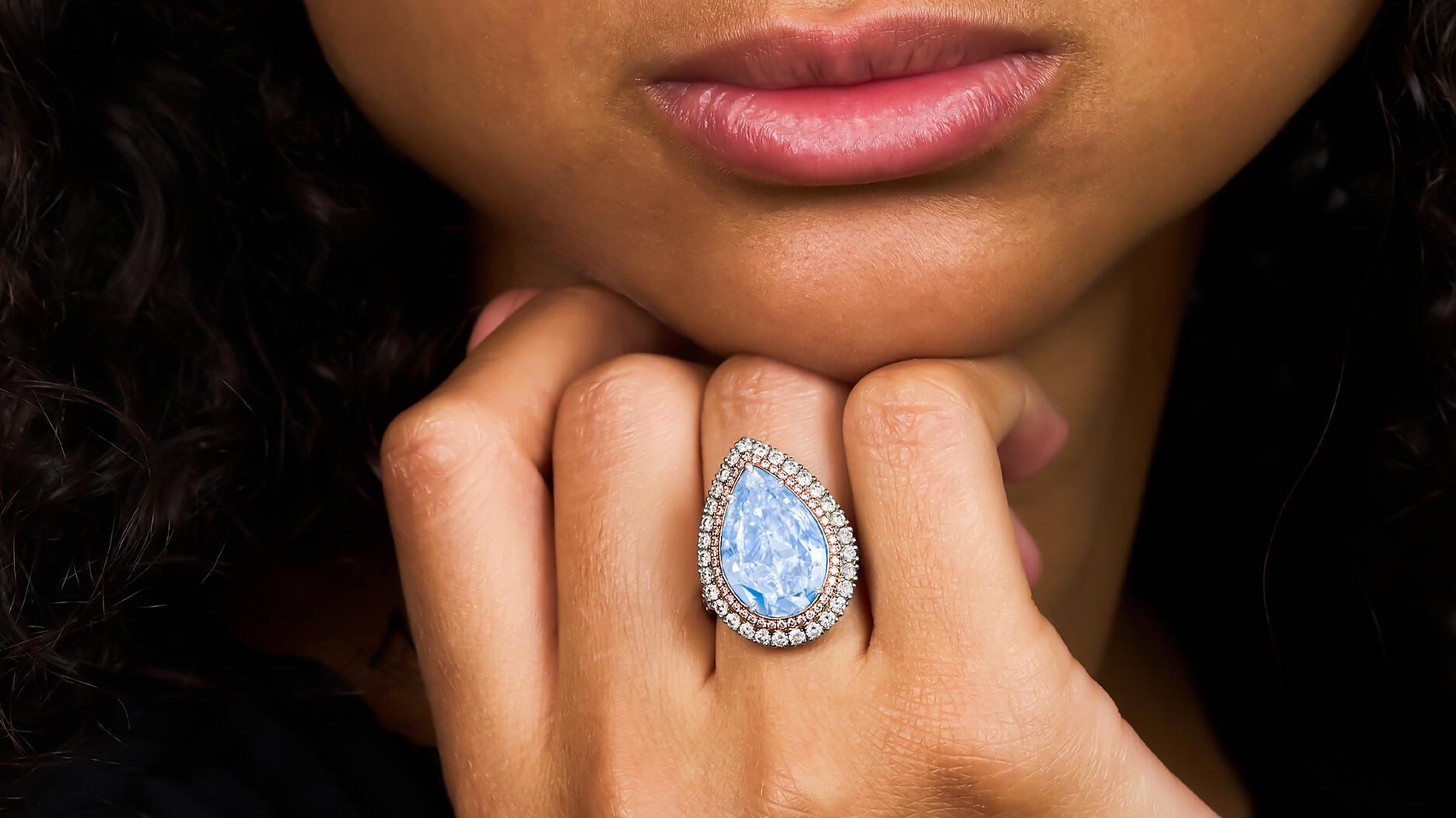
The pear-shaped stone has been in the same family for more than 300 years, passing through some of Europe’s most important houses.


Geneva--A historic blue diamond that’s been in the same family for more than three centuries will hit the market for the first time this spring.
“The Farnese Blue,” a 6.16-carat pear shaped fancy dark gray-blue diamond, will be offered at the Magnificent Jewels and Noble Jewels sale at Sotheby’s Geneva on May 15, where it is expected to sell for between $3.7 million and $5.3 million.
It was uncovered in the Golconda mines of India, which also produced the famous Hope and Wittelsbach diamonds.
The stone was given to Elisabeth Farnese, Queen of Spain (1692-1766) and descendant of Pope Paul III, following her wedding to King Philip V of Spain, grandson of Louis XIV, King of France.
The wedding was celebrated in Parma, Italy in 1714, after the War of the Spanish Succession, which had depleted the country’s finances. To be able to offer a suitable dowry for the new queen, the Spanish government sent word to its colonies, demanding they send wedding presents to Madrid.
Then, in August 1715, the Golden Fleet sailed from Cuba: 12 ships carrying a fortune in gold bullion and emeralds. But after only 10 days of sailing, a hurricane destroyed most of the fleet in the gulf of Florida. Only one ship survived.
The emeralds were thought to be lost in one of the sunken ships, but one diamond made its way to Spain: a pear-shaped blue diamond, gifted to the new Spanish queen by the governor of the Philippine Islands.
For the next 300 hundred years, as Elisabeth and Philip of Spain’s descendants married, the stone was passed down through four of the most important royal families in Europe: Spain, France, Italy and Austria.
Elisabeth Farnese passed it to her favorite son, Philip (1720-1765), Duke of Parma and founder of the House of Bourbon-Parma. When he died, his son Ferdinand inherited the jewel, which then passed to his son, Louis I, made King of Etruria, during Napoleon’s invasion of Italy, followed by his grandson, Charles II, who become Duke of Lucca, following the Congress of Vienna in 1815.
Charles II had a tie-pin setting created for the stone. He abdicated in 1849 and the title of Duke of Parma passed to his son, Charles III, who was assassinated just five years later. The Farnese Blue then was inherited by Charles II’s grandson, Robert I (1848-1907), the last ruling Duke of Parma.


“Vibrations” features several firsts for De Beers’ high jewelry, including the use of chalcedony and diamonds sourced from artisanal miners.

The “Bows” collection features three interpretations of the bow motif designed with Georgian and Victorian influences.

The American Gem Society recognized industry members, one Guild, and a law enforcement official for their contributions to jewelry.

Experience gemstones with greater precision and comfort than ever before.


Through a new system integration, customers can now receive instant personal jewelry insurance quotes at the time of appraisal.


Five of the 10 fastest-appreciating Rolex models on Bob’s Watches were Datejust 31 or Lady Datejust watches.

The Sherwood family and AJS Creations CEO Tejas Shah purchased the jewelry chain back from Palladium Equity Partners.
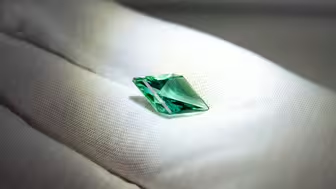
Submit your pieces for a chance to win in this year's competition.


“The Elizabeth Taylor Collection” uses lab-grown diamonds and gemstones in contemporary designs inspired by the icon.

The artist wore Dana Rebecca Designs’ marquise diamond-set gold hoops at the Chiefs game last Sunday. Now they’re our Piece of the Week.

JSA and Jewelers Mutual shared advice on spotting suspicious behavior, combatting cell phone jammers, and staying safe at home.


“Secret Language of Victorian Jewelry” unveils the meaning behind the symbols, motifs, and gemstones used in Victorian-era jewelry.

KIRAJewels.one gives retailers access to more than 500 SKUs of lab-grown diamond rings, earrings, necklaces, and bracelets.

This holiday season, look to pieces that will help to fill out customers’ everyday diamond jewelry wardrobe, experts say.

The Natural Diamond Council is now The Diamond Collective and has announced a new strategy under CEO Amber Pepper.

Paul’s Jewelers sells coffee, chocolate, and cookies from a custom gold-wrapped trailer parked outside the store starting at 7 a.m.

Part of its brand relaunch, the marketing around the campaign includes a contest involving a jacket set with 550 diamonds.

The curation, opening soon at the Crystal Bridges Museum of American Art, honors the jeweler’s heritage through a distinctly American lens.

The jewelry giant has partnered with the famed makeup artist to create a colorful new collection of charms and rings.

The association will mark the milestone at its convention next month.

The jeweler donated school supplies to Memphis, Tennessee, students during the event combining basketball and mentorship.

A federal judge denied Pandora’s motion to dismiss Foundrae’s claim for copyright infringement of its medallions.

People aren’t thinking rationally when they are buying luxury products, and we shouldn’t be selling them that way, Peter Smith writes.

The Baltimore Business Journal recognized the entrepreneur for her leadership in business and the jewelry industry.

The facility is located within SEEPZ and is GCAL by Sarine’s second location in India, joining its existing grading lab in Surat.

The four-day show is slated for Nov. 19-22 at the Metropolitan Pavilion in New York City’s Chelsea neighborhood.



This site uses cookies to give you the best online experience. By continuing to use & browse this site, we assume you agree to our Privacy Policy