









Supplier BulletinSep 24, 2026
Ship with Confidence with JM Shipping SolutionSponsored by JM Shipping




The Intruder Spray System is used in banks and convenience stores in Europe, and now has been installed in a high-end watch boutique on New York’s 57th Street.


New York—The company behind the fine, harmless mist that’s been deployed to deter and detain thieves in Europe for a decade is making a push into the U.S. market.
SelectaDNA’s Intruder Spray System (ISS) uses forensic markers, or DNA, but not the same kind police use to crack the cold cases featured on “Dateline” or that led to the arrest of the man believed to be the Golden State Killer after three decades.
What’s used in ISS is synthetic DNA that, just like human DNA, can be used to tie suspects to a particular place and time.
Installed at points of entry and exit, the system works by spraying the perpetrator or perpetrators with a fine, non-toxic water-based mist dispensed from a canister that’s about the size of a standard aerosol cleaner or beauty product.
The canisters can be installed anywhere—above doors, by windows, in ceilings, in walls, or in the ground—and the spray is triggered in a number of ways, said Joe Maltese, who is handling sales and marketing for SelectaDNA in the United States.
It can be integrated with a store’s security system or wired to its motion detectors so it hits people who trip the alarm, or activated manually via panic buttons or money clips, meaning jewelers who are in the store during a robbery can press a button to spray the perpetrator on his or her way out.
A high-tech version of the dye packs invented in the ‘60s to foil bank robberies, the spray marks the suspect with an invisible, odorless substance that stays on his or her skin for 4-6 weeks and on clothing for a bit longer, up to three months.
If the suspect is taken into custody during that time, the mist will show up under a special-frequency ultraviolet light. Police can then take a swab and send it to the SelectaDNA lab for analysis.
Maltese explained that the spray in each canister has its own long, unique code that’s used only once, so when the lab receives a swab, it can say with 100 percent accuracy that particular spray

“It’s impossible that they [the suspects] were not there because that code is never used again,” he said while pointing out that the forensic marker is used in concert with other evidence, such as first-hand accounts and surveillance video, to help prosecute suspects.
The cost varies depending on the size and complexity of the system, but Maltese said plans start around $80 a month. There is also a $240 fee to replace each canister. The canisters must be replaced every time they’re activated, or once a year if they haven’t been used.
WATCH: The Intruder Spray System in Action
SelectaDNA’s Intruder Spray System, which is distributed through CSI Protect in North America, is used in 46 countries by banks, fast-food chains, convenience stores and jewelry companies including TAG Heuer, Pandora, Chanel, and Watchfinder & Co.
Originally piloted in the U.S. market in 2015, ISS is currently installed in five places here: a rare book store in Florida, two convenience stores, one major national retail chain Maltese said he can’t name because of a non-disclosure agreement, and one watch boutique—the Richard Mille flagship on 57th Street in New York.
The high-end watchmaker is the first retailer in New York state to use it, marking the first adoption of the technology by a watch or jewelry retailer in the U.S., a market that SelectaDNA is looking to break into (no pun intended).
In a statement emailed to National Jeweler, Richard Mille said it learned of the system in Europe and found it to be a “worthwhile addition” to the new flagship location in Manhattan.
Questions & Answers
As with any security system, there are, of course, some drawbacks and questions about the Intruder Spray System.
No. 1 is awareness. Police have to be educated about the system so they know to look for the invisible film and have the proper equipment to detect it.
Maltese acknowledged that the company’s efforts to educate law enforcement agencies across the entire United States are akin to a “marathon;” they will be ongoing for years because of the size of the market. In New York, the company is working with the state sheriff’s association, and in Florida, they’re working with the Florida Law Enforcement Exchange.
Jewelers’ Security Alliance President John J. Kennedy described ISS’s adoption as a “long-term proposition.”
“[The system is] going to have to become accepted and widely used and the police are going to have to be knowledgeable about it,” he said. “There’s a big learning curve here.”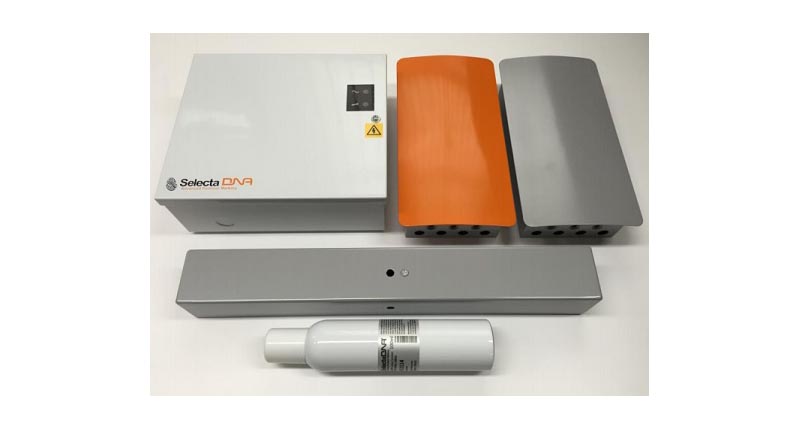
Kennedy brought up another concern he has with the system—the fear of retaliation from criminals if they realize they’ve been sprayed.
“When there’s nobody in the store, like in a burglary, it seems less risky; they won’t hurt anybody,” he said. “In a robbery situation, however, I just hope it doesn’t precipitate violence or retaliation.”
Maltese said criminals don’t notice that they’ve been sprayed, as they are usually charged with adrenaline and focused on one task—getting out of the store they robbed as quickly as possible. He added that there have been zero incidents of a criminal retaliating after being sprayed.
Kennedy said the JSA does not endorse any specific products or companies, but he did allow that he thinks SelectaDNA “has the best handle” on the DNA spray technology and are working with police departments and the industry in a “sensible way” to try to get it into jewelry stores and offices.
SelectaDNA is one of a fresh crop of companies popping up to pitch technology-based security solutions to the jewelry industry. It is a revival of the boom seen in the mid-1990s, before the dot-com bubble burst, that’s been made possible by the availability of startup money and advances in technology.
Kennedy said JSA is always on the lookout for new technologies that could aid with security and the rest of the industry should be too.
He said, “Retailers and other jewelers should keep abreast of things to see what will apply to their own businesses.”


The fancy light blue diamond is estimated to fetch up to $2.6 million at Elmwood’s next week.

“Secret Language of Victorian Jewelry” unveils the meaning behind the symbols, motifs, and gemstones used in Victorian-era jewelry.

Experience gemstones with greater precision and comfort than ever before.


KIRAJewels.one gives retailers access to more than 500 SKUs of lab-grown diamond rings, earrings, necklaces, and bracelets.


This holiday season, look to pieces that will help to fill out customers’ everyday diamond jewelry wardrobe, experts say.

The Natural Diamond Council is now The Diamond Collective and has announced a new strategy under CEO Amber Pepper.
Submit your pieces for a chance to win in this year's competition.


Paul’s Jewelers sells coffee, chocolate, and cookies from a custom gold-wrapped trailer parked outside the store starting at 7 a.m.

Part of its brand relaunch, the marketing around the campaign includes a contest involving a jacket set with 550 diamonds.

The curation, opening soon at the Crystal Bridges Museum of American Art, honors the jeweler’s heritage through a distinctly American lens.

The jewelry giant has partnered with the famed makeup artist to create a colorful new collection of charms and rings.

The association will mark the milestone at its convention next month.

The jeweler donated school supplies to Memphis, Tennessee, students during the event combining basketball and mentorship.

A federal judge denied Pandora’s motion to dismiss Foundrae’s claim for copyright infringement of its medallions.

People aren’t thinking rationally when they are buying luxury products, and we shouldn’t be selling them that way, Peter Smith writes.

The Baltimore Business Journal recognized the entrepreneur for her leadership in business and the jewelry industry.

The facility is located within SEEPZ and is GCAL by Sarine’s second location in India, joining its existing grading lab in Surat.

The four-day show is slated for Nov. 19-22 at the Metropolitan Pavilion in New York City’s Chelsea neighborhood.

Offered at Sotheby’s Hong Kong, the one-of-a-kind white gold watch now holds the title of most valuable Cartier wristwatch sold at auction.

Bernstein-Gulla has been working in the jewelry industry for 40 years, most recently as chief engagement officer for Hill & Co.

The relocated Glendale store, now at The Americana at Brand, was designed to be a contemporary “timepiece haven” inspired by luxury resorts.


The top lot of the auction house’s Hong Kong jewelry sale was an Art Deco Mauboussin necklace with ruby beads, which sold for $2 million.

Retailers and manufacturers headed to the Capitol this week to discuss tariff exemptions for diamonds and gemstones, among other issues.

Our Piece of the Week is a pair of drop earrings from the “Sway” collection featuring Nanis’ first use of mirror-polished gold.

SynthDetect 2 can scan a full tray in less than five minutes, De Beers said, making it six times faster than its predecessors.

Two metal detectorists discovered the ring, which may have belonged to English noblewoman Matilda of Lancaster, in Suffolk.



This site uses cookies to give you the best online experience. By continuing to use & browse this site, we assume you agree to our Privacy Policy