Seattle--In 50 Jewelers/50 States, National Jeweler interviews one retailer in each of the 50 U.S. states to find out how they are meeting the challenges of the changing retail environment.
Seattle has long marched to the beat of its own drum, and Green Lake Jewelry Works is no exception.
Green Lake doesn’t buy jewelry to sell out of the case. Instead, the majority of owner Jim Tuttle’s 65 employees are designers/jewelers who collaborate on custom bridal designs with their clientele, who are both tech-savvy and always looking for something unique and one-of-a-kind.
Tuttle personally started as a bench jeweler and CAD modeler before opening Green Lake, which has a Seattle flagship store and a second location opened in 2016 in Bellevue, home to Seattle’s billionaires like Bill Gates and Jeff Bezos.
A testament to the way Tuttle works is that he designed both of the stores--in Matrix.
Tuttle spoke to National Jeweler about how he’s always implemented technology to service his business, long before it was the norm, and what’s trending in the Pacific Northwest.
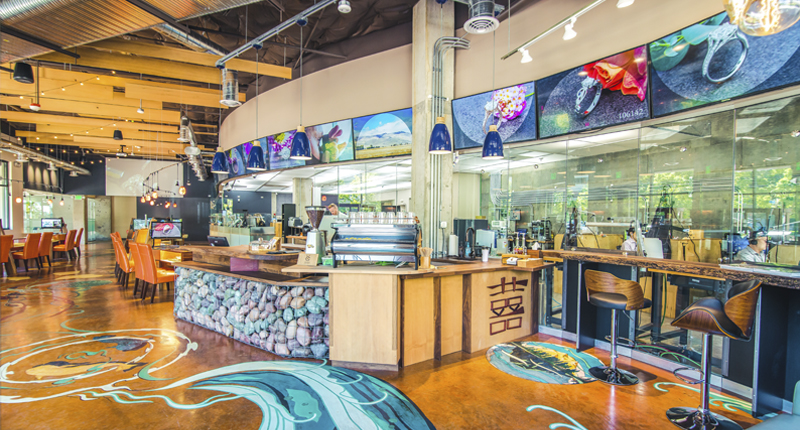
Green Lake Jewelry Works was founded in 1996 by Jim Tuttle. Today, he has about 65 employees across two stores, the original 7,500-square-foot flagship in Seattle and a 5,700-square-foot location in Bellevue, opened last year.
National Jeweler: What’s the biggest challenge your store is facing today?
Jim Tuttle: I would say our biggest challenge is staffing because we do literally everything in house: web development, photography, the design and production from sketch to delivery--everything about making the jewelry. We even cut sapphires on site, etc.
So we’re always trying to find world class CAD modelers and bench jewelers, people beyond my original jeweler skills level, which is always challenging and with this large of a staff there is a small turnover, but even a small turnover and small growth means you’re always hiring.
I don’t think we’ve gone three months in our history when we weren’t looking to fill a position. We’ve grown every year that we’ve been open and even modest turnover and modest growth means one to five people a year, sometimes 10--we’ve hired more than a dozen in a year before--which can be challenging for a small business.
NJ: What’s the top-selling category and brand at your store?
JT: We are relatively unique. We’re very much a niche and we only have one category that counts, larger than all the others
So made-to-order, one-at-a-time pieces for an individual client is about 80 percent of our total sales.
Approximately 10 percent of our sales are all types of merchandise sold out of the case. Most of that are things we’ve made, and a very tiny portion of that are little tennis bracelets and studs and chains and things that we didn’t make, which aren’t branded.
The last 10 percent of our business are repairs and restorations, appraisals and services like that.
The only bridal merchandise that we don’t make that matters is Jim Binnions’s mokume. Even though for at least five years we’ve done mokume in house, we still find that his is just fabulous and still sells so it was one of those things we added originally when we didn’t do mokume, when we had no skill set for it. I never learned it. It was a magic that I never figured out how to do.
We’re not out-of-the-case people. We never were. I was a bench jeweler and never really trained in how to close people on what I have. I trained on how to sell them something I don’t have. We have high hopes to sell more of our finished goods, but we’ve been in a location for 11 years now (in Seattle) that is a drive-up destination. We don’t even bother putting jewelry in a window; there’s nowhere to walk up to with the way the building is.
Our new shop that we opened in Bellevue (in the summer of 2016) is at a prime street corner that is a walking street. It’s actually a mini-jewelry district; I think there are eight jewelers within two blocks. We plopped ourselves right in the middle of it and filled our windows with things, and we’re already getting more traction over there out of case because people walk by the window, say, “That’s pretty,” and walk inside. Whereas at our Seattle store almost everybody drives here purposely to design a wedding ring.
Eighty percent of people who walk in the door are here to design a wedding ring. They’re already pre-sold by going to our website or talking to friends. Twenty-one years in the city selling custom wedding rings; most people have a friend that told them to come here. They’re not wandering in look for a Christmas present. That’s our hope for the Bellevue location, to maybe double that volume and give us a way to move those things (in the case) a little bit better, not have them sit around as long. All of the Seattle billionaires are two minutes away in Bellevue, like Bill Gates and Jeff Bezos.
Seattle real estate is terrible and Bellevue is as hot as it gets.
Green Lake Jewelry Works owner Jim Tuttle
NJ: Tell me more about your regional customer.
JT: In Seattle you’ve got Microsoft, Amazon, Yahoo, Apple; everyone is here now. It used to be a one-horse town--it was Boeing and Microsoft, two very different businesses--and now it’s a tech city.
Our clients are very tech-savvy. They’re interested in CAD models. They’re interested in how things are made. Our shop is wide open so they can see us work. Our clients aren’t necessarily younger, but they are tech-savvy and interested in getting unique things. I’d say they’re a little bit higher income.
They do come from a long distance. We commonly have people drive from as far as Portland, which is three hours from here. We do a lot of work online, 20 to 30 percent of our custom bridal market is for people from different states and Canada. It does surprise me that people would drive two or three hours to sit in a location when they could do the exact same thing online. And we do that pretty well for people from Minnesota and Texas and Florida and everywhere else, but it reminds me that people prefer an in-person experience when they can get it, even if takes a two- or three-hour drive for something special.
Often, those people only come in once or twice and finish the transaction online, since the process is long and slow for custom. We’ll mail them a wax and email them pictures about the process along the way. Our common paradigm is to design a piece and modify it one to 10 times during the production process with subtle adjustments.
Of our out-of-state clients, which account for 20 to 30 percent of our bridal business, tons come up from California, particularly San Francisco, often flying up to meet with us. Our designers are pretty cavalier about it, mentioning “Oh, he came up for the day from San Francisco.” We have flights about 20 times a day between Seattle and San Francisco and San Jose, so it’s fairly easy for them.
NJ: What’s the most popular style of engagement ring with your clientele?
JT: Our trends do mimic the rest of the industry with a couple of exceptions. Halos and rose gold are very, very popular. Marquise have been very hot in the last 18 months, cushions too.
Princess cuts seem to have completely died. It was a big deal for, it seems like a decade, and, thank God, finally has died for us. I’m not a fan. I sat at the bench for many years and pointed corners suck. Think about it: With pointed corners you’re never going to completely have a smooth, neat view with any prong. They’re all going to be ugly. You can only bar-set and bezel-set so many things before you’ve got clients who want more visibility of the stone, and there aren’t many things you can do to make a princess cut look great.
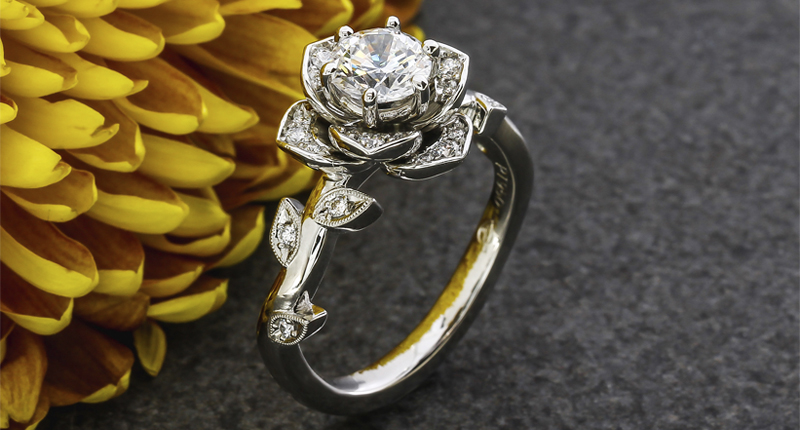
Our most popular Instagram and Pinterest item is a flower design, basically a center stone with rose like petals and melee paved in. By far it beats the next five shared items combined.
What’s somewhat unique to the Northwest are Montana sapphires. It’s sort of a granola Seattle thing. They like muted colors, and it’s really unusual. Montana sapphires are not as popular with our clients in the rest of the country, but it is for our local clients.
NJ: Which social media accounts are important to your stores?
JT: Instagram, if I had to pick, would be my most important in terms of communicating with clients, getting followers and getting engagement.
Because of traffic, because Instagram doesn’t link back to us via the individual pictures, Pinterest, the 800-pound gorilla, drives something like five to eight times as much traffic to our site as all other social media combined. Nothing else comes close.
We buy lots of Google adverts too. The No. 1 way people find us online is by entering our name into a search engine, so they know our name from a friend or Instagram--we don’t know all the time so we ask them--but I don’t think people always honestly tell you the first way they found you, they say the way that says something best about them. If they saw our ad and a friend mentioned, “Oh I know that place,” they would say my friend told me, because they don’t want to be influenced by advertising. Not many refer to our ads, even though a lot obviously click them.
My point is, Instagram is important, all of these other ways that we get our name out there is important, because even bigger than Pinterest, our No. 1 traffic driver is people who already knew our name and entered it into a search engine, No. 2 is Google adverts and No. 3 is Pinterest. And we think a lot of the Instagram, Facebook, etc. is driving the already-knew-our-name searches.
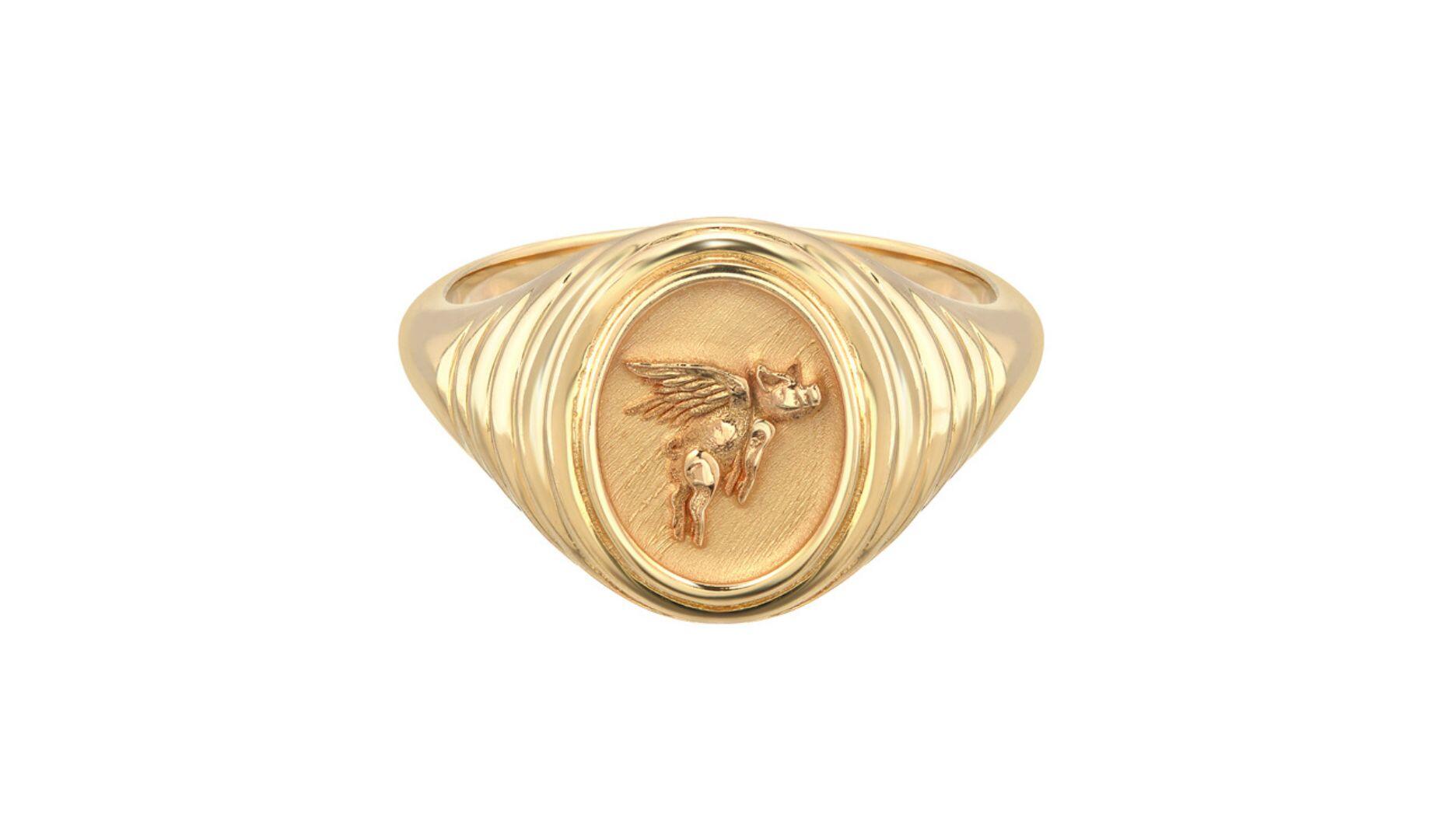
This ring is the store’s most pinned and shared on social media.
NJ: Do you have e-commerce?
JT: Technically, we implemented it ages ago. In terms of click-and-buy capability, we started it around 10 years ago. We get virtually no click and buy. A whole month goes by without any click and buy. It’s just not important to us. It’s something we implemented because everybody else did.
I heard at a trade show a few years ago that Blue Nile closed 65 percent or more sales while communicating with a client by live chat or on the phone. That resonated with all of my friends that have any kind of an online presence, to remind us not to worry if people don’t click and buy.
That’s the whole nature of jewelry to me. It’s a one-on-one thing. For small businesses like us, even for Blue Nile, the bulk of people need their hands held to know they’re making a good choice. They’re buying large, just not clicking the button.
Blue Nile went private, and they’re opening stores. I think everybody is realizing that pure online sales by itself is pretty hard for jewelry.
NJ: But the important thing is that your custom design process is available online, which is separate from click and buy.
JT: Absolutely. We put that online about 10 to 14 years ago. It was right after we put up our website. We started getting emails from people for custom, and it was pretty early that we converted from just email orders to a different system where our designers could see the order process online, with all communications with a client, pictures, etc. Emails were just so hard to keep track of and always getting spammed out of our inbox.
NJ: Did you purchase a software to do that?
JT: We’ve had a full-time web developer on staff since the late 1990s, so we built that system ourselves. Today it’s a completely integrated system. It runs the website you see on the front end, our production control, inventory, finance, customer communication. It’s been evolving since our very first website.
NJ: What’s the best piece of advice you’d offer to a fellow independent jeweler?
JT: If you don’t have a great website that looks very professional, get one. Don’t worry so much about selling online. Make the site a fabulous portfolio/calling card. The key point is to look professional, modern and showcase your work.
Take a picture of every custom piece you do so you can show your work because David Yurman may decide you can’t sell Yurman anymore, like Pandora decided you can’t sell Pandora anymore, so you need to highlight your brand. Showcase what you do because brands switch around--they’ll dump you, you dump them--but if people think you’re great at what you do, it won’t matter.
Branding yourself and taking pictures of all of your work is key.
NJ: What’s a fun fact about you we can share with our readers?
JT: It’s a sad fact. I grew up in south Florida, and I thought if I’m successful in life that means I’ll be scuba diving every weekend. And I ended up in a place I love, Seattle, where the water is too cold, so I’ve never been diving here.
I lost out on my dream by moving to the cold Pacific Northwest. I was very close to buying a dive boat in 1985 and making that my career, but I decided not to and a year or two later became a jeweler instead.
Ashley Davisis the senior editor, fashion at National Jeweler, covering all things related to design, style and trends.