



SourcingOct 23, 2026
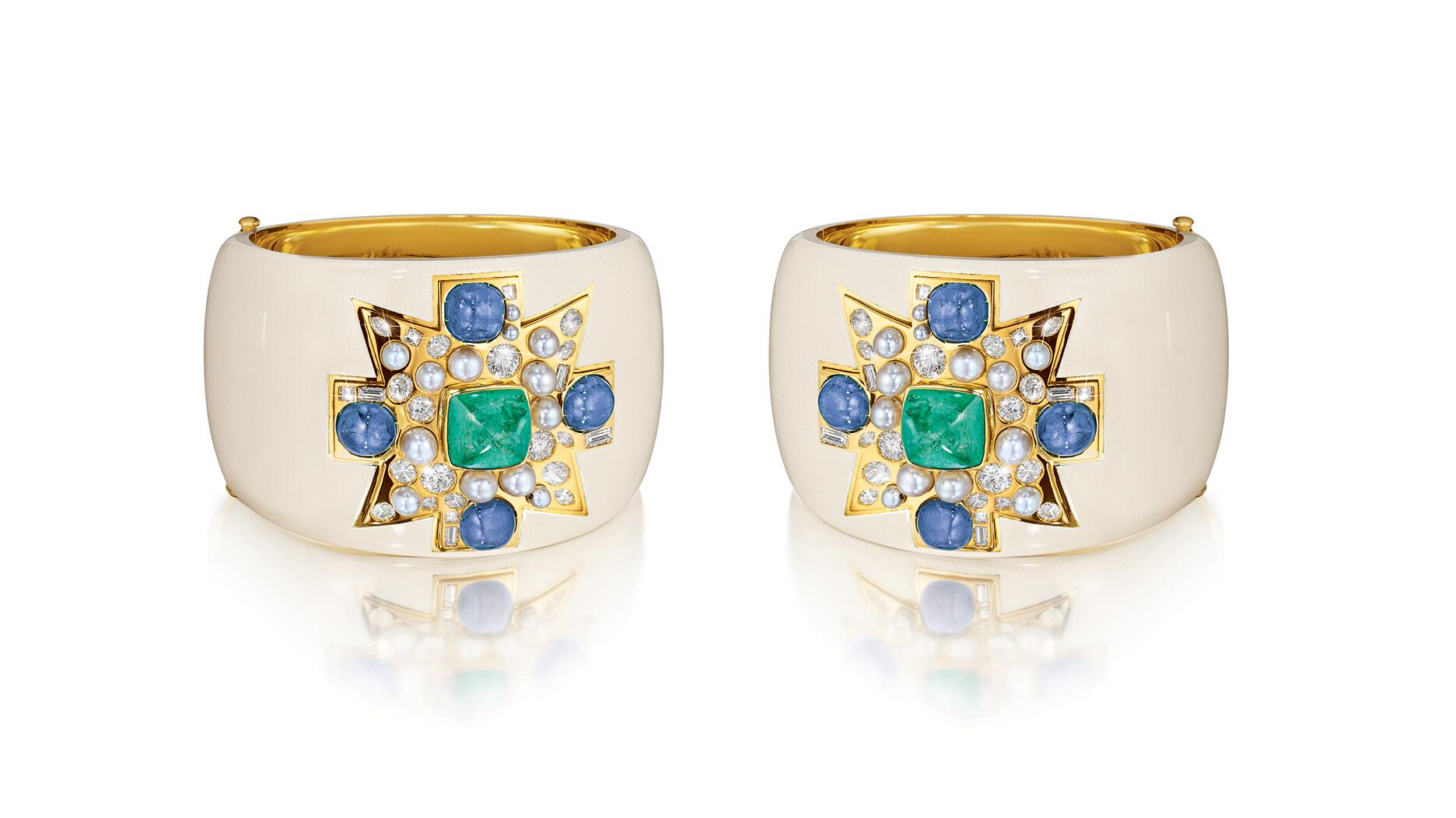
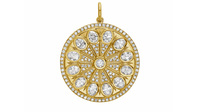
Rachel Chalchinsky’s ‘Survivor Tribute’ RingThe ring, our Piece of the Week, was designed by eight-year breast cancer survivor Rachel Chalchinsky of Color Source Gems.





Signet Jewelers sought to have one of the two claims brought against it by shareholders in a 2016 suit dismissed.


New York—Earlier this month, a New York federal judge denied Signet Jewelers Ltd.’s request to dismiss one of the two claims contained in a lawsuit brought against it by shareholders.
The Public Employees’ Retirement System of Mississippi, a pension fund, is the lead plaintiff in a purported securities class-action against Signet originally filed in 2016.
The lawsuit accuses the jewelry retailer of misrepresenting two aspects of the company: the health of its credit portfolio (which the company has since outsourced) and allegations of a culture of “pervasive” sexual harassment.
The sexual harassment aspect of the shareholder lawsuit relates to Jock, et al. v. Sterling Jewelers Inc., a subsidiary of Signet. That case was filed in March 2008 by several women accusing the company of discriminatory pay and promotion practices based on their gender.
Though the case itself contains no allegations of sexual harassment, documents eventually unsealed in connection to the case, and reported on by The Washington Post as well as other media outlets, painted a picture of a culture where women were objectified, disrespected and scared of retaliation, generating a lot of negative publicity for the retailer and, the shareholders noted in their lawsuit, sending Signet’s stock price plummeting.
Signet previously sought to have the entire shareholder lawsuit dismissed, but U.S. District Court Judge Colleen McMahon denied that motion in November 2018.
In May 2019, the retailer sought the dismissal of the claims relating to its company culture. It filed a motion for a judgement on the pleadings, which is when a party asks the court to rule in its favor based not on new evidence but interpretation of the law.
Signet asked the court to take a look at a March ruling from the Second Circuit Court of Appeals in a case called Singh v. Cigna Corp.
In that case, a shareholder alleged that Cigna’s pamphlet about its code of ethics misled investors about its compliance with Medicare regulations, court documents show.
The code of ethics, which included statements about staying in compliance with the law and acting with integrity, was determined to be a “textbook example of puffery,” court papers state, meaning the statements were too general for a reasonable investor to take into consideration when buying shares of the company.
Signet argued in its motion for a judgement on the pleadings that its code of conduct should be viewed in the same manner, but Judge McMahon disagreed and

The ring, our Piece of the Week, was designed by eight-year breast cancer survivor Rachel Chalchinsky of Color Source Gems.

The website offers enhanced member benefit access, industry directories, educational resources, a job board, and access to the MJSA Journal.

Boucheron and Pomellato had a strong third quarter, with Kering looking at jewelry as an increasingly important part of its portfolio.

A Diamond Is Forever's holiday campaign reimagines natural diamond icons for a new generation celebrating individuality.


Tara Sinchuri was the owner of Everest Jewels in Fairfield, Ohio, and a father of three. He was found dead in his store on Tuesday.


The number of participants at the fall show was up 12 percent.

The Academy and Grammy award-winning siblings have collaborated with John Hardy on a new jewelry line inspired by their personal style.

Built on Relationships. Refined by Craft.

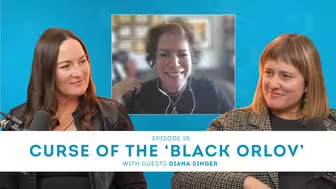

Diana Singer shared the stories of two “cursed” diamonds on this month’s podcast, which was inexplicably riddled with technical issues.

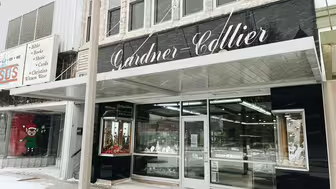
The family-owned jeweler has three locations across Missouri and Iowa.

The De Beers-owned diamond mine in South Africa is being put on ice as part of a round of previously announced cost-cutting measures.

The collection centers designs with clean geometric lines, chunky sculptural pieces, and recognizable details from the luxury fashion brand.
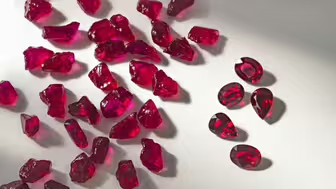
The miner said it saw particularly strong prices for larger, fine-quality rubies at the sale.

The guard opened fire on a man who was smashing a jewelry display case at La Gran Plaza in Fort Worth last week, police said.

The Texas jeweler added 2,000 square feet to its reimagined showroom, complete with a new design studio and an event space.

Jacob & Co.'s diamond masterpiece is the most expensive Fantasy Bra ever worn on the Victoria’s Secret Fashion Show runway.

The “Atelier” collection was inspired by the tools, rituals, and objects in an artist’s studio as a quiet rebuttal to an automated world.
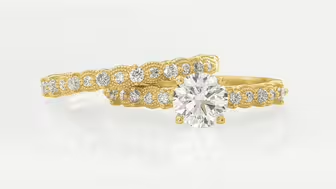
The pending acquisition is an “exciting opportunity” for wedding vendors to grow their business, said The Knot Worldwide’s CEO.

"The Secret Gems" features eight Thai jewelry brands paired with a team of young craftspeople who create jewelry together to win challenges.

The brand’s “Modern Talisman” capsule collection introduces pendants inspired by the mythology, natural world, and spiritual ethos of Bali.

Independent jewelers from New Mexico to New Jersey answer the question: What has kept your store in business for 100 years?

The NRF is expecting holiday sales to increase this year, but consumers and retailers alike are facing Grinch-like headwinds.
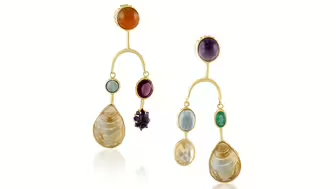
Our Piece of the Week gathers the planets, represented by a variety of colored gemstones, in a pair of 14-karat yellow gold earrings.

The New York-based jeweler is moving its Amherst flagship store to a larger location in nearby Snyder.

Chen, who worked at Cartier and Tiffany & Co., will lead retail sales and operations for the luxury jeweler’s 11 U.S. stores.

For 40 years, sisters Amy and Elise Greenberg have helmed their 126-year-old family business, leading with appreciation and integrity.

It’s a term Smith coined and felt compelled to share following a bad experience with an aborted flight and an unfeeling flight attendant.



This site uses cookies to give you the best online experience. By continuing to use & browse this site, we assume you agree to our Privacy Policy