







SurveysOct 16, 2026
How Inflation, Gas Prices Will Affect Holiday Sales The NRF is expecting holiday sales to increase this year, but consumers and retailers alike are facing Grinch-like headwinds.





Researchers discovered a new methodology using minute amounts of coral DNA material to identify the species.


Basel, Switzerland—A breakthrough study about DNA fingerprinting for precious coral has led to a new service offered by the Swiss Gemmological Institute (SSEF) to identify coral species.
Researchers from SSEF and the University of Zurich’s Institute of Forensic Medicine recently published “DNA fingerprinting: an effective tool for taxonomic identification of precious corals in jewelry” in leading peer review journal Scientific Reports.
According to SSEF, the new methodology detailed in the article uses minute amounts of DNA recovered from precious coral to identify its species.
This is important because several precious coral species are listed on the Convention on International Trade in Endangered Species and need to be correctly identified and declared to be legally traded.
The DNA fingerprinting technology is minimally destructive, SSEF said, requiring “considerably less sample material” than other methods, with testable DNA being recovered from as little as 2.3 milligrams (0.0115 carats) of material.
SSEF’s Laurent Cartier told National Jeweler the coral material should be submitted loose for testing so the lab can access it properly; coral material strung on a necklace or in cabochon form could be unmounted, he added.
As with all scientific techniques, there are some limits—Cartier said if there is too little DNA or the DNA is too degraded, it won’t work.
But he added there are no other methods currently for conclusively identifying coral species, “so this can still be considered a breakthrough.” And, it has worked on all the samples SSEF has tested so far.
Cartier said they continue to improve the research and methodology as well as add material to their collection to provide a reference for comparison.
SSEF research, in fact, led them to discover a coral variety previously unknown as a species used in the jewelry trade: pleurocorallium niveum.
The lab’s testing will always be done in combination with other techniques routinely applied to coral, like trace-element chemistry and Raman spectroscopy, to give the lab access to new information, SSEF said.
The new coral identification service is being offered in partnership with the Institute of Forensic Medicine at the University of Zurich.
For additional information and details, read the full article about the study on Nature.com or visit the SSEF website.

The NRF is expecting holiday sales to increase this year, but consumers and retailers alike are facing Grinch-like headwinds.

Our Piece of the Week gathers the planets, represented by a variety of colored gemstones, in a pair of 14-karat yellow gold earrings.

The New York-based jeweler is moving its Amherst flagship store to a larger location in nearby Snyder.

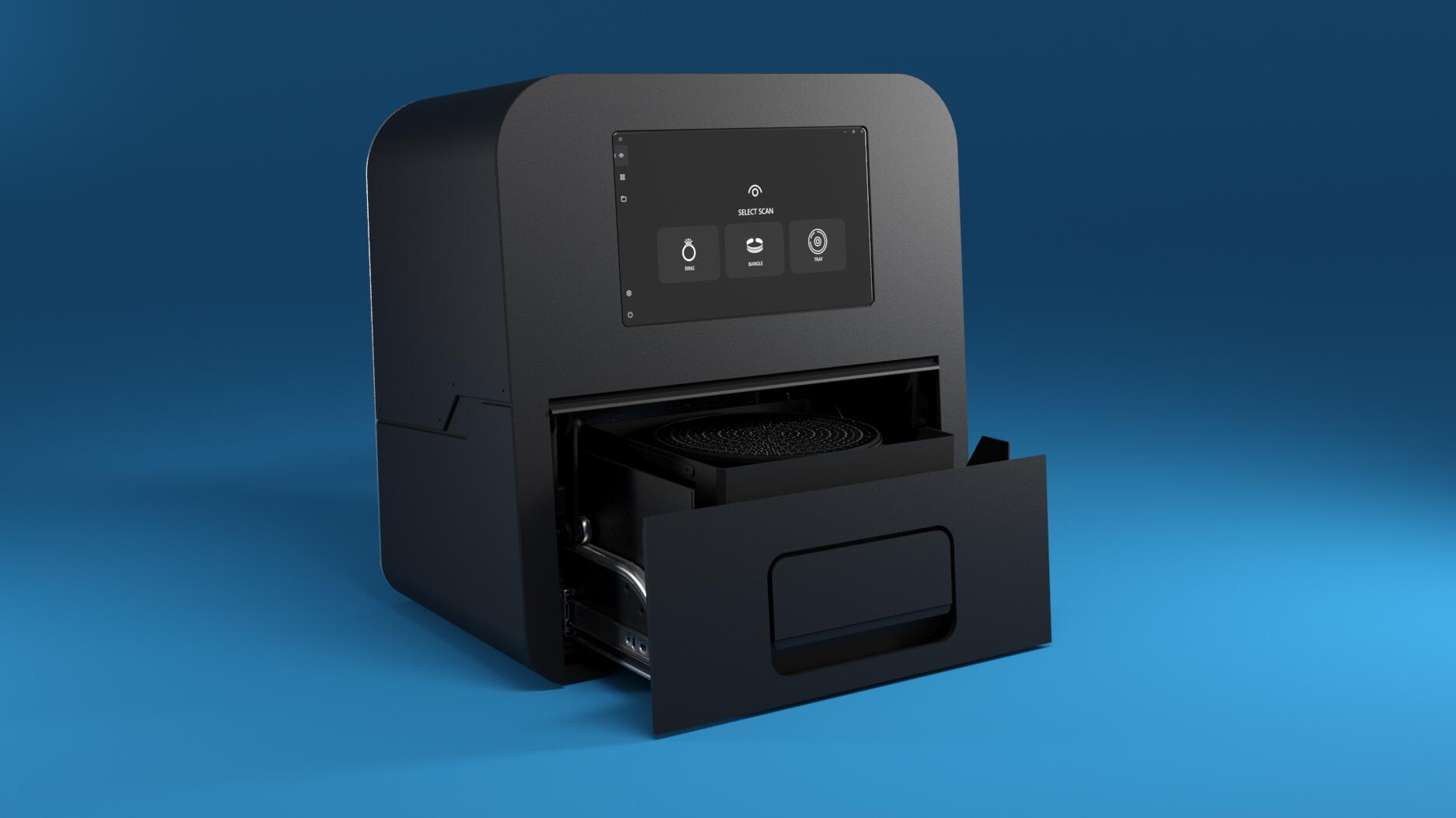
Experience gemstones with greater precision and comfort than ever before.


Chen, who worked at Cartier and Tiffany & Co., will lead retail sales and operations for the luxury jeweler’s 11 U.S. stores.


For 40 years, sisters Amy and Elise Greenberg have helmed their 126-year-old family business, leading with appreciation and integrity.

It’s a term Smith coined and felt compelled to share following a bad experience with an aborted flight and an unfeeling flight attendant.
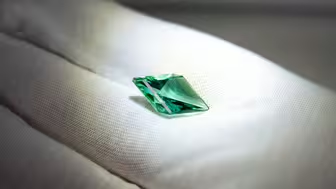
Submit your pieces for a chance to win in this year's competition.

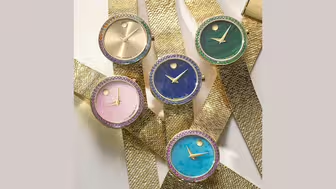
Movado teamed up with the New York-based fine jewelry designer on a new collection of Movado Museum Velura watches.

The two companies are reportedly in talks to join the Global Diamond Consortium, led by former De Beers CEO Gareth Penny, as per Bloomberg.
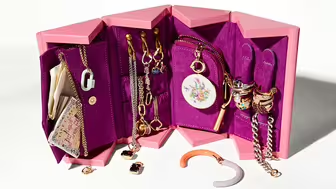
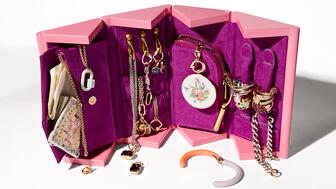
The “Some of the Things” box follows the two larger “Everything” box designs with the look and function of antique sewing and toolboxes.

Fourth-generation jewelers Coleman and Mitchell Clark exemplify the best qualities of their predecessors: humility, modesty, and confidence.

The gem hunter, whose 70-year career was defined by adventure and exploration, is remembered for his steadfast faith and sense of wonder.

Tiffany & Co. continued its full-scale store renovation project while Bulgari’s high jewelry collection generated “record-breaking revenue.”

This year’s sessions feature leading voices from human rights, legal, and conservation organizations.

The high-end jewelry retailer was sold to private investment firm Middle West Partners and a group of longtime clients.

The jewelry designer has partnered with Sofer Jewelry to distribute her 85-piece lab-grown diamond collection.

Dunn, this year’s Single-Store Independent inductee, is passionate about innovation and telling the story of natural diamonds.

The 24-carat fancy intense pink diamond ring could fetch up to $18 million at the November sale.

The “Island Jewel” candle honors New York City and Puerto Rico and raises money for the island’s water relief efforts.
The partnership will give JA members access to preferred pricing, exclusive benefits, technology solutions, education, and resources.

Stores should expect to see the most customers on Nov. 27, and Christmas week is expected to be hectic too, as Dec. 25 falls on a Friday.

The charm, our Piece of the Week, features brown diamond frozen hot chocolate topped with white diamond whipped cream and a ruby straw.

The top lot of Elmwood’s recent fine jewelry sale in London was a 1.84-carat, D color Tiffany & Co. solitaire diamond ring.

The watch company agreed to sell a 95 percent interest to a group comprised of F.P. Journe, Chanel, and Swiss watch exec Pierre Jacques.

This round of tariff refunds is for importers that have sued over IEEPA tariffs in the Court of International Trade and won.

It revisits the brand’s most requested silhouettes, from "Pillow"-set necklaces and bracelets to "Signature"-set rings and earrings.



This site uses cookies to give you the best online experience. By continuing to use & browse this site, we assume you agree to our Privacy Policy