
The Western star’s 14-karat gold signet ring sold for six times its low estimate following a bidding war at U.K. auction house Elmwood’s.

How Pippa Small is Helping Afghan Artisans
An official partner of the organization Turquoise Mountain, Small is dedicated to empowering her fellow jewelers in beleaguered Afghanistan.
The more e-mails I receive, the more I come to the conclusion that design and philanthropy are members of a tricky partnership.
At times, it can be difficult to ascertain whether a company is dedicated to aligning their business with a cause, or if they’re simply participating in a self-benefiting marketing ploy.
More detrimental still can be the companies that donate funds to unsustainable ventures. It goes back to the proverb “give a man a fish.” If you teach him to fish, he’ll be self-sufficient for a lifetime. It’s an old saying, but one that remains difficult to embody.
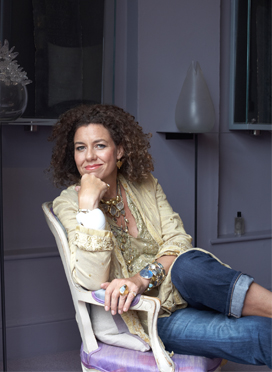
I knew of London-based jewelry designer Pippa Small because of her eye for vividly colored gemstones and the easy, organic quality of her jewelry.
It was only when I met her for the first time, at the opening of her shop-in-shop at ABC Carpet & Home in New York, that I learned about her many years of work with Turquoise Mountain, an organization founded in 2006 by the Prince of Wales and Hamid Karzai, then the president of Afghanistan.
Turquoise Mountain has worked to rebuild infrastructure and provide vocational training to Afghan artisans in Kabul.
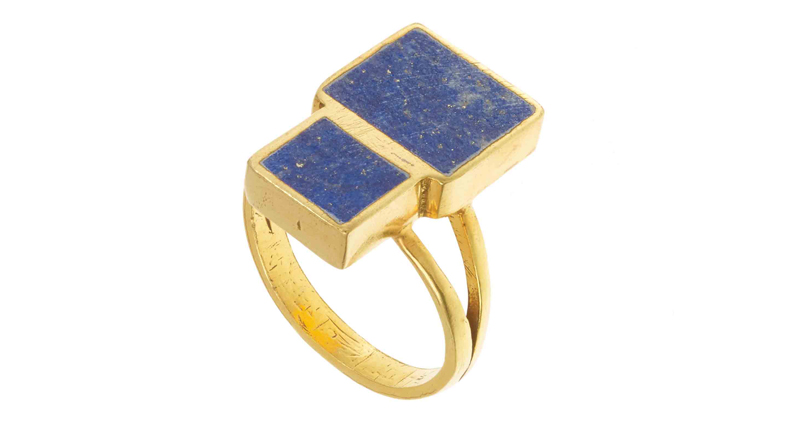
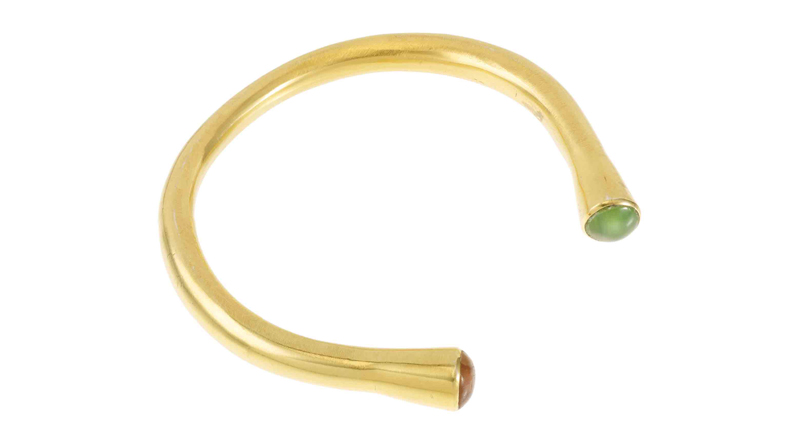
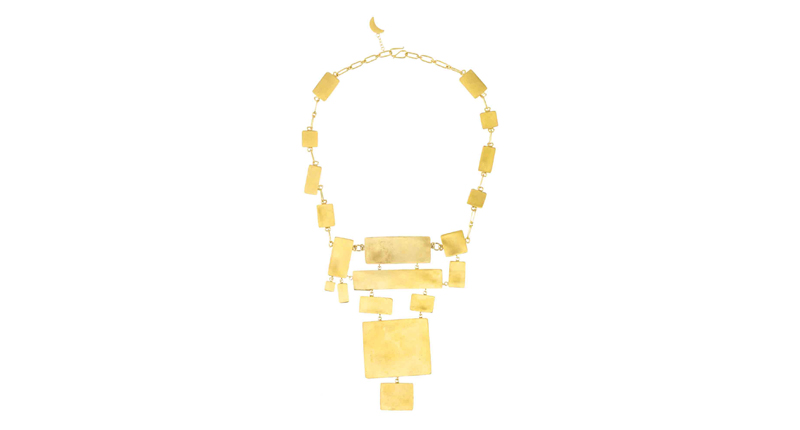
Small has been working with the organization, helping design, market and sell pieces so artisans can earn a living on the way to self-sufficiency, since 2008.
She is, essentially, dedicating her life to teaching people how to fish.
Below, I chatted with the exemplary designer about her connection to Afghanistan, life in a warzone and the moments that have inspired her.
National Jeweler: When and how did you become involved with Turquoise Mountain?
Pippa Small: In 2008, I was approached by a mutual friend to design a collection of jewelry in Afghanistan to compliment a touring exhibition of the famous “Bactrian Gold,” a remarkable collection of antiquities found in what is now Afghanistan: treasures gathered from the famous Silk Routes of Central Asia, from second-century Greece and Rome to China and India. The trade of goods, materials and design aesthetics was extraordinary. I said yes before she had even finished explaining the proposal.
My best friend in school when I was 10 years old was an Afghan girl whose grandfather was the last king of Afghanistan--I had a childhood filled with tales of this mysterious country and, like the rest of the world, watched in horror as the Taliban took over and the recent wars.
Within two weeks I had a visa, a letter of invitation and was on a plane for Kabul. From the moment I landed, I loved the country and over the following few years, every trip has taken me a step deeper and into understanding this remarkable culture and people.
“Within two weeks I had a visa, a letter of invitation and was on a plane for Kabul.”
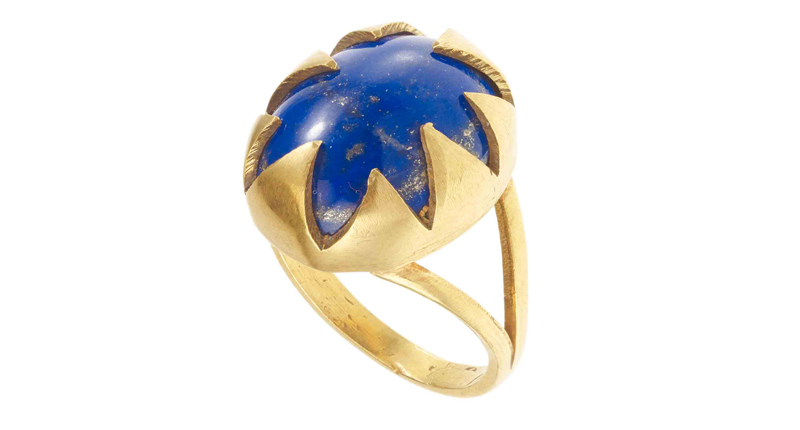
Turquoise Mountain is a wonderful foundation that has managed to achieve so much in a short space of time, from beautifully restoring the historic old city’s architecture and creating an infrastructure, health clinic and school, as well as a school for traditional craft like woodwork, miniature painting, calligraphy and jewelry. I am so proud to be working with them.
NJ: How would you describe your role within the organization?
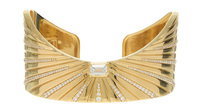
PS: My role is to create designs with the workshops where the graduates from the Turquoise Mountain school are hired. The designs are inspired by Bactrian, Islamic or Central Asian aesthetics. My job is also to market them and thereby ensure employment for the craftsmen and women (as well as) to send another kind of message to the media and our clients about the remarkable creative resilience of these people, giving an optimistic message for the future.
NJ: How often do you visit Kabul and what is it like on the ground, working directly with the artisans?
PS: I go about twice a year and, despite some trepidation about going, once I am inside the workshop, the rest of the world is blocked out.
We sit on the floor and talk about designs, but more importantly about life and love and politics and the stresses of living in a war zone. They are brave and warm and have totally captured my heart.
NJ: Can you speak a bit about the kind of art and jewelry the artisans at Turquoise Mountain create or what kind of techniques Turquoise Mountain is trying to keep alive?
PS: Because of the nearly 50 years of war and the huge diaspora of people and the Taliban’s banning of jewelry and adornment, many traditional techniques and skills were on the verge of being lost.
A prime example is the story of a master woodcarver who worked with the king and was a deeply talented craftsman. He was found working in the vegetable market in his 80s--he is now a master teacher at the school, teaching and passing on his skills to a new generation of young wood workers.
Afghanistan has some beautiful precious gems, but so many are smuggled out of the country with no benefit to the country, so now the teaching of master stone cutting and goldsmithing allows finished pieces to be sold from within the country, which adds value to Afghanistan.
NJ: What challenges have you encountered in your work with the organization?
PS: Bombs that have damaged the workshop, thefts of entire collections of jewelry, kidnapping, election violence … but despite so many challenges, the craftsmen and women always get the work done.
NJ: How do you help to facilitate a sustainable vocation for the artists with whom you work? Is this a challenge and if so, how?
PS: It is a challenge to keep anything sustainable in the fashion world by the very nature of the vogue for change and our thirst for newness, but by keeping the designs fresh and exploring different techniques, I hope to keep a loyal and growing audience.
NJ: Are there any specific moments or memories you have that stand out to you as significant or inspiring?
PS: Working with a young Afghan woman who was left deaf and mute from a childhood illness as a refugee in Pakistan. Encouraged by her family, she joined the jewelry-making course at the Turquoise Mountain Institute and then set up a cooperative of women jewelers in Kabul.
We were asked by Turquoise Mountain to collaborate on a piece of jewelry for the prestigious Smithsonian Exhibition for Turquoise Mountain this year. I found it remarkable that a young woman locked in her silent world would enter a male-dominated industry, and be brave enough to follow her dreams and be creative in a country at war.
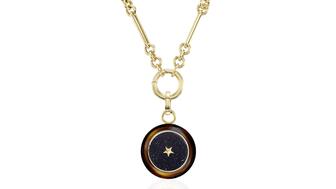
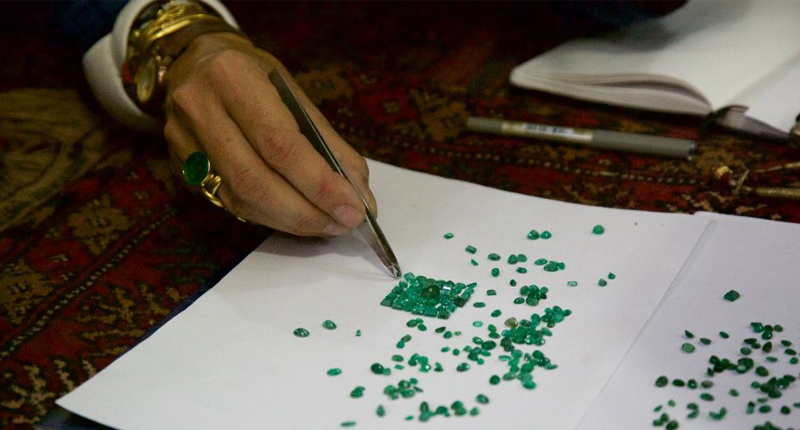
We created a piece together that is based on an ancient amulet, made of Panjshiri emeralds [from the Panjshir Valley in Afghanistan] and inspired by the movement of rain--so important in a desert place.
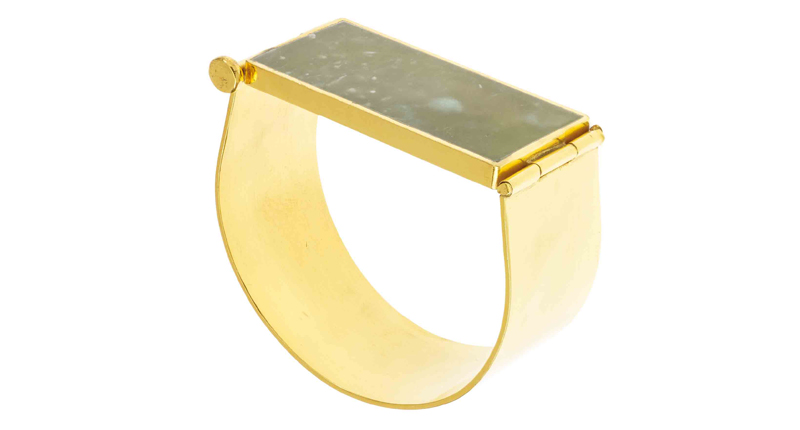
Behind the necklace we created a tiny hidden gold box with a pinch of Afghan soil inside. She is an inspiring young woman and has since gone to Washington to display her jewelry-making skills at the Smithsonian museum.
“I found it remarkable that a young women locked in her silent world would enter a male dominated industry, and be brave enough to follow her dreams and be creative in a country at war.”
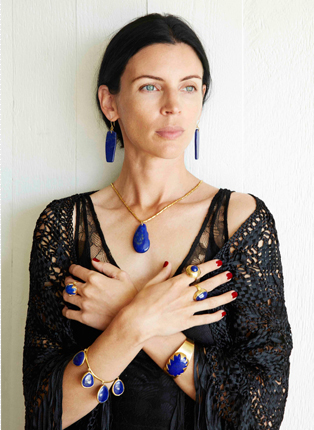
NJ: Over your time with Turquoise Mountain how has the environment in Kabul changed? Has it improved? Are there any increasing or new challenges to deal with in the social environment?
PS: In the years I have been going, sadly, the security situation in Kabul has deteriorated; there has been an economic collapse in the city as foreign troops, NGOs and the press pull out. It is very sad to see a country have a moment where things looked positive and then slowly to see that fall apart and young people not have hope for the future.
I worry that if we don’t help to provide jobs, groups like ISIS and Taliban will be the only option for the young and disillusioned.
NJ: What advice do you have to those interested in empowering others through the business and crafting of jewelry?
PS: I think jewelry making and all creative businesses can have a tremendously positive impact on communities. Craft is generally something all peoples practice to some extent everywhere in the world, to be creative and make things, to be able to use traditional skills that help create a feeling of self-confidence, a business that allows men and women to stay in the community and not have to migrate for work, that allows self-expression and earns an income is a great and empowering thing.
I think keeping expectations realistic is important when working with communities, sharing your design process so designing can become something for others to learn, keeping a good business head on when it comes to margins and mark-ups so the pieces will eventually be realistically marketable.
Pieces from Pippa Small Turquoise Mountain are available on PippaSmall.com.
The Latest

The discussion, "Rebuilding the Jewelry Workforce," will take place on Saturday, May 16, in Troy, Michigan.

The jewelry industry is reassessing its positioning as Gen Z reshapes the retail landscape and lab grown continues to gain market share.

With the trade and customer trust in mind, GIA® developed NextGem™ – on-demand training designed specifically for retail.

A matching pair of 18.38-carat, D-color diamonds from Botswana’s Jwaneng mine sold for $3.3 million, the top lot of the jewelry auction.


Sponsored by A Diamond Is Forever

The next generation of lapidarists are entrepreneurial, engaged online, and see the craft as a means for artistic expression.

Gain access to the most exclusive and coveted antique pieces from trusted dealers during Las Vegas Jewelry Week.

It was the second auction appearance for the fancy vivid blue-green diamond, which sold for $7.8 million at Christie’s Geneva 12 years ago.

Members of the U.S. Marshals Task Force took a 22-year-old man into custody. He was charged with tampering with evidence.

While the overall number of crimes was down, there were more incidences in which robbers pulled out guns, mace, or rammed cars into stores.

Jack Sutton Fine Jewelry is closing its store inside the downtown shopping center after 40 years in business.

Reena Ahluwalia’s painting of the rare red diamond is the first contemporary painting to join the National Gem Collection.

The price of gold has risen, affecting the number of pieces designers make, the materials they use, and how they position themselves.

Peter Smith gives tips on leading meetings, developing marketing, and making trade show appointments in the age of short attention spans.

The 11-piece “Medallions” capsule collection features five motifs: a crying eye, a heart on fire, a spiral, a flower, and a swallow.

From Gen Z’s view of luxury to “doom spending,” these are the six consumer trends to note this year.

The partners have announced the second cycle of the program, which has expanded to include a $25,000 student scholarship.

The owners of Staats Jewelers are heading into retirement.

Jeffrey Gennette, who retired in 2024 after 41 years with Macy’s, is the newest member of the jewelry retailer’s board of directors.

May babies are lucky to have emeralds, a gemstone admired for centuries, as their birthstone, writes Amanda Gizzi.

The new module allows retailers to plan, promote, and measure the success of events from a single dashboard.

NDC said in an open letter that Pandora’s statements about the carbon footprint of lab grown versus natural diamonds are inaccurate.

The diamantaire and industry leader succeeds Feriel Zerouki and said he will focus on being a “champion” for natural diamonds.

She wore our Piece of the Week, Glenn Spiro’s “Old Moghul Golconda” earrings, featuring fancy brown-yellow diamonds totaling 51.90 carats.

Two pieces were named “Best in Show,” one from the retail category and one from the supplier category.

The jewelry retailer noted resilience among its higher-end customers while demand softened for its lower-priced offerings.