

In its annual report, Pinterest noted an increase in searches for brooches, heirloom jewelry, and ‘80s luxury.
Greenland Rubies: What We Know At This Point
A chat with Hayley Henning, of Greenland Ruby, about what the mining company’s discovered so far and what still needs to be done.

The rubies and pink sapphires coming out of Greenland are about ready to make their debut.
Greenland Ruby officially announced the start of production at Aappaluttoq in May, making headway on a project that stalled after the former owner of the license to mine the site, True North Gems, ran into financial troubles.
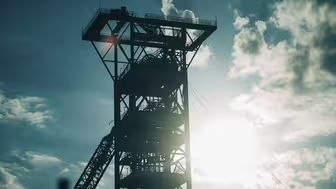
Aappaluttoq is Greenland’s first corundum mine, located about 155 miles south of Greenland’s capital, Nuuk. The deposit is primary type, meaning that the rubies are extracted from hard rock.
While scale and production numbers are still to be determined, the site could prove to be an important one, offering a consistent supply of gem-quality rubies and pink sapphires.
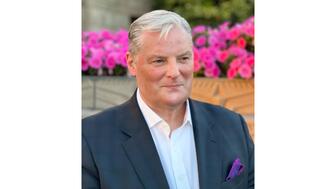
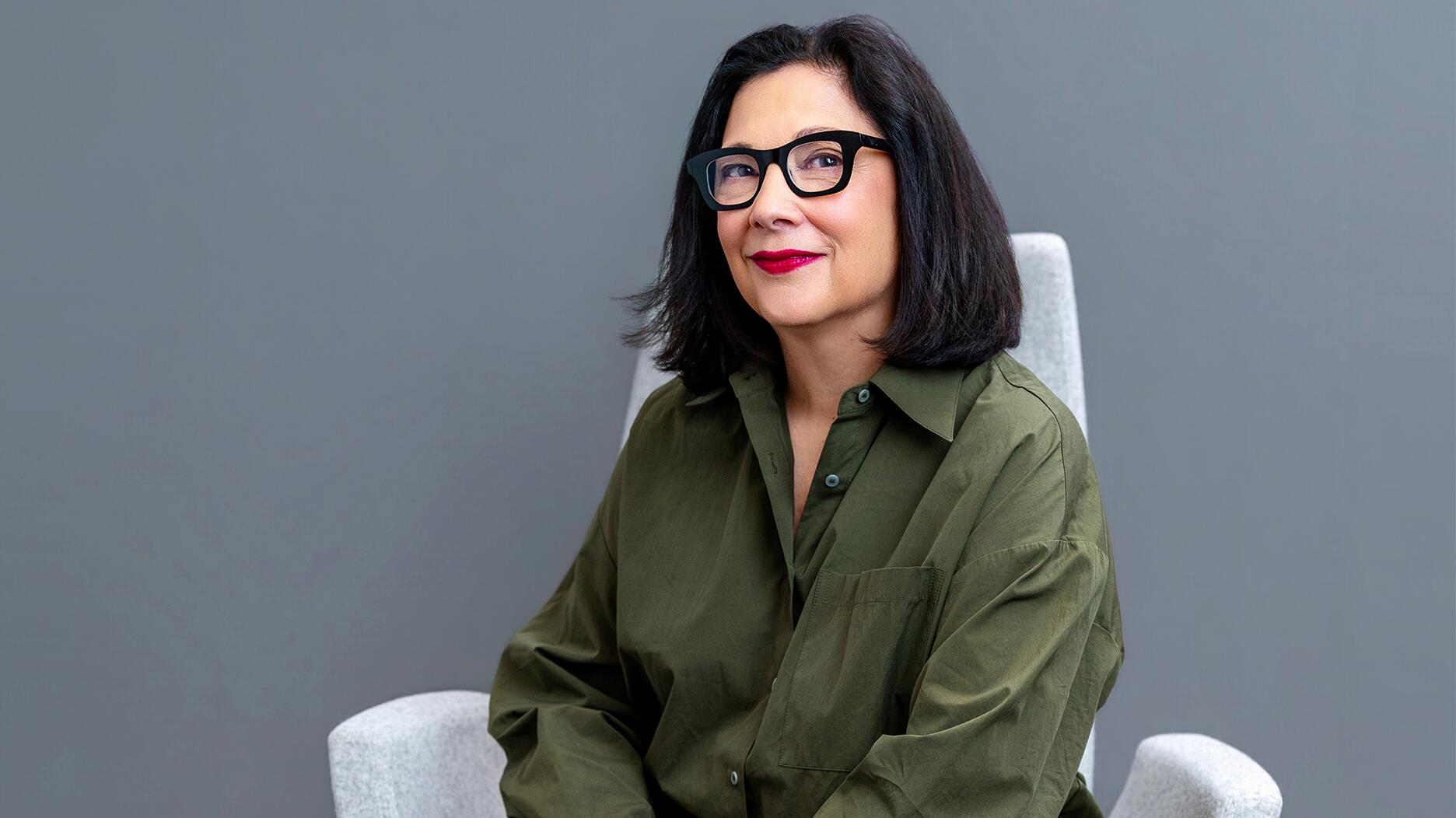
In effort to keep up with the project, I recently had a chat with Hayley Henning, vice president of sales and marketing at Greenland Ruby, about the company’s progress.
Greenland Ruby recently launched a new website, and Henning told me that the company also is working on the branding behind Greenland rubies and pink sapphires.
And now that the stones are coming out of the ground, a number of labs have and continue to get involved, Henning said, to look at both the material and the site.
Perhaps most importantly, though, Greenland Ruby is getting ready to bring some of its first stones to market, specifically as the gem and jewelry world converges in Hong Kong this week.
Read on for more of what Henning had to say.
National Jeweler: Since you started production earlier this year, what have you guys discovered about the stones themselves?
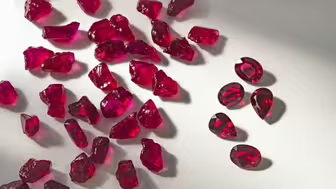
Hayley Henning: What’s coming out of the ground here is rubies and pink sapphires. Very often, in the colored gemstone world, it’s the origin that is so important and, of course, with these gems, the Greenland story is so special. With so many people, you get a reaction when they find out that Greenland produces gems, let alone that they’re rubies. From a product point of view, we know that the colors are excellent, deep, beautiful, saturated reds and then of course running the full gamut all the way down to the line of icy pinks, which of course would be the pink sapphires.
NJ: Will you be selling the gems as rough?
HH: Yes, we will be selling the rough. Greenland Ruby is, after all, a mining operation. We will be promoting the material in way that is meant to be
NJ: Now that you’re getting ready to launch the product, how will you be positioning it in the market and making it stand out from other rubies?
HH: That’s the million-dollar question. It really is all about the origin with these gems. It is ruby after all, and there is intrinsic value with ruby and with sapphire. But when we start talking about the origin, we really are talking about this pure, new, untouched environment. It is, in fact, the people of Greenland who have authorized the exploration of the site, as well as the sales and marketing of the material, because it is their material and we have their permission to go ahead and introduce the world to the Greenland ruby. And we’re really going to be talking about that because that is the point of differentiation, in the end.
NJ: Will you be launching marketing campaigns around them?
HH: We will. We’re not quite there yet, but we will eventually be doing that. We’re still in the process of selecting our preferred partners, and these are going to be people who are interested in telling the story along with us, interested in following that route to market, which everybody is so concerned about at the moment, being able to literally track the material from the moment it comes out of the ground. But, we have to do this anyway for export reasons--the Greenland government requires it--so that’s a tracking system we have in place.
Our partners will basically be on the same page as us. We don’t want to sell through an auction system and then (have) the material disappear into a factory in India or somewhere in Thailand. We will partner with these people who will be buying the rough and personally seeing it through so that we can follow that story. And we want them to tell the story as well.
At that point, after we have established partners, we will start working on marketing campaigns, depending on who those partners are. We are not at this stage saying, ‘This is how we’re doing it,’ because different manufacturers and different brands will have different ideas with how they want to do that. And we want to be a part of all of those processes.
“People who have seen the Greenland rubies say, ‘Oh it’s very fractured and it’s really not that great.’ But they haven’t seen anything that’s been properly produced, which is what we’re going to show now.” – Hayley Henning, Greenland RubyNJ: What exactly will your presence in Hong Kong entail?
HH: We don’t have a booth, but we have a series of meetings set up with potential customers where they can actually see what the material is and what it looks like. And we’ll be able to explain a little bit better, depending on what their needs are, how much of this material we’ll be able to provide over X amount of time. That’s also the goal with the Greenland material; because we’re a modern, mechanized mining operation, we will be able to know how much material we can produce.
This is something very unique in the colored gemstone industry, especially with rubies and pink sapphires, because there really isn’t much consistent supply of material where we can say--we could produce this material for the next nine years, and this is how it looks and this is what it’s going to cost. Because of that, people will be able to plan their collections.
NJ: So has nine years been established as the life of the mine?
HH: For this particular deposit, we’re looking at nine years, and exploration has identified two other sites that we will be able to go into after that.
NJ: Is there any idea what production will be in terms of number of carats?
HH: No. That’s a little difficult to determine at this stage. We don’t know that yet.
NJ: Have you started planning when the other deposits might be in production?
HH: Our geologists have mapped those projects, but we’re not really there yet. We still have to perfect what we’re doing here first. It is a hard rock deposit, so we’re fine tuning our processing plant so that we end up with a very rich concentrate and, of course, that’s what’s going to be key for our customers--trying to match the best customer with the best product.
NJ: How do you think that these rubies will compare in pricing in the market?
HH: Well that’s another big question. From a price point of view, while I never want to answer a question with ‘I don’t know,’ this series of meetings in Hong Kong is also just to sort of determine our place in the market. We want to get a feel for how people respond to the material. The prices will certainly be market-driven. We have to see exactly what people’s expectations are, balancing that with, of course, what happens at the mine. And then we want to determine, over time, how that will work for everybody’s business.
NJ: So Hong Kong will act as a kind of launching pad for figuring all of that out?
HH: Yes. Exactly. It’s so difficult to put prices on anything because you don’t really know what people are willing to pay. And it depends on what the contract entails and how much they’re interested in buying. There are a lot of different things that come into actual pricing. We’ll see. But certainly the very unusual and exclusive location is what makes this material so different from anything else.
Of course what’s key, too, is all of this talk about responsible sourcing and the responsibility of Greenland Ruby as a company, not only to the people of Greenland but within the industry. We’re actually producing something that is responsible and something that people will really be able to identify from other sources of ruby or pink sapphire because our intention is to keep it separate.
And tracking mine to market is a pretty big part of what it’s all about. This is really the first time that the Greenland government has ever done anything like this. This is really the first big sort of licensing permit that they’ve issued, so it’s unique, and we will, for that reason, be able to keep it separate for a fair amount of time. Then, as I said, it will go into the hands of our partners, who will have agreed to treat the material in the same way and follow the story through to the brands and manufacturers.
NJ: I know you said it’s too early to know exactly what form the marketing will take, but do you think it will include consumer-facing campaigns as well?
HH: Absolutely. It’s much easier today with all the social media that we do; we’re going to be hitting all of those marks with our social media and, obviously, wherever we can as best we can just to drive awareness, and to create pull and desirability and interest. It’s still very early days with this project, so we’ll see how it all rolls out. But we’re very excited.
People do seem to be interested beyond our industry. Everybody, for a start, knows what a ruby is; there’s no explanation needed there. But then they get excited when they hear about Greenland. It’s really not on people’s radars, so they’re fascinated by this idea of finding something red and very precious and rare in this sort of white iciness. It conjures up something very interesting.
People who have seen the materials so far seem to be pleasantly surprised. I think in the past there have been some rumors (about the quality). It’s a hard rock deposit, so it’s tough mining environment there, and because it’s a primary deposit in hard rock, much of the material is fractured. That is the nature of the material. It’s very normal in a primary deposit. It’s been buried under ice and glaciers, and there’s been a huge amount of pressure for millions of years.
There has been some artisanal mining there, which is definitely not easy. It has been done since the 1960s, so some people who have seen the Greenland rubies say, ‘Oh it’s very fractured and it’s really not that great.’ But they haven’t seen anything that’s been properly produced and properly processed, which is what we’re going to show now.
NJ: So with it being so fractured, does that mean it comes in smaller sizes, needs treatment, etc.?
HH: It does come in smaller sizes and does mostly need treatment, which is quite normal for most corundum material. We will be showing the results of some of those treatments and how this material really is, or can be sold commercially as a new and different source.
The Latest

Starting Jan. 1, customers can request the service for opal, peridot, and demantoid garnet.

The 111-year-old retailer celebrated the opening of its new location in Salem, New Hampshire, which is its third store in the state.

How Jewelers of America’s 20 Under 40 are leading to ensure a brighter future for the jewelry industry.

The new catalog features its most popular chains as well as new styles.


The filmmaker’s personal F.P. Journe “FFC” prototype was the star of Phillips’ recent record-setting watch auction in New York.

The new location in the Design District pays homage to Miami’s Art Deco heritage and its connection to the ocean.

Roseco’s 704-page catalog showcases new lab-grown diamonds, findings, tools & more—available in print or interactive digital editions.

Inflations, tariffs, and politics—including the government shutdown—were among consumers’ top concerns last month.

“Longtime favorite” presenters, as well as first-time speakers, will lead talks and workshops at the annual event in Tucson next year.

Silas Smith of Meridian Metalworks won the challenge with his pendant that blends Australian and American landscapes.

The sale of the 31.68-carat, sunset-hued stone was part of Sotheby’s first series of events and auctions in Abu Dhabi.

Most customers who walk into your store this month have made up their minds. Your job is to validate their choice, Emmanuel Raheb writes.

The collection features characters and motifs from Ukrainian folklore, including an enchanted mirror and a magic egg.

MatrixGold 3.11, the newest version of the jewelry design program, offers more flexibility, precision, and creative control.

The pavilion will be part of the 2026 JA New York Spring show, scheduled for March 15 to 17.

Kadet, a 1994 National Jeweler Retailer Hall of Fame inductee, helped grow the family-owned retailer in the Chicago area and beyond.

Billed as the world’s smallest wearable, Lumia Health’s new smart earrings have a health tracker subtly embedded in the back.

Don’t let those with December birthdays feel blue. Help them celebrate their month with blue zircon, turquoise, and tanzanite.

The new pink sapphire version of the piece dances with its wearer in the brand’s “Icons After Dark” holiday campaign.

A choice that’s generated a lot of commentary, Pantone says “Cloud Dancer” marks a fresh start and encourages relaxation and creativity.

The manufacturer’s holiday campaign features a gift guide filled with trending designs and jewelry that can be personalized.

The man was charged with theft, accused of ingesting the necklace while in a jewelry store in Auckland, New Zealand.

The Florida independent expanded its store from 8,000 to 14,000 square feet, fulfilling the vision of its late co-founder, Jim Dunn.

Sponsored by De Beers Group

The classic 5600 series G-Shock has been scaled down to about a tenth of its size, becoming a fully functioning watch ring.

The association’s annual conference and gala will take place Feb. 4, 2026, during the Tucson gem shows.