


CrimeOct 20, 2026
Security Guard Charged With Murder in Shooting at Texas MallThe guard opened fire on a man who was smashing a jewelry display case at La Gran Plaza in Fort Worth last week, police said.

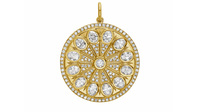
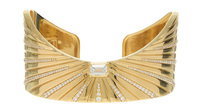




In this installment of Rocks On, National Jeweler takes a look at the state of the alexandrite market and features seven pieces of jewelry made using this chameleon-like stone.

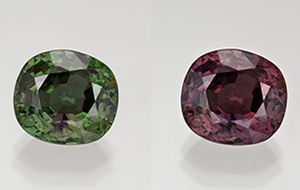
Alexandrite is a very rare mineral from the chrysoberyl family. Due to the complex way the stone absorbs light, it changes color depending on what kind of light it’s exposed to--it can be bluish-green in daylight or fluorescent light, and changes to purplish-red in incandescent light.
The stone was discovered in the Ural Mountains in Russia in the 1830s, and those initial stones displayed a high quality and immense color change. The gemstone caught the attention of the country’s leaders, and it was named for Alexander II.
This royal history gives the gemstone a certain cache, according to GIA Senior Industry Analyst Russell Shor.
Some of the original alexandrite stones from the Ural Mountains still can be found in vintage and estate jewelry, while a great number of the stones being mined these days are now coming from Sri Lanka, Brazil, and parts of Southeast Asia and east Africa.
High-quality alexandrite now is extremely rare and difficult to find. According to the International Colored Gemstone Association’s website, if is undisputable that a piece of alexandrite originated in Russia, the stone possesses a “rarity of enormous value.”
Thus, finely faceted alexandrites bigger than 1 carat are among the most expensive gemstones in the world, rarer even than fine ruby, sapphire or emerald, according to the ICA.
Made for the experts
Because of its color-changing properties and low supply, alexandrite is sought after more by the gemstone lover or connoisseur than the average consumer, and that isn’t likely to change any time soon.
“They appeal to a client who is knowledgeable or wants to increase their education in gemstones,” says Tom Heyman, a third-generation family member at Oscar Heyman.
Shor concurs, saying that because it’s so hard to find, very few consumers have actually seen a high-quality piece of alexandrite. The general market doesn’t quite understand the perceived value of alexandrite, and while some might have heard of it before, most don’t understand its proposition value, he says.
“It’s really hard

The key to this, for retailers and consumers alike, is learning about the stone, especially through exposure.
“Education is the key to understanding, and seeing stones is how you gain an understanding of them. Alexandrites are particularly difficult to photograph. They of course look different as the light source changes. It is best to learn by looking at the stones,” Heyman says.
Soaring prices
Given the current state of the market for this stone, and the fact that there’s nothing to suggest that it will change, alexandrite, which has never been plentiful, likely only will get harder to find.
And the stone’s price has been on the rise. According to Shor, over the past few years the price of alexandrite has risen “thousands per carat.”
Mois Medine, owner of the Mark Henry alexandrite jewelry brand, reiterated what Shor has been seeing, noting that he has been on a number of trips over the past few years to source the company’s alexandrite and has seen the price increasing consistently every time. He tells National Jeweler that he’s seen the price rising between 5 and 15 percent every year for the past few years.
Medine, who sells both retail and wholesale, also says the average retail price point for his jewelry is now right around $4,800 for a piece, and that is exactly what his customers are spending. But, really, what a customer will pay for a piece of jewelry depends on their personal preference and factors such as desired stone quality and size.
Medine says while he does have certain markets and clients who regularly buy alexandrite from Mark Henry, he also has seen a greater demand coming from mass-market jewelers, but noted that he has no interest in entering that arena since a consistent quality can be extremely difficult to maintain in the quantity larger jewelers demand.
The stone also is competing with other colored gemstones in this market, Medine adds, noting that its relative anonymity among consumers can make it a difficult sell.
Heyman says when he’s selling alexandrite, it’s all about putting the stone in perspective, and looking at the quality and size rather than just price alone. “A large alexandrite with little or no color change can be harder to sell than a smaller stone with an excellent color change even though the smaller stone is more valuable,” he says.
Keeping it simple
Medine notes that the design aspect is important to give the piece some sort of meaning and value to the client, and that one of the challenges in designing in alexandrite is offering something to their liking for an agreeable price.
Alexandrite jewelry generally speaks to either the gem collectors who are comfortable dealing with those price points because of their understanding of the stone, or customers who are excited to see something unique.
Many of the designs for alexandrite jewelry involve simple, clean-cut pieces, created in a way that will best show off the beauty of the stone and the uniqueness of its color change.
“We like the alexandrite to be the main attraction and keep our designs simple, to support the alexandrite without distracting from the phenomenon,” Heyman says.
Since it’s unusual for most retailers to carry more than a few pieces at a time, consumers always are excited to get to see the gemstones in person, which can be exciting for the store as well.
“When an alexandrite is in a store, the salespeople should take advantage of the opportunity to excite their clients and show it off.”

The guard opened fire on a man who was smashing a jewelry display case at La Gran Plaza in Fort Worth last week, police said.
The Texas jeweler added 2,000 square feet to its reimagined showroom, complete with a new design studio and an event space.

Jacob & Co.'s diamond masterpiece is the most expensive Fantasy Bra ever worn on the Victoria’s Secret Fashion Show runway.

Built on Relationships. Refined by Craft.


The “Atelier” collection was inspired by the tools, rituals, and objects in an artist’s studio as a quiet rebuttal to an automated world.

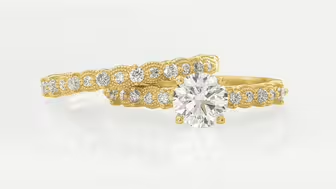
The pending acquisition is an “exciting opportunity” for wedding vendors to grow their business, said The Knot Worldwide’s CEO.

"The Secret Gems" features eight Thai jewelry brands paired with a team of young craftspeople who create jewelry together to win challenges.

Experience gemstones with greater precision and comfort than ever before.


The brand’s “Modern Talisman” capsule collection introduces pendants inspired by the mythology, natural world, and spiritual ethos of Bali.

Independent jewelers from New Mexico to New Jersey answer the question: What has kept your store in business for 100 years?

The NRF is expecting holiday sales to increase this year, but consumers and retailers alike are facing Grinch-like headwinds.
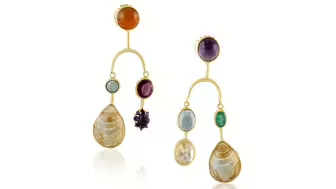
Our Piece of the Week gathers the planets, represented by a variety of colored gemstones, in a pair of 14-karat yellow gold earrings.
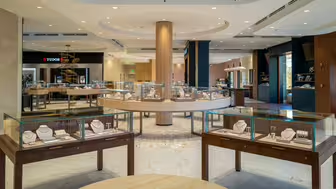
The New York-based jeweler is moving its Amherst flagship store to a larger location in nearby Snyder.

Chen, who worked at Cartier and Tiffany & Co., will lead retail sales and operations for the luxury jeweler’s 11 U.S. stores.

For 40 years, sisters Amy and Elise Greenberg have helmed their 126-year-old family business, leading with appreciation and integrity.

It’s a term Smith coined and felt compelled to share following a bad experience with an aborted flight and an unfeeling flight attendant.
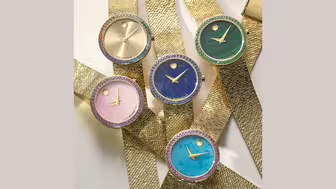
Movado teamed up with the New York-based fine jewelry designer on a new collection of Movado Museum Velura watches.
The two companies are reportedly in talks to join the Global Diamond Consortium, led by former De Beers CEO Gareth Penny, as per Bloomberg.
The “Some of the Things” box follows the two larger “Everything” box designs with the look and function of antique sewing and toolboxes.

Fourth-generation jewelers Coleman and Mitchell Clark exemplify the best qualities of their predecessors: humility, modesty, and confidence.

The gem hunter, whose 70-year career was defined by adventure and exploration, is remembered for his steadfast faith and sense of wonder.

Tiffany & Co. continued its full-scale store renovation project while Bulgari’s high jewelry collection generated “record-breaking revenue.”

This year’s sessions feature leading voices from human rights, legal, and conservation organizations.

The high-end jewelry retailer was sold to private investment firm Middle West Partners and a group of longtime clients.

The jewelry designer has partnered with Sofer Jewelry to distribute her 85-piece lab-grown diamond collection.

Dunn, this year’s Single-Store Independent inductee, is passionate about innovation and telling the story of natural diamonds.

The 24-carat fancy intense pink diamond ring could fetch up to $18 million at the November sale.



This site uses cookies to give you the best online experience. By continuing to use & browse this site, we assume you agree to our Privacy Policy