


CollectionsSep 03, 2026
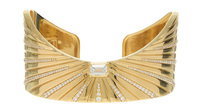
Sydney Evan Celebrates 25 Years With 4 New CollectionsThe “Confetti Disco,” “Champagne Cheers,” “Tuxedo,” and “Classic Punk” jewelry collections each capture a distinct spirit of celebration.





It’s central to growing your business, and it’s not just about material provenance.

There are a handful of topics right now in the jewelry industry that come up again and again—sustainability, social media and omnichannel retail, to name a few—and rightly so, because they signal monumental changes in the way all sectors of the industry do business.
Transparency is one of these hot topics that I hear a great deal about, but I was surprised to get a totally different take on the issue at a recent educational panel at JCK Las Vegas.
Moderated by Ben Smithee of The Smithee Group, the panelists of “JCK Next Generation” illuminated how empowering transparency can be for a company when approached in a multi-faceted way.
“Some of us think if we don’t know provenance for every single element that we can’t participate in being transparent with our customers—that’s not at all true.”— Michelle Adorjan Chila, Tacori
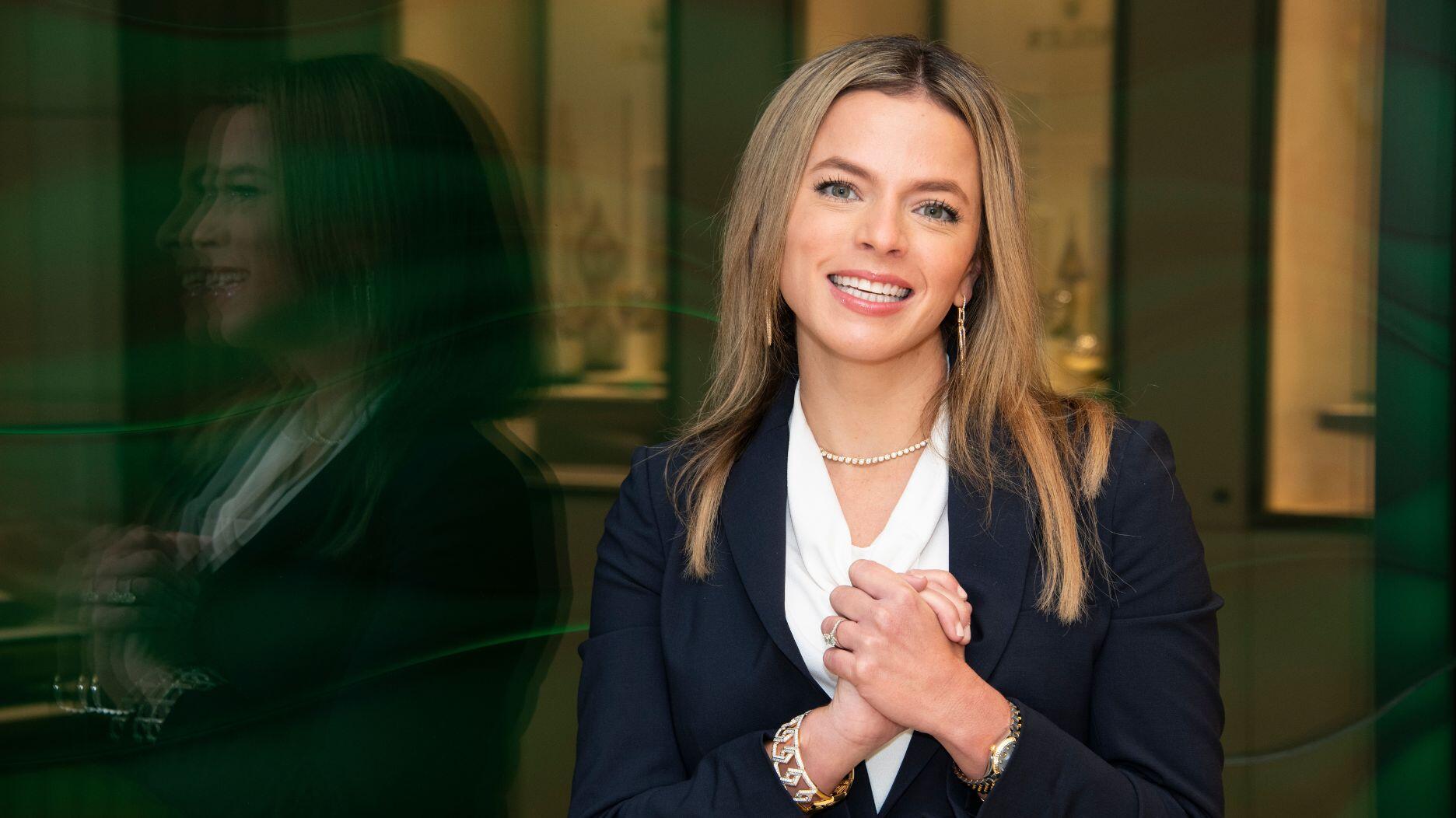
“Don’t be intimidated by it,” said Michelle Adorjan Chila, senior vice president of marketing and public relations at Tacori.
“Some of us think if we don’t know provenance for every single element that we can’t participate in being transparent with our customers—that’s not at all true.”
For Tacori, Chila explained, which is handmade in California, the brand’s current mission is to illuminate what it already offers—“bespoke, made-to-measure jewelry”—to consumers.
“What we’re working toward is creating that artisanal transparency, so [customers] know which artisans worked on their pieces,” she said.
“In bridal, every customer feels like they got their own ring, though [in the industry] we know it’s a variation of a color, a finger size, a diamond shape or size, but it has to feel really personal. And that journey that it takes to get to you is personal. Each ring has its own unique path.”
Transparency can also be a valuable tool, she said, in communicating a brand’s story through social media.
“We’ve been doing Instagram Stories where we meet our designers and they talk about their favorite pieces and why. Doing that for your sales team is also really functional, where they get to share their favorite pieces and why, or give visibility into the before and after of a custom piece.
“Any [time] you give people insight into the magic adds value, and whether that’s provenance-related or materials-related or designer-related, that’s a really important story that we need more of.”
Chila’s point, that transparency into the inner workings of a business can pique
View this post on InstagramA post shared by WWAKE (@wwake) on Jun 15, 2019 at 12:30pm PDT
Brooklyn, New York-based Wwake, headed by designer Wing Yau, is a perfect example of the strategy Chila talks about.
A recent Instagram story I viewed took me behind-the-scenes of the Wwake workshop in Brooklyn’s Greenpoint neighborhood, where I watched a female bench jeweler set a ring with diamonds and gemstones. What many in the industry may take for granted as being the mundane, daily workings of their company can be fascinating to the average layperson, even to a seasoned jewelry lover like me.
I’m not the only one interested in the unique, esoteric craft of jewelry-making.
Instagram itself went on to visit the Wwake workshop as well, capturing a tour of the facility in its Instagram Stories (yes, Instagram’s Instagram Stories; I can only imagine how many consumers were introduced to Wwake in the process.)
Even if product isn’t fully made on-site or in the country, brands can still provide insight into their world.
Dana Rebecca Designs, based out of Chicago, does an excellent job of this.
A recent Instagram story showed the designer in her workshop in India, demonstrating the steps of the manufacturing process, while a typical story will show employees of the Chicago store showing off the jewelry they’re wearing that day, oftentimes touting a sale to go with it for certain pieces, and even tagging the clothing brands they’re wearing.
The social interaction feels personal and authentic, which is the key to transparency, said another “JCK Next Generation” panelist, Jackie Brooks, owner of Bottom Line Marketing.
“Be transparent with your employees. Are you up? Are you down?”— Jackie Brooks, Bottom Line Marketing
“You can’t cut corners anymore, it needs to be real,” she said of addressing consumers on social media.
But authenticity doesn’t stop there. Brooks stressed that transparency is important in all aspects of a company, not just on the consumer-facing front.
“Be transparent with your employees,” she said. “Are you up? Are you down? Are you meeting your sales goals? Why are there secrets in that world? Let employees take ownership.”
And how can retailers address transparency, particularly when it comes to the provenance of all the materials from all the brands they carry or the loose diamonds they sell, including older product made or mined before there was all this emphasis on transparency and traceability?
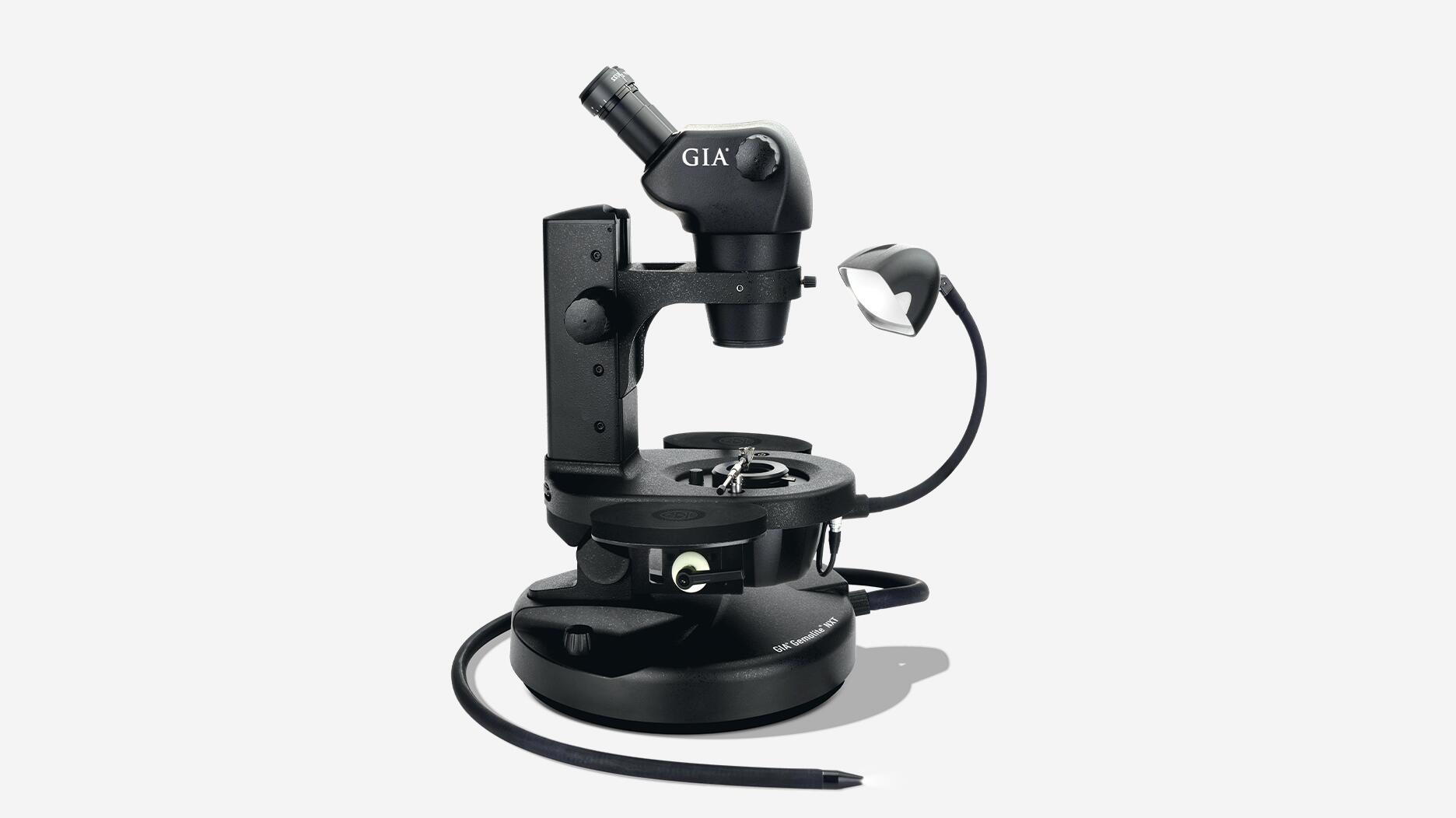
GIA Global Director of Business Development (and former National Jeweler publisher) Matthew Tratner said that as he’s traveled the country talking about GIA’s new diamond origin reports, that’s the No. 1 question he’s asked, and his advice is to just be honest.
“Unfortunately, the answer is really that the technology just didn’t exist to be able to match that rough to the polished diamond. It doesn’t mean [a diamond was] unethically sourced.
“As technology evolves and blockchain gets better and other [new] data systems come to the forefront, there’s always going to be that question.”
Tratner said to tell consumers: “There’s the technology to identify these diamonds now; when these other diamonds were obtained, the technology didn’t exist.”

The “Confetti Disco,” “Champagne Cheers,” “Tuxedo,” and “Classic Punk” jewelry collections each capture a distinct spirit of celebration.

Nelson Holdo of Newport Beach pleaded guilty to multiple counts of felony grand theft and writing bad checks and was sentenced Monday.

Cat ladies of the jewelry world, unite. Sandy Lerner’s “significant” collection of cat jewelry and other objects is going up for auction.
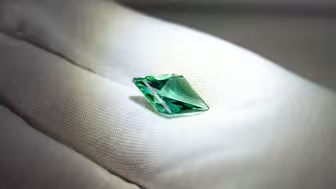
Submit your pieces for a chance to win in this year's competition.


Arnaud Michon, the former Omega USA President, will now lead Messika’s Americas region during its international development.


The branding references the back-to-back jewelry shows that new parent company Forge will host in Miami's Coconut Grove this November.
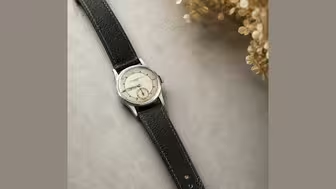
The stainless steel Patek Philippe “Calatrava” watch from the 1930s sold for nearly $80,000 at a recent Hansons Cornwall auction.

Retailers are seeking new ways to attract customers, increase traffic, and create revenue – Estate buying events are a popular solution.


Engagement rings are important but don’t ignore the customers who are buying jewelry “just because,” Emmanuel Raheb writes.

Former Pomellato CEO Sabina Belli has been named president of Kering Italia amid a shakeup of Kering's new Jewelry division.

The veteran luxury packaging executive was appointed to help the company grow its North American business.

Once the property of an Egyptian queen, the necklace was part of a larger exhibition of VCA jewelry at the Museum of Applied Arts (MAK).
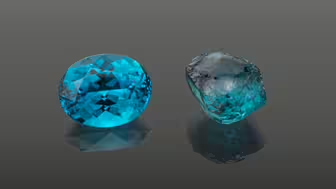
The labs’ separate investigations each determined that the East African country is producing copper-bearing tourmaline.
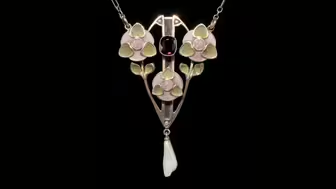
“Chicago Collects: Jewelry in Perspective” at the Oshkosh Public Museum will feature works by Fabergé, Lalique, and Louis Comfort Tiffany.
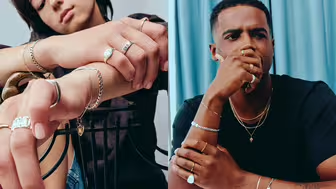
The “Worn Well” collection is Catbird's take on classic men's jewelry.
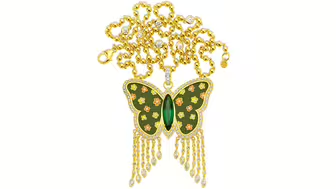
This Buddha Mama butterfly is our Piece of the Week honoring the legend, who embraced the beautiful insect as her symbol.

The former De Beers CEO, and perhaps its next owner, will be a featured speaker at the event, slated for Sept. 4-7 in Italy.
The employee-owned jeweler was named a “Best Place to Work” in Maine, New Hampshire, and for women.
The second iteration of the jewelry collection was inspired by the zodiac and the four elements: earth, water, air and fire.
General License 104B supersedes General License 104A, which was set to expire on Sept. 1.
The package, intercepted in Indianapolis, contained fake Cartier, Tiffany & Co., and Van Cleef and Arpels jewelry.

The new location in Costa Mesa, California, marks the brand’s second store in the United States and fourth standalone location worldwide.
The fashion watch category was once threatened by the Apple Watch, but consumers are now opting for new wearables, said Movado’s CEO.
The report delves into trending styles, the most popular jewelry brands by city, and why Belle Époque jewelry could be the next big thing.
The association added the requirement to its revised "Code of Ethics" and released the 17th edition of its “Gemstone Information Manual.”

Respondents were concerned about the future of the labor market and their income as well as the rising prices of gas and groceries.

The campaign highlights the asymmetrical high jewelry necklace style that the jeweler first created in 1879.



This site uses cookies to give you the best online experience. By continuing to use & browse this site, we assume you agree to our Privacy Policy