




The chocolatier is bringing back its chocolate-inspired locket, offering sets of two to celebrate “perfect pairs.”
The History Behind … Cameos
Jewelers’ love affair with cameos has been recurrent since the Roman era, and a handful of contemporary designers continue to innovate the iconic jewelry style.

New York--Iconic jewelry trends have a way of resurfacing through the centuries, and the cameo is a perfect example.
Experts say that the jewelry style enjoyed the greatest popularity during the Roman era, the Renaissance and the 19th century.
“The cameo, perhaps more than any other form of jewel, has been appreciated as a work of art and an object of virtue since ancient times through to the Renaissance era and the Neo-classical period,” said Michele Rowan, owner of antique store Rowan & Rowan and author of “Nineteenth Century Cameos.”
Today, a handful of designers make the classic style their own, whether as the signature of their brand, like Amedeo Scognamiglio, or as one element of their oeuvre, like Jacquie Aiche, Wilfredo Rosado, Lydia Courteille and Laura Lee.
National Jeweler spoke with Scognamiglio, Rowan, and Emily Stoehrer, the Rita J. Kaplan and Susan B. Kaplan Curator of Jewelry at the Museum of Fine Arts, Boston, on the cameo’s continued reemergence through the ages.
When did cameos first appear in history?
“You really see them in the Roman period,” said Stoehrer. “Then there’s a revival of them in the Renaissance period when there’s this renewed interest in classical art and then you see them go in and out of fashion in the 19th and 20th century.”
According to Stoehrer, cameos passed down through generations were sometimes repurposed, leaving the cameo itself intact but updating the setting for modernity.
This practice is still employed by designers like Aiche, who uses either vintage cameos or carved versions of her own creations, as well as Courteille.
What were they made of?
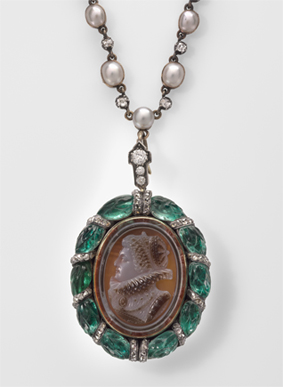
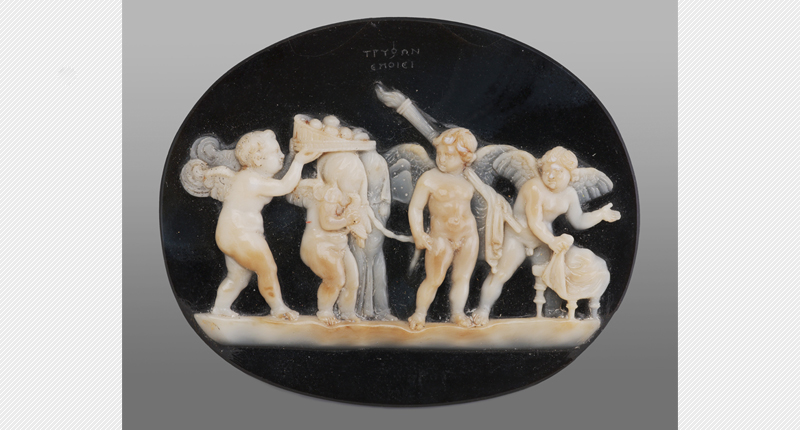
“Cameos are relief carvings, in effect miniature sculptures,” Rowan explained. “The mediums they were carved from were mainly agate or various types of shell. Gem engravers carved each stone or shell by hand to create figures or scenes, which stood proud from their background.”
“The carver exploits the different variations of color that are in the layers of shell or stone and with that they’re able to carve different motifs in low relief,” said Stoehrer.
What subjects do cameos portray?
No matter the period a cameo was created, the subject matter
“The subject matter rarely varied, most cameos--whether ancient or 17th, 18th or 19th century-- tended to depict scenes or personalities from Greek mythology. The universal appeal of tales of love, loss, deception and magic endured,” said Rowan.
“You’ll typically see allegorical themes, portraits or mythic figures like Medusa for example,” said Stoehrer.
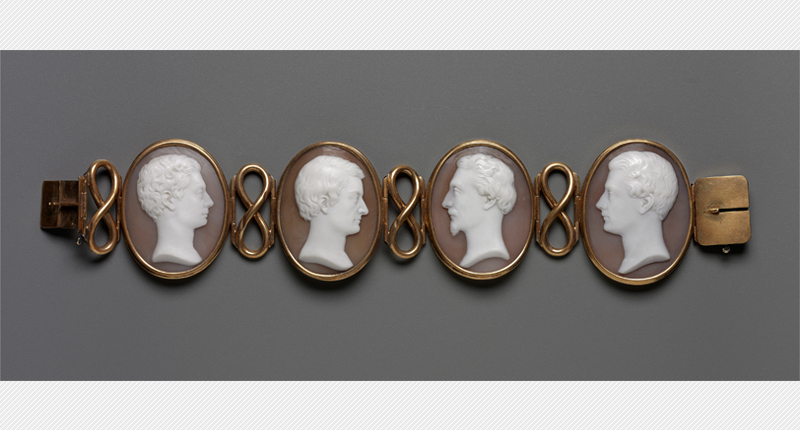
Stoehrer noted that while mythology has been the predominant theme of cameos, some were commissioned to depict real people, a particularly good example of which can be found in bracelet-form in the Museum of Fine Arts, Boston’s permanent collection.
“The bracelet has four cameos representing the Hunt brothers,” she said. “Each one is in the likeness of one of the four brothers and it was donated to the Museum of Fine Arts by their sister.”
Who would typically buy or commission a cameo?
The MFA’s cameo collection features pieces that originated in the collections of the wealthy and influential elite, Stoehrer explained, such as one that belonged to Flemish Baroque artist Peter Paul Rubens.
Rowan explained that, later on, the owning of cameos became more democratic.
“During the 19th century, the cameo moved from the realm of the wealthy cabinet collector to a wider audience,” she said. “Increased wealth among the European middle class and increased travel meant a demand for souvenirs, especially from trips to Italy. The shell cameo industry in Italy increased in size to meet demand.”
What about the cameo’s decline after Victorian times?
In the earliest part of the 20th century, the cameo peaked.
At the time, the image of a woman wearing a choker was an extremely popular figure portrayed in cameos, so popular, said Stoehrer, that it saturated the market and fell out of favor.
As chokers became mass-produced, the quality also suffered.
“The advent of the machine-carved cameo led to a serious decline in quality,” said Rowan.
The Cameo Now
Scognamiglio’s pioneering of the ancient trend has created the cameo’s biggest contemporary success story.
Rare for a modern artist, the Italian-born designer learned to carve cameos in the ancient technique.
“My family has been making cameos since 1857, basically all branches of my paternal family have been either master carvers or cameo manufacturers, throughout two centuries,” said Scognamiglio, who nevertheless, is a self-taught carver, as his family expected his interest in cameos to be a passing fancy.
Scognamiglio started with classic themes found in Greek and Roman mythology, and mastered these before deciding to put his own stamp on the art form.
He created works depicting monkeys, skulls, elephants and crowns, combining ancient craft with rock ‘n’ roll modernity.
He explained, “I made them cool again, contemporary again. And only someone with my long heritage and family tradition, only someone from the bench like me could have done so. I decided I would revolutionize the idea of cameos.”
Scognamiglio opened a boutique in New York City in 2006, eventually expanding to also sell at other retailers. Ten years later, his business is still booming, and he’s known as “the king of cameos.”
“I thought that there was not much interest in cameos now,” said Stoehrer. “I’ve heard from different dealers that they collect dust in their show room, but I had a group in at the MFA who completely disagreed and thought that cameos were really gaining popularity right now. Maybe this is their moment.”
Scognamiglio’s works are particularly popular for their tongue-in-cheek motifs, but the designer couldn’t have created them without studying what came before.
“Evolution comes from a long way,” he said, “from research, study and classical practice.”
The Latest

The top lot of the year was a 1930s Cartier tiara owned by Nancy, Viscountess Astor, which sold for $1.2 million in London last summer.

Any gemstones on Stuller.com that were sourced by an AGTA vendor member will now bear the association’s logo.

Launched in 2023, the program will help the passing of knowledge between generations and alleviate the shortage of bench jewelers.

The Swiss watchmaker has brought its latest immersive boutique to Atlanta, a city it described as “an epicenter of music and storytelling.”


The new addition will feature finished jewelry created using “consciously sourced” gemstones.

In his new column, Smith advises playing to your successor's strengths and resisting the urge to become a backseat driver.

Criminals are using cell jammers to disable alarms, but new technology like JamAlert™ can stop them.

The index fell to its lowest level since May 2014 amid concerns about the present and the future.

The new store in Aspen, Colorado, takes inspiration from a stately library for its intimate yet elevated interior design.

The brands’ high jewelry collections performed especially well last year despite a challenging environment.

The collection marks the first time GemFair’s artisanal diamonds will be brought directly to consumers.

The initial charts are for blue, teal, and green material, each grouped into three charts categorized as good, fine, and extra fine.

The new tool can assign the appropriate associate based on the client or appointment type and automate personalized text message follow-ups.

Buyers are expected to gravitate toward gemstones that have a little something special, just like last year.

Endiama and Sodiam will contribute money to the marketing of natural diamonds as new members of the Natural Diamond Council.

The retailer operates more than 450 boutiques across 45 states, according to its website.

The new members’ skills span communications, business development, advocacy, and industry leadership.

The jeweler’s 2026 Valentine’s Day campaign, “Celebrating Love Stories Since 1837,” includes a short firm starring actress Adria Arjona.

The new features include interactive flashcards and scenario-based roleplay with AI tools.

Family-owned jewelry and watch retailer Deutsch & Deutsch has stores in El Paso, Laredo, McAllen, and Victoria.

The Italian luxury company purchased the nearly 200-year-old Swiss watch brand from Richemont.

Ella Blum was appointed to the newly created role.

Sponsored by RapNet

Investment firm Enhanced Retail Funding, a division of Gordon Brothers, was the successful bidder.

It explores the history of the iconic tagline and the company’s strategy to redefine the role of diamonds in society.

Retail veteran Sindhu Culas has stepped into the role.