







MajorsNov 23, 2026
Bulgari Chairman Paolo Bulgari Dies at 89Paolo Bulgari, grandson of brand founder Sotirio Bulgari and chairman of Bulgari Group, is remembered as a “true creative soul.”






Some justices say the current structure for collecting sales tax for items bought online needs to be updated while others argue it’s an issue for the legislative branch.


Washington--The U.S. Supreme Court heard arguments Tuesday morning in the case that could, or could not, change Quill, the decades-old decision governing collection of sales tax online.
The case, South Dakota vs. Wayfair Inc. et al, pits proponents of online sales tax collection, including states and retail organizations like Jewelers of America and the National Retail Federation, against online sellers like Jewelry Television, Etsy and eBay.
At issue is Quill vs. North Dakota, the 1992 Supreme Court ruling that prevents states from collecting sales tax from sellers with no physical presence, meaning a store, a warehouse, etc., in the state.
Heading into oral arguments, two justices who often find themselves on opposite sides of an issue—Justices Anthony Kennedy and Neil Gorsuch—had publicly expressed support for overturning Quill, a decision that Gorsuch described Tuesday as “antiquated.”
Justice Ruth Bader Ginsburg indicated during oral arguments that she agreed with Kennedy and Gorsuch, stating that those opposed to overturning Quill make the case that asking an out-of-state seller to collect tax on goods shipped in-state discriminates against interstate commerce.
“But as I see it,” she said, “why isn’t it, far from discriminating, equalizing sellers; that is, anyone who wants to sell in-state, whether an in-state shop, an out-of-state shop, everybody is treated to the same tax collection obligation. All who exploit an in-state market are subject to the in-state tax. Why isn’t that equalizing rather than discriminating?”
However, Justices Sonya Sotomayor, Samuel Alito and Elena Kagan seemed to agree that while Quill is outdated, the issues of governing sales tax collection is best left to Congress due to the complexities involved.
“From this court’s perspective, the choice is just binary. It’s you either have the Quill rule or you don’t,” Kagan said. “But Congress is capable of crafting compromises and trying to figure out how to balance the wide range of interests involved here.
“Now, the general (South Dakota Attorney General Marty Jackley, who spoke on behalf of the state in front of the court) said Congress hasn’t done that, but … Congress can decide when it wants to craft a compromise and when it doesn’t want to craft a compromise. And then Congress, if it decides it wants to craft a compromise, can craft a compromise in ways that we cannot.”
Justice Stephen Breyer mentioned that placing the administrative burdens of having to collect sales tax in every state could hinder smaller online sellers from entering the

Paolo Bulgari, grandson of brand founder Sotirio Bulgari and chairman of Bulgari Group, is remembered as a “true creative soul.”

Peek inside the new Little Rock, Arkansas, showroom, the jeweler’s largest store to date.

The company has increased the number of CVD reactors to 10,000, allowing its monthly production to reach 750,000 polished carats.

These twelve tips can help retailers improve margins, convert shoppers, and make every dollar work harder.


Stephen F. Kahler was appointed to chair of the board while Robert Andrew Johnson is GIA’s new vice chair.


Dubai-based AV Group has acquired Lucapa Diamond Company, which holds a stake in Angola’s Lulo mine and has a diamond project in Australia.

Actress Mckenna Grace wore our Piece of the Week to the London premiere of “The Hunger Games: Sunrise on the Reaping.”

The GIA Jewelry Report helps retailers answer customer questions with independent, science-based information from GIA—all in one report.


Registration for the trade show, taking place March 7-9, is now open.


Sponsored by American Gem Trade Association (AGTA)

The “Owishi” made its U.S. debut in Washington, D.C. on Monday and now will return to Namibia for planning, cutting, and polishing.

CBP agents in Houston have seen “significant seizures” of counterfeit watches, baby toys, and FIFA World Cup merchandise, the agency said.

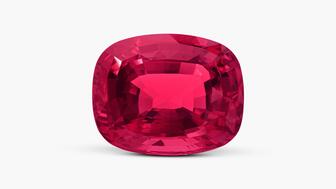
The London high jewelry house, which bought the gemstone at Sotheby’s Geneva jewelry auction, has renamed it the “Moussaieff Spinel.”

The Here We Are High School award will gift a Future Jewelers Academy student with $750 and a Rio Grande tool kit with bench essentials.


Peter Smith and R.J. Hottovy of Placer.ai guest on this special pre-holiday episode of the podcast to discuss the status of shopping malls.


The jeweler is closing its store in the Trumbull Mall in Connecticut, citing a decline in foot traffic.

In “Not For Sale,” the CEO and founder of Bob’s Watches showcases his collection of 134 rare vintage Rolexes and the stories behind them.

The "Shaken & Stirred" clasp is one of seven designs in a new collection celebrating notorious male figures from the 20th century.

Winnie Park was also previously the CEO of Forever 21 and Paper Source.

The collaborative collection features rivière necklaces, layered bracelets, drop earrings, and stackable rings in four vivid colors.

Tara Sinchuri was shot to death inside his store, Everest Jewels in Fairfield, Ohio, during a robbery last month.

The Chicago jeweler celebrated its ruby anniversary in style.

Smith recounts notable interactions from his three-day shopping mission to recruit salespeople for a client.

The five pieces on offer at Bonhams, together estimated to fetch $300,000, were made as gifts for the artist’s mother, sister, and niece.

Located on the main street in Greenwich, the renovation marks Watches of Switzerland’s most significant U.S. retail investment to date.

Her eclectic collection, with jewels spanning several periods of the 20th century, could fetch up to $10 million at Sotheby's next month.

Jewelry industry executive Kerry Feldmann has taken on the role.


This site uses cookies to give you the best online experience. By continuing to use & browse this site, we assume you agree to our Privacy Policy


