





SourcingApr 21, 2021
Why Inclusivity Is Important in Diamond Traceability SourcingAug 26, 2021
De Beers Is Bringing Back Its ‘A Diamond Is Forever’ Ads
It also has a new sourcing program called Code of Origin and a partnership with National Geographic to help protect the Okavango Delta.


De Beers Group made a number of announcements at its annual breakfast event in Las Vegas, including a new partnership with National Geographic that aims to protect the animals and people who depend on the Okavango Delta in northern Botswana. (Photo credit: C. Boyes/National Geographic)
Las Vegas—“A Diamond Is Forever” is getting a revival this fall.
In Las Vegas, De Beers Group announced plans for a new marketing campaign built around the iconic tag line but updated for a new generation, said Chief Brand Officer David Prager.
The campaign, which is expected to launch in late October, is the company’s first campaign branded as “De Beers” but not focused on De Beers Jewellers since the late 1990s.
De Beers is releasing limited details about the campaign right now, but a couple things are clear.
It will promote the natural diamonds De Beers Group sells across its properties—at De Beers Jewellers stores, via Forevermark and, eventually, through the new Code of Origin sourcing program. (Lightbox, the company’s lab-grown diamond line, is not branded as De Beers and will not be part of this campaign.)
And De Beers said the campaign will be inclusive, in terms of the people represented, the moments celebrated and the jewelry worn, featuring designs sold at De Beers Jewellers stores and by Forevermark.
In addition to its new campaign, De Beers will also invest in communicating about its environmental and social programs, something the company sees as key in speaking to younger consumers today, millennials and—to an even greater extent—Gen Z, the diverse generation that follows.
In an interview with National Jeweler Wednesday, De Beers Executive Vice President Stephen Lussier said Gen Zers are even more socially aware than their older millennial peers and “very brand-oriented” in the luxury space.
They want to be part of the brands they follow and invest in, and they want those brands to not just “do no harm” but to actively be making positive change in the world.
De Beers does a lot of good in the communities where it mines, Prager said in the same interview, but consumers haven’t necessarily been getting the message.
“No matter how good our story has been, it’s been very difficult to connect a consumer to it.”
Related stories will be right here …
In Las Vegas, De Beers Group announced plans for a new marketing campaign built around the iconic tag line but updated for a new generation, said Chief Brand Officer David Prager.
The campaign, which is expected to launch in late October, is the company’s first campaign branded as “De Beers” but not focused on De Beers Jewellers since the late 1990s.
De Beers is releasing limited details about the campaign right now, but a couple things are clear.
It will promote the natural diamonds De Beers Group sells across its properties—at De Beers Jewellers stores, via Forevermark and, eventually, through the new Code of Origin sourcing program. (Lightbox, the company’s lab-grown diamond line, is not branded as De Beers and will not be part of this campaign.)
And De Beers said the campaign will be inclusive, in terms of the people represented, the moments celebrated and the jewelry worn, featuring designs sold at De Beers Jewellers stores and by Forevermark.
In addition to its new campaign, De Beers will also invest in communicating about its environmental and social programs, something the company sees as key in speaking to younger consumers today, millennials and—to an even greater extent—Gen Z, the diverse generation that follows.
In an interview with National Jeweler Wednesday, De Beers Executive Vice President Stephen Lussier said Gen Zers are even more socially aware than their older millennial peers and “very brand-oriented” in the luxury space.
They want to be part of the brands they follow and invest in, and they want those brands to not just “do no harm” but to actively be making positive change in the world.
De Beers does a lot of good in the communities where it mines, Prager said in the same interview, but consumers haven’t necessarily been getting the message.
“No matter how good our story has been, it’s been very difficult to connect a consumer to it.”
In late 2020, De Beers announced “Building Forever,” a set of goals it hopes to achieve by 2030 that are built around four pillars: protecting the environment, fostering equal opportunity, partnering for thriving communities, and leading ethical practices across the jewelry industry.
On Wednesday, the company announced a new partnership that will aid in its environmental goals.
“Okavango Eternal” is a partnership between De Beers and National Geographic aimed at protecting the source waters of the Okavango Delta and the lives and livelihoods they support.
The Okavango Delta is located in northern Botswana and holds protected status. But the delta originates from the unprotected Okavango Basin, which spans southern Angola, eastern Namibia, and northern Botswana, fed by rain from Angola’s highlands.
National Geographic has been working since 2015 to secure permanent, sustainable protection for the basin through its Wilderness Project.
Now, De Beers joins National Geographic in its mission, making a five-year commitment to provide money and resources to protect endangered species in the area, support conservation resources, ensure water and food security for more than 1 million people, develop livelihood opportunities for 10,000, and raise awareness about the importance of the Okavango Delta.
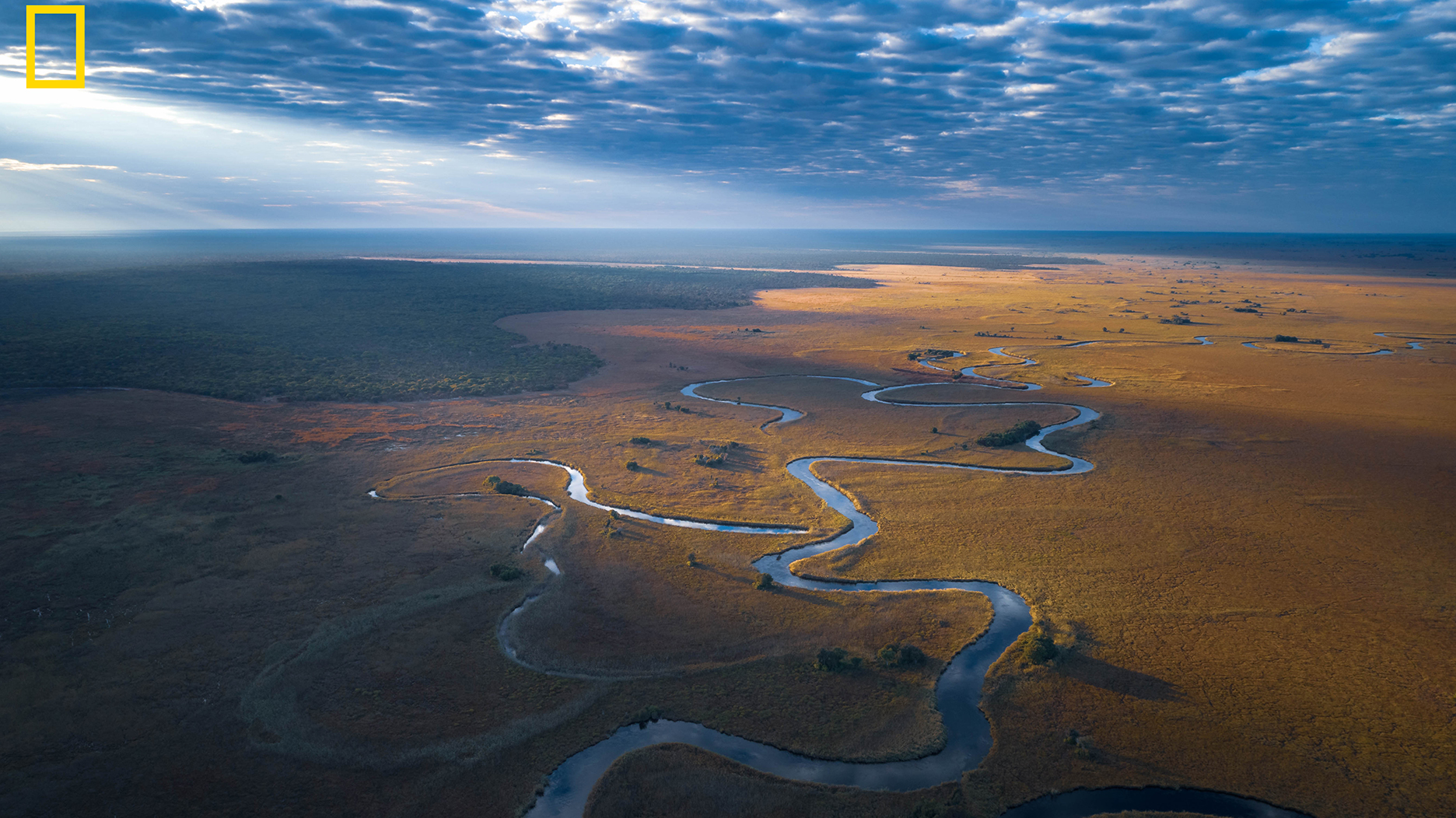
The Okavango Delta in northern Botswana is protected, but it is fed by the unprotected Okavango Basin. National Geographic has been working to change that since 2015. (Photo credit: Kostadin Luchansky/National Geographic)
The return of “A Diamond Is Forever” and the National Geographic partnership were just two of the announcements De Beers made Thursday at its annual breakfast event in Las Vegas.
The diamond miner and marketer also announced a new source program that opens up mine-to-market traceability to a broader swath of the industry, De Beers Code of Origin.
Code of Origin will enable participating retailers to say, “This is a De Beers diamond,” even if it is not Forevermark.
Under the program, a unique code will be inscribed on the table of De Beers diamonds larger than 0.30 carats. It will serve as proof that the diamond is natural and conflict-free, originating from one of De Beers’ mines.
De Beers will not be providing the exact mine of origin with each diamond, Lussier explained in Wednesday’s interview. Jewelers will be able to say the De Beers diamond was mined in either Botswana, Namibia, South Africa, or Canada.
“Knowing [exactly] where a diamond comes from; it’s not that important,” Lussier said. “What I really want to know is, what positive impact does it have where it comes from?”
Code of Origin is still in what De Beers called the “learn to scale” phase, though the goal is that the majority of diamonds De Beers sells into the market will carry this code.
De Beers is looking for more development partners for Code of Origin as it aims to expand the program in 2022.
Editors' Picks
Sponsored by


More on Sourcing


The Latest

SurveysOct 09, 2026
These Will Be the 10 Busiest Days for In-Store Shopping This Holiday SeasonStores should expect to see the most customers on Nov. 27, and Christmas week is expected to be hectic too, as Dec. 25 falls on a Friday.

CollectionsOct 09, 2026
Elisa Solomon Collabs With Serendipity 3 on ‘Frozen Hot Chocolate’ CharmThe charm, our Piece of the Week, features brown diamond frozen hot chocolate topped with white diamond whipped cream and a ruby straw.


AuctionsOct 09, 2026
8-Carat Blue Diamond Goes Unsold at UK Jewelry Auction The top lot of Elmwood’s recent fine jewelry sale in London was a 1.84-carat, D color Tiffany & Co. solitaire diamond ring.


Brought to you by
Meet Gemology’s Next Generation Microscope: GIA® Gemolite® NXT Professional EditionExperience gemstones with greater precision and comfort than ever before.


WatchesOct 09, 2026
Movado to Sell Majority Stake in Ebel for $66.5MThe watch company agreed to sell a 95 percent interest to a group comprised of F.P. Journe, Chanel, and Swiss watch exec Pierre Jacques.

Weekly QuizOct 08, 2026
This Week’s QuizTest your jewelry news knowledge by answering these questions.


Policies & IssuesOct 08, 2026
Third Wave of IEEPA Tariff Refunds Begins This round of tariff refunds is for importers that have sued over IEEPA tariffs in the Court of International Trade and won.

CollectionsOct 08, 2026
Brent Neale’s New Collection Goes ‘Back to Basics’It revisits the brand’s most requested silhouettes, from "Pillow"-set necklaces and bracelets to "Signature"-set rings and earrings.
Brought to you by
Your Piece Could Be the One Editors Talk AboutSubmit your pieces for a chance to win in this year's competition.


Events & AwardsOct 08, 2026
Pattons Fine Jewelry Sweeps Local Design ContestAra Chanakian, a jeweler at Pattons, took home top honors in every category at Jewelers of Louisiana’s annual jewelry design competition.

AuctionsOct 08, 2026
Reba McEntire’s Jewelry, Watches Head to Julien’s AuctionsThe live charity benefit sale in Nashville will also feature gowns, boots, and other memorabilia from the country music legend.


Supplier BulletinOct 08, 2026
Overnight Mountings’ Bridal Builder Helps Jewelers Turn Custom Design into a Hands-On Selling ExperienceSponsored by Overnight Mountings

Policies & IssuesOct 07, 2026
The Plumb Club Amplifies Its Voice as Geopolitical Pressures MountThe supplier organization recently joined JA and JVC to have more input on political issues affecting the jewelry industry.

CollectionsOct 07, 2026
Blue Nile, Royal Asscher Collection Highlights Natural Diamond BeautyBlue Nile, a Signet Jewelers-owned brand, is now Royal Asscher’s exclusive licensed retailer in North America.

CollectionsOct 07, 2026
4 Standout Pieces in Audemars Piguet’s First High Jewelry Collection “Royal Oak” pays homage to the brand’s most popular watch model using 18-karat gold as well as diamonds, emeralds, and sapphires.

MajorsOct 07, 2026
Empire Safe & Vault Promotes Juan Morales to CEOAs part of the transition, Joseph Nicosia has stepped into the role of COO.

CrimeOct 06, 2026
6 Charged in Connection to String of New Jersey Smash-and-GrabsThe alleged thieves used crow bars and sledgehammers to smash into jewelry stores across the state.

ColumnistsOct 06, 2026
Sherry Smith: Is the Consumer Really Trading Up?Ahead of the holidays, Smith urges jewelers to take a hard look at who’s buying jewelry, what they’re purchasing, and who’s stopped buying.


SourcingOct 06, 2026
DDG Taps Influencers for ‘My Diamond Does Good’ CampaignIn the new consumer-facing campaign, four fashion and lifestyle creators share the stories behind their natural diamond pieces.

MajorsOct 06, 2026
Frederick Goldman Names COO, CMOFGI President John Orrico is also leaving the company after more than 13 years.

Events & AwardsOct 06, 2026
JIS Fall Returns to MiamiThe 2026 edition will feature presentations on alternative materials and design trends, as well as pop-up activations on the show floor.

SourcingOct 05, 2026
De Beers to Take Full Ownership of Gahcho KuéIt is the last fully operational diamond mine in Canada following the recent closures of Ekati and Diavik.

AuctionsOct 05, 2026
The Star Cats of the Sandy Lerner AuctionThese jewels stood out at Bonhams’ sale of the cat-loving tech entrepreneur’s collection of objects depicting the feline form.

CollectionsOct 05, 2026
Sorellina Writes Another Love Letter for ‘Postscript’ CollectionThe fine jewelry brand has expanded the collection that debuted at Couture with four new designs based on its most popular styles.

SourcingOct 05, 2026
Bruce Bridges Joins CIBJO BoardThe AGTA president was elected for a two-year term on the board of directors.

SourcingOct 02, 2026
De Beers, National Geographic Society Renew Okavango Eternal Partnership The partnership, a pledge to protect Africa’s Okavango River Basin, has been extended for an additional five years.

MajorsOct 02, 2026
Pandora Opens New $150M Manufacturing Facility in VietnamThe new facility, its first outside of Thailand, will boost its manufacturing capacity by 50 percent.

TrendsOct 02, 2026
Hearts On Fire Celebrates 30th Anniversary With Heart PendantThe special-edition “Dream” pendant, our Piece of the Week, was created to mark Hearts On Fire’s 30-year milestone with 30 diamonds.