





ColumnistsMar 31, 2026
Q1 Clues That Reveal Where Your Jewelry Store’s Sales Are Heading ColumnistsApr 09, 2026
Jewelry Demand Isn’t Stronger, Prices Are Just Higher
Jewelers who misinterpret the state of the jewelry market risk employing the wrong retail strategy, cautions columnist Sherry Smith.


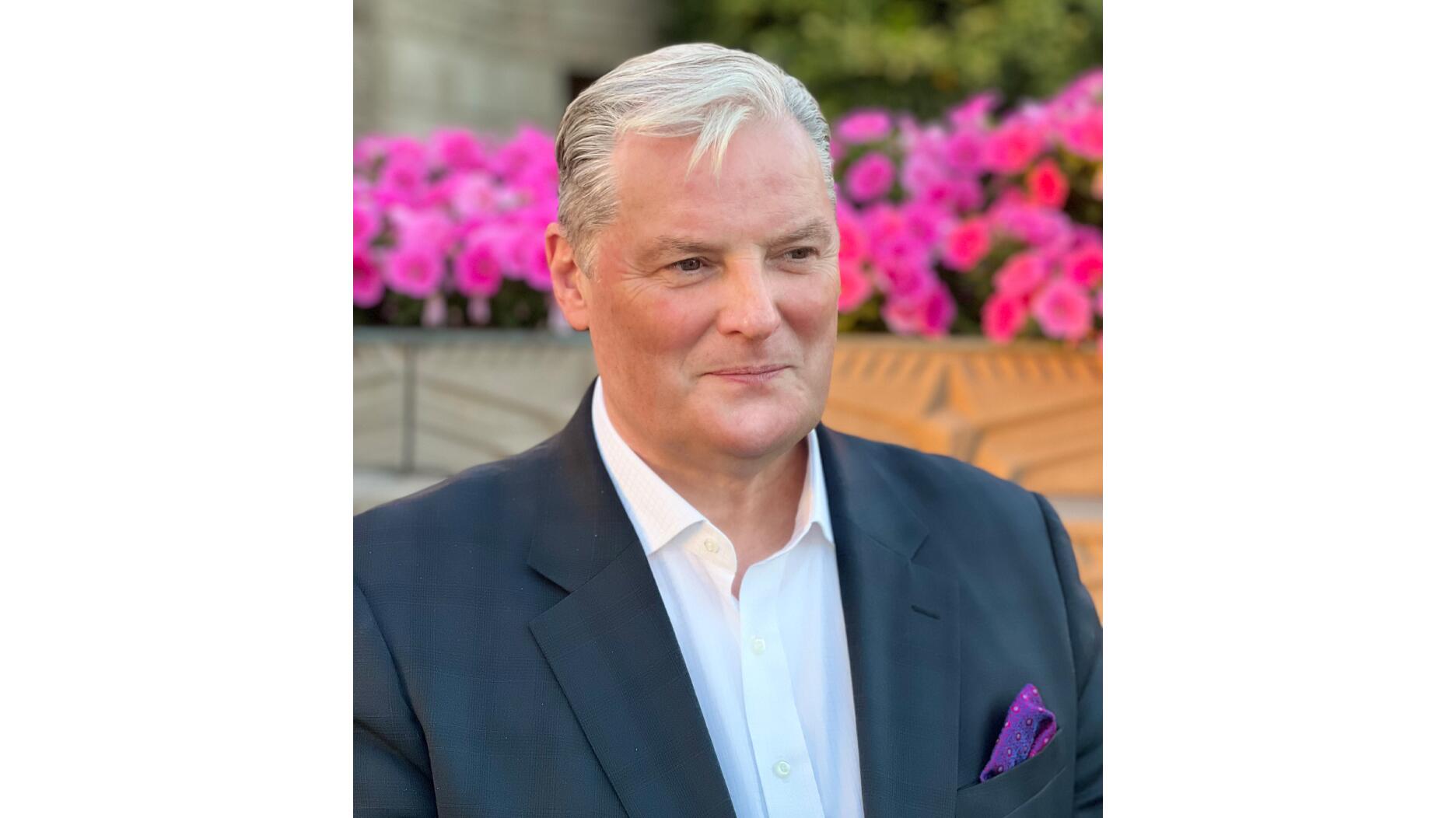
Sherry Smith is a principal partner at The Retail Smiths, a consultancy for retailers and vendors. She can be reached at sherrytrs@gmail.com.
We need to be careful about the story we’re telling ourselves right now.
There’s a growing narrative in the jewelry industry that what we’re seeing is “premiumization,” meaning consumers are buying fewer pieces, but going for higher-priced, higher-value goods.
It’s a compelling idea, but it’s not entirely accurate.
Industry data suggests something more nuanced is happening: unit sales are declining while average retail prices are rising.
On paper, that can look like strength. In reality, it may be masking something very different because higher average tickets don’t always signal stronger demand. Sometimes, they simply reflect a more expensive product.
The Difference Between Premiumization and Price Inflation
True premiumization is driven by the customer. It reflects a deliberate shift toward higher-quality, higher-value, or more meaningful purchases.
It suggests intent. Choice. Movement upmarket.
What we are seeing, in many cases, is something quite different.
Industry data suggests that while average retail prices have increased, unit volumes have declined across multiple categories.
That combination of higher dollars and lower units should immediately prompt a more nuanced question: Is this demand-driven growth, or price-driven preservation?
Those are two very different realities.
The Gold Factor: Value Up, Volume Down
To understand what is happening, we need to look beyond the store and into the macro environment.
Gold pricing alone has fundamentally reshaped the economics of jewelry retail over the past 18
months.
In its Gold Demand Trends report for Q4 and full-year 2025, the World Gold Council (WGC) reported that 2025 saw 53 all-time highs in gold pricing, with the average annual price reaching $3,431 per ounce, a 44 percent year-over-year increase and the highest annual average ever recorded.
At the same time, WGC said global jewelry demand fell to a five-year low, even as the total value of that demand reached a record $172 billion.
That is a critical distinction. Value increased, volume decreased. This is not a sign of stronger consumer demand; it is a reflection of rising input costs.
More recently, Reuters reported that gold prices surged past $5,100 per ounce in January 2026 before falling back to roughly $4,600 by late March, underscoring just how volatile the pricing environment has become.
When your primary raw material behaves like that, it changes everything:
— Retail price points rise
— Replacement costs accelerate
— Inventory risk increases
— Margin discipline becomes more complex
More importantly, average retail sale increases even if consumer demand does not.
There’s a growing narrative in the jewelry industry that what we’re seeing is “premiumization,” meaning consumers are buying fewer pieces, but going for higher-priced, higher-value goods.
It’s a compelling idea, but it’s not entirely accurate.
Industry data suggests something more nuanced is happening: unit sales are declining while average retail prices are rising.
On paper, that can look like strength. In reality, it may be masking something very different because higher average tickets don’t always signal stronger demand. Sometimes, they simply reflect a more expensive product.
The Difference Between Premiumization and Price Inflation
True premiumization is driven by the customer. It reflects a deliberate shift toward higher-quality, higher-value, or more meaningful purchases.
It suggests intent. Choice. Movement upmarket.
What we are seeing, in many cases, is something quite different.
Industry data suggests that while average retail prices have increased, unit volumes have declined across multiple categories.
That combination of higher dollars and lower units should immediately prompt a more nuanced question: Is this demand-driven growth, or price-driven preservation?
Those are two very different realities.
The Gold Factor: Value Up, Volume Down
To understand what is happening, we need to look beyond the store and into the macro environment.
Gold pricing alone has fundamentally reshaped the economics of jewelry retail over the past 18
months.
In its Gold Demand Trends report for Q4 and full-year 2025, the World Gold Council (WGC) reported that 2025 saw 53 all-time highs in gold pricing, with the average annual price reaching $3,431 per ounce, a 44 percent year-over-year increase and the highest annual average ever recorded.
At the same time, WGC said global jewelry demand fell to a five-year low, even as the total value of that demand reached a record $172 billion.
That is a critical distinction. Value increased, volume decreased. This is not a sign of stronger consumer demand; it is a reflection of rising input costs.
More recently, Reuters reported that gold prices surged past $5,100 per ounce in January 2026 before falling back to roughly $4,600 by late March, underscoring just how volatile the pricing environment has become.
When your primary raw material behaves like that, it changes everything:
— Retail price points rise
— Replacement costs accelerate
— Inventory risk increases
— Margin discipline becomes more complex
More importantly, average retail sale increases even if consumer demand does not.
“The customer is not necessarily choosing to spend more. They often have to spend more for the same or a similar product.” —Sherry Smith, The Retail Smiths
Tariffs: The Hidden Multiplier
Gold is only part of the story.
Tariffs are quietly adding another layer of pressure that many retailers are now feeling in real time.
Recent coverage in National Jeweler and JCK has outlined ongoing tariff exposure on jewelry imports, which, after soaring as high as 50 percent (India), stand at 10 percent across the board, as of press time.
These costs do not stay at the supplier level; they move through the supply chain and ultimately show up at retail, which means the customer is not necessarily choosing to spend more. They often have to spend more for the same or a similar product.
That is not premiumization, that is cost pressure working its way through the system.
Why This Distinction Matters
At first glance, rising average tickets can feel like a win.
However, if retailers misinterpret what is driving that increase, the consequences can be significant.
If this is framed as premiumization, a retailer might assume:
— Consumers are trading up
— Demand for higher-end goods is strengthening
— The market can absorb continued price increases
But if this is price-driven growth, the reality is very different:
— Units are declining
— Traffic may be softening
— Conversion pressure is increasing
— The lower and middle segments of the market may be under more strain than it appears
Those are not small differences. They directly impact buying decisions, inventory strategy, pricing discipline, and how aggressively a retailer should pursue growth.
A More Accurate Read of the Market
I believe what many retailers are experiencing is a market in which elevated input costs, driven by gold pricing volatility and tariff pressures, are pushing average retail prices higher while underlying unit demand remains sluggish.
Revenue is being supported by price, not demand. If we misread that, we risk building strategy on the wrong foundation.
What the Best Retailers Are Doing Differently
The strongest operators I work with are not getting distracted by labels.
They are asking better questions, such as:
— What portion of our growth is price versus volume?
— Are we seeing true trade-up behavior, or are customers simply absorbing higher costs?
— How sustainable is our current average retail if gold remains volatile?
— Where are units declining and why?
— Are we managing inventory based on demand, or based on inflated replacement costs?
Most importantly, they are adjusting their strategy accordingly, which means:
— Protecting margin with intention, not assumption
— Being disciplined and surgical in inventory buys
— Watching unit trends as closely as top-line revenue
—Clienteling not as a trend, but as a necessity in a lower-transaction environment
— Avoiding overconfidence driven by higher average tickets
Final Thoughts
This is where language matters more than most realize, because the words we use to describe the market ultimately shape how we respond to it.
Right now, average retail sales are rising. In some cases, revenue is holding or even growing. On the surface, that can feel like momentum.
But momentum driven by pricing and momentum driven by demand are not the same thing.
One reflects a strengthening consumer. The other reflects a more expensive product.
If we fail to distinguish between the two, we risk building strategy on a version of the market that doesn’t fully exist.
Clarity matters because in this market, misreading the signals is more dangerous than missing them.


More on Columnists
The Latest

WatchesApr 16, 2026
Cartier Brings Back the RoadsterThe “watchmaker of shapes” debuted the reworked version of the vintage sports car-inspired timepiece at Watches & Wonders.


IndependentsApr 16, 2026
Edge Retail Academy Updates Leadership TeamAs demand for jewelry retail coaching grows, the company has established a dedicated business coaching leadership team.


MajorsApr 16, 2026
Stuller’s Latest Mountings Catalog Is Out NowThe “Mountings 2026-2027” catalog showcases Stuller’s largest and most diverse assortment to date with more than 400 new mounting styles.


Brought to you by
Discover Timeless Treasures: A Showcase of Antique Jewelry & Timepieces in Las VegasGain access to the most exclusive and coveted antique pieces from trusted dealers during Las Vegas Jewelry Week.


CrimeApr 16, 2026
FBI Issues Warning to Refineries, Retailers Due to High Price of GoldThe alert states that burglary crews are targeting jewelry businesses and details how jewelers and refineries can protect themselves.

Weekly QuizApr 09, 2026
This Week’s QuizTest your jewelry news knowledge by answering these questions.


PodcastsApr 15, 2026
Episode 4: The Natural Diamond DilemmaSally Morrison and Mark Klein discuss De Beers’ first beacon in 16 years and the mistake the industry made with lab-grown diamonds.


MajorsApr 15, 2026
Spark Creations’ Randy McKenzie Dies at 72 McKenzie spent 45 years with Spark Creations and is remembered for being kind, dedicated, and hardworking.

Brought to you by
Las Vegas Antique Jewelry & Watch Show: Showcasing the Most Collectible Merchandise from Across the GlobeGain access to the most exclusive and coveted antique pieces from trusted dealers during Las Vegas Jewelry Week.

WatchesApr 15, 2026
These Are the New Rolex Watches for 2026Rolex focused exclusively on the Oyster Perpetual this year, as the model is celebrating its 100th anniversary.

FinancialsApr 15, 2026
Kering’s Jewelry Shines in Q1, Gucci’s Struggle ContinuesThe luxury giant discussed the Middle East conflict and its transformation plans, hinting at a stronger jewelry presence in North America.

SourcingApr 15, 2026
Diamond Club West Coast Names 2026 BoardKalpesh Jhaveri was re-elected as president for a third year.

TechnologyApr 15, 2026
This Jewelry Brand’s Video Series Is Up for a Webby Award“Diamond Divas,” a social media reality series by Shahla Karimi Jewelry, is nominated in the “Best Social: Fashion & Beauty” category.

SourcingApr 14, 2026
De Beers Expands ‘Desert Diamonds’ Beacon Into BridalThe campaign seeks to reignite desire for natural diamond engagement rings by highlighting the “distinct character” of warm-toned diamonds.

FinancialsApr 14, 2026
LVMH’s Q1 Sales Sink 6% Amid Middle East ConflictPlus, how Saks Global’s bankruptcy affected the luxury giant’s first quarter.

SourcingApr 14, 2026
International Jade Summit to Return to MontereyPresented by Mason-Kay Jade, the summit, in its second year, will again be held during the Monterey Bay Jade Festival.

Events & AwardsApr 14, 2026
CBG Releases Details for Las Vegas ShowThe group has announced its lineup of speakers and a new “Rising Stars” pavilion.

CollectionsApr 13, 2026
Uniform Object’s New Jewelry Collection Centers on the ‘Carbon Form’The “Carbon Form” collection explores the contrast between high and low materials, using rubber cord alongside 18-karat gold and gemstones.

Events & AwardsApr 13, 2026
JA Accepting 2026 Impact Initiative ApplicationsThe program provides essential funding to organizations for projects that enhance the jewelry industry.

Events & AwardsApr 13, 2026
Couture Announces New Show in MiamiThe jewelry trade show is launching its first open-to-the-public event in Coconut Grove this November.

CrimeApr 13, 2026
JSA Offers Reward in Oregon Jewelry Store Armed RobberyJSA is seeking information about the gunpoint robbery of a Kay Jewelers location in Oregon’s Washington Square Mall.

WatchesApr 10, 2026
These Watches Have Increased in Value the Most Since 2018, Says Chrono24The top-performing watch models may be surprising, with Rolex and several popular pandemic-era picks notably absent from the top 20.

CollectionsApr 10, 2026
Ophelia Eve’s Toggle Pendant Holds Your SecretsThe “Scroll” toggle pendant, our Piece of the Week, opens to reveal a hidden message, mantra, or love letter written on washi paper.

MajorsApr 09, 2026
Tiffany & Co. Promotes Nathalie Verdeille to SVP, Chief Artistic OfficerIn her newly expanded role, she will continue to oversee the jewelry category, as well as watches, home, and accessories.

WatchesApr 09, 2026
Jacob & Co. Rolls Out Its Sequel to ‘The Godfather’ Musical Watch“The Godfather II” watch plays two melodies from the mob film’s score, “The Godfather’s Waltz” and “The Godfather Love Theme.”

Events & AwardsApr 09, 2026
JCK Announces Jesse Itzler as 2026 Keynote SpeakerOrganizers have also introduced the new JCK Talks Signature Series, as well as an offering of watch-focused workshops and lectures.

SourcingApr 09, 2026
AGA To Honor ‘Quiet Leadership’ With New AwardThe Alan Hodgkinson Medal recognizes gemologists who are consistently generous with their time and expertise.

WatchesApr 09, 2026
Oris Names New CEO, CFOThe Swiss watchmaker is changing up its executive leadership team as part of a restructuring.