





PodcastsMay 21, 2026
Episode 5: Sotheby’s Frank Everett Puts the Auction Market in PerspectiveEverett covers colored stones’ surging popularity, the mellow return of the “Mellon Blue,” and his “The Devil Wears Prada” doppelgänger.






The jewelry brand is selling direct-to-consumer on its website, with profits going to the retail partner closest to the customer.


New York—Simon G. has gone direct-to-consumer for the first time to support its retail partners during the COVID-19 pandemic.
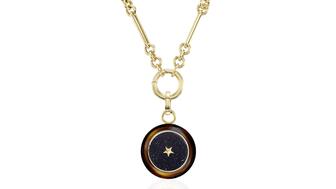
The jewelry brand is now selling its jewelry on SimonGJewelry.com and giving the profit from each order to the retailer located closest to the consumer.
While e-commerce has long been an option for the brand, Vice President of Marketing and Communications Brooke Brinkman said they’ve steered away from it before because of their strong relationship with retailers and the latter’s ability to fulfill consumer needs in local markets.
But the recent pandemic has hit jewelry stores hard as measures have forced the closing of nonessential businesses.
Some have started to re-open and find ways to service customers safely, but for a large amount, business is still slow.
And even for those that may have wanted to build or enhance e-commerce abilities, many don’t have the staffing resources, especially now, to not only get the website up and running but service customers through it.
Brinkman said Simon G., which has about 800 retail partners, realized it could quickly develop a platform on its existing website to benefit them during the pandemic.
“We felt like this was the time for us to really be able to support the retailers that have supported us for so long,” she said.
What’s more, it provided a way to respond to consumers at this time, who have been “very, very eager to purchase,” according to Brinkman.
She said the brand has seen an uptick in purchasing from images they have posted on social media during the pandemic, even noting every piece featuring a colored gemstone has sold within 24 hours of posting.
Before, they had no platform from which to sell it. Rather, the Simon G. team connected an interested customer to a retailer—not necessarily nearby—who was able to make the sale.
With the e-commerce platform, they can now sell a piece online and ship it directly to the consumer or allow them to pick it up at a nearby retailer if possible.
Additionally, if the nearby retailer has the piece in stock, they can deliver it to customers themselves to help reduce their own inventory.
Simon G. will keep a percentage of every sale to cover the credit card processing fee, process the order and facilitate shipping, but retailers will receive a similar profit margin as they would if

Brinkman noted everything featured on the Simon G. website prior to the switch will be available for purchase, representing top sellers, iconic pieces and those promoted in ads or editorial features—the majority of what you’d see in a retail store plus a little more, she said.
The brand plans to keep the e-commerce change in place for the “foreseeable future,” selling jewelry on its website to provide additional support for retailers for as long as they may need it.


Everett covers colored stones’ surging popularity, the mellow return of the “Mellon Blue,” and his “The Devil Wears Prada” doppelgänger.

Fourth-generation CEO Lilly Mullen wants to emphasize experience, connection, and personalized service.

The new award, created in partnership with Henne Jewelers, honors the late designer’s legacy through supporting jewelry education.

As gold prices rise, today’s retailers are looking for alternatives at prices that will appeal to wider audiences.


The addition of the diamond-producing countries as nation affiliated members broadens the federation’s global representation, WFDB said.


The NYPD is warning elderly New Yorkers to keep their jewelry hidden when walking outside to avoid being a target.

Designer Viviana Langhoff has realized her dream of owning a space for her Chicago jewelry store that looks and feels like her brand.

With the trade and customer trust in mind, GIA® developed NextGem™ – on-demand training designed specifically for retail.


The sessions will run from Friday, May 29, to Sunday, May 31, with one being a live taping of an episode of Couture’s podcast.

Former Stephanie Gottlieb Fine Jewelry executive Morgan P. Richardson is joining the lab-grown diamond jewelry brand.


The $400 pocket watch is a blend of Audemars Piguet’s iconic eight-sided Royal Oak and Swatch’s unserious Pop watches from the ‘80s.

With gold prices on the rise, the “Modern Electrum” collection uses an alternative, non-tarnishing metal alloy composed of gold and silver.

Fruchtman Marketing has new owners, Erin Moyer-Carballea and Manuel Carballea, and will relocate to Miami.

In a column for the 2026 State of the Majors issue, Smith lists 10 time-tested principles about sales that still ring true.

In a column for the 2026 State of the Majors issue, Golan spells out how the growing economic divide in the U.S. is reshaping the market.

The “Limitless Expansion of Joy and Hope” collection evokes summer through colored gemstones and motifs of butterflies and florals.

The jewel, circa 1890, is from the late Victorian era and was owned by descendants of the last high king of Ireland.

This is what the nine recipients plan to do with the funds.

The Western star’s 14-karat gold signet ring sold for six times its low estimate following a bidding war at U.K. auction house Elmwood’s.

The discussion, "Rebuilding the Jewelry Workforce," will take place on Saturday, May 16, in Troy, Michigan.

The jewelry industry is reassessing its positioning as Gen Z reshapes the retail landscape and lab grown continues to gain market share.

A matching pair of 18.38-carat, D-color diamonds from Botswana’s Jwaneng mine sold for $3.3 million, the top lot of the jewelry auction.

Sponsored by A Diamond Is Forever

The next generation of lapidarists are entrepreneurial, engaged online, and see the craft as a means for artistic expression.

It was the second auction appearance for the fancy vivid blue-green diamond, which sold for $7.8 million at Christie’s Geneva 12 years ago.

Members of the U.S. Marshals Task Force took a 22-year-old man into custody. He was charged with tampering with evidence.

While the overall number of crimes was down, there were more incidences in which robbers pulled out guns, mace, or rammed cars into stores.



This site uses cookies to give you the best online experience. By continuing to use & browse this site, we assume you agree to our Privacy Policy