
MajorsApr 29, 2026
The Thought Process Behind the Mother's Day Email Opt-OutSome retailers are taking a nuanced approach to marketing what can be a difficult holiday for many.


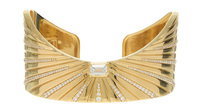




Two men with metal detectors unearthed what is thought to be the oldest Iron Age gold work ever found in Great Britain.


Leekfrith, England--Two men who were metal-detecting in a field in Leekfrith, a civil parish in Staffordshire, England, managed to dig up some important buried treasure.
Mark Hambleton and Joe Kania found what is being referred to as the “Leekfrith Torcs”--three gold necklaces and one bracelet that date to the Iron Age, approximately 2,500 years ago.
The British Museum believes the pieces to be the oldest Iron Age gold work ever found in Great Britain, estimating the work’s origin to date to about 400-250 BC.
“Iron Age jewelry is rare,” Lori Ettlinger Gross, a jewelry author, historian and MA candidate in the History of Design and Curatorial Studies at The New School, said in an interview with National Jeweler.
Gross also noted that much will be learned from where the jewelry was found.
“The thing that is most significant about this discovery is the evidence that it supports,” she said. “As people, as a culture and as individuals, jewelry was an apparent display of the self. It was made and worn because someone wanted to have the world see them a certain way, and in a way that perhaps stated wealth, beauty, or power.”
Julia Farley, curator of British & European Iron Age Collections at the British Museum, told the BBC: “Piecing together how these objects came to be carefully buried in a Staffordshire field will give us an invaluable insight into life in Iron Age Britain. The torcs were probably worn by wealthy and powerful women, perhaps people from the Continent who had married into the local community.”
Both Farley and Gross commented on the excellent condition in which the torcs were found.
Farley told National Jeweler, “I was completely stunned when I saw the torcs for the first time. They’re beautiful objects, and the skill which has gone into making them is incredible.”
Each torc was found about one meter (3.28 feet) apart and not far below the ground.
“As people, as a culture and as individuals, jewelry was an apparent display of the self. It was made and worn because someone wanted to have the world see them a certain way, and in a way that perhaps stated wealth, beauty, or power.” --Jewelry historian Lori Ettlinger GrossHambleton and Kania had permission from the property owner to search the fielded area and upon discovery, turned their finds in to the Portable Antiquities Scheme.


Some retailers are taking a nuanced approach to marketing what can be a difficult holiday for many.

The Edge has announced its new CEO, as well as a new partnership with an investment firm focused on founder-led software businesses.

De Beers’ diamond production was up 17 percent in Q1, boosted by increased output at its mines in South Africa and Canada.

Gain access to the most exclusive and coveted antique pieces from trusted dealers during Las Vegas Jewelry Week.


A signet ring belonging to the Western film star of Hollywood’s Golden Age will be up for auction at Elmwood’s next month.


Importers can submit claims now to receive money back for the IEEPA tariffs they’ve paid, with refunds expected to take up to 90 days.

The owners of Gregory Jewelers in Morganton, North Carolina, are heading into retirement.

Gain access to the most exclusive and coveted antique pieces from trusted dealers during Las Vegas Jewelry Week.

The colored gemstone industry leader is heading into retirement after four years as the association’s CEO.

Susie Dewey joins the Natural Diamond Council as its new chief marketing officer.

The largest known fancy vivid blue-green diamond could fetch more than $12 million at its second auction appearance.

Emmanuel Raheb says jewelers need to start marketing early and make it easy for customers to pick a gift for mom.

In honor of the milestone, the Nebraska jeweler has debuted Leslie & Co., its new in-house jewelry brand.

The trade organization, which held its annual elections earlier this year, also added five new board members.

NRF’s annual survey found that 45 percent of consumers plan to purchase jewelry for a loved one this Mother’s Day.

The “Vault” charm, our Piece of the Week, expands on the memories that can be stored in a locket by connecting to your phone.

The open-to-the-public luxury jewelry and timepiece show, in its second year, is slated for July 23-26.

The jeweler’s Mother’s Day campaign highlights the women who work there—mothers, grandmothers, women who want to be mothers, and dog moms.

Sponsored by Jewelers Mutual

The proposed agreement follows the moissanite maker’s Chapter 11 bankruptcy protection filing last month.

The Patek Philippe for Tiffany & Co. timepiece Astor brought aboard the ill-fated ship sold for double its estimate at a Freeman’s auction.

The “Dalí’s Garden” collection was inspired by a surreal dream Neeley had after cooking a recipe from Salvador Dalí’s 1973 cookbook.

Natalie Feanny has been appointed to the role.

The pair falsely claimed their jewelry was made by Navajo artists, but it was imported from Vietnam.

Julien’s Auctions is selling the musician’s fine and fashion jewelry alongside her clothing, gold records, and other memorabilia.

Rachel King’s book dives into the history of the pendant believed to have belonged to Henry VIII and his first wife, Katherine of Aragon.

The company will have deals on precious metals testers as well as the latest in lab-grown diamond detection technology and security.



This site uses cookies to give you the best online experience. By continuing to use & browse this site, we assume you agree to our Privacy Policy