





CollectionsAug 28, 2026
Dolly Parton Would Have Loved This Butterfly Necklace This Buddha Mama butterfly is our Piece of the Week honoring the legend, who embraced the beautiful insect as her symbol.





Now is not the time to stop communicating, says Cindy Krupp.


New York—Cindy Krupp may have more than 20 years of public relations experience, but she’s the first to admit that the coronavirus poses challenges unlike any she’s experienced.
“It’s unprecedented,” the PR and luxury veteran said of the pandemic that’s halted trade shows and shut down jewelry production across the United States. “I keep saying to my clients, I have no prior experience to pull from [in this scenario].”
Therein lies Krupp’s first piece of advice she shared with National Jeweler for navigating a crisis: When faced with unusual circumstances, take a breath. Then, listen.
1. Don’t Be Tone-Deaf
Krupp, founder of public relations and brand strategy firm Krupp Group, which works with fine jewelry brands such as Foundrae, Eva Fehren and Sylva & Cie in addition to ready-to-wear fashion brands, said the first thing her team did as coronavirus began disrupting businesses was take a step back and really listen to consumers.
“Listen to what your customers are saying,” she advised. “A sense of camaraderie and transparency is really what people are desiring now from the brands they rely on for enjoyment, pleasure and comfort.”
That means addressing the elephant in the room. To carry on with regular brand messaging via social media and other marketing channels would feel disingenuous when the world is reeling from the impact of a pandemic.
“I know everyone wants to not call out COVID-19 because it feels taboo, but people won’t respect a brand that can’t acknowledge that we’re all in this together,” Krupp explained.
That also means refraining from content that could be deemed insensitive or out-of-touch.
“Don’t be tone-deaf. Be thoughtful. Listen and communicate in a candid, transparent way because no one wants bullshit right now. That’s really how we are guiding our brands and clients with how to handle communications.”
2. Transparency Is Key
On that note, be honest and up front in how coronavirus is impacting your business, said Krupp.
“Talk about what you’re doing, that you appreciate [your customers’] loyalty and support and describe what business looks like in this time frame.”
Whether that’s closing stores, or limiting or halting shipping, use your marketing platforms to communicate logistical limitations.
If you don’t have PR or rely on an in-house team, be sure to run these communications by someone you trust before posting.
Part of what Krupp Group does is help its clients

3. Keep the Content Coming
No matter the capabilities of your business, the worst thing a brand can do is stop communication.
“I keep telling my clients, don’t go dark. I know a lot of people are feeling fear and when you feel fear you want to contract and go dark but I’m not allowing my clients do that.”
Even if messaging is less frequent than when a business had full staffing or regular content creation capabilities, regular social media posts and e-mails are essential to weathering a storm.
“The brands that continued conversations with customers, influencers and media are the ones who are going to be able to pick back up quickly and take steps forward [when this is over]. Going dark is the worst thing you could do right now.”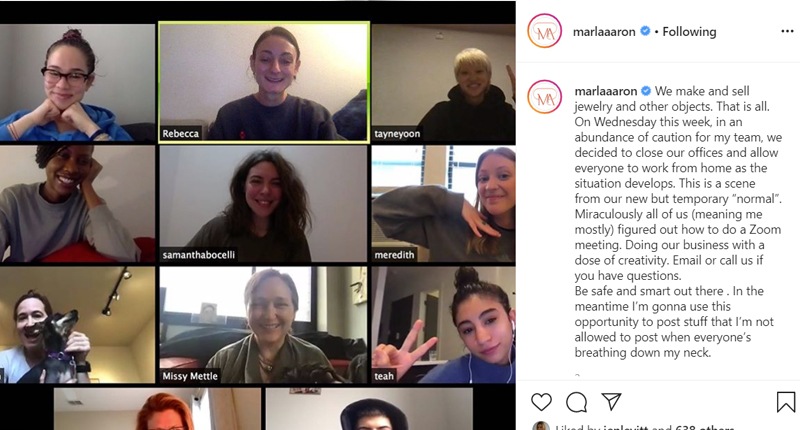
Plus, your audience hasn’t gone anywhere.
“People are more digitally tuned in right now than they’ve ever been,” Krupp noted.
4. Think Short-Term
With COVID-19’s impact constantly changing and evolving, Krupp and her team are checking in with clients regularly to reassess their status in real time.
With any type of unfamiliar crisis, Krupp advises brands to stay flexible by not thinking too far ahead.
Instead, focus on short-term strategy, assessing, “this week, next week, that’s it,” Krupp said.
Coming up, Krupp anticipates, “there’s going to be a ton of spring merchandise and we’re going to need to push people to brands’ ecommerce really fast.”
Brands should continuously adapt their marketing focus on what they need to sell and what they can deliver to customers as quarantines continue and, eventually, end.
“The brands that continued conversations with customers, influencers and media are the ones who are going to be able to pick back up quickly and take steps forward [when this is over]. Going dark is the worst thing you could do right now.” – Cindy Krupp, Krupp Group
Krupp’s clients are showing that people are still buying jewelry, so brands need to be strategic about what they promote to offset damage.
“Our jewelry brands are still seeing sales. No one has said they’re having a banner month but it’s still trickling in a little bit. Retail therapy is a real thing. The value of gold is great and strong and if [customers] took some cash out of the market and want to make a purchase that will maintain or increase value and want to enjoy it in the meantime, then gold is a great thing to purchase.
“We’re not cancelling birthdays and graduation gifts.”
5. Keep Pitching
While media is not immune to a poor economy, journalists and editors still need content.
Krupp said her firm has been getting consistent press for its clients during quarantine.
While magazine photo shoots might be currently out of the question, jewelry hi-res product imagery is all that’s required for plenty of digital and print features.
And don’t forget the power of influencers—they need content too.
“Social media influencers feel like a lifeline because they can push out really good content on their own quickly, so we’re able to ship them product directly from brands, and they’re able to shoot it and post.”
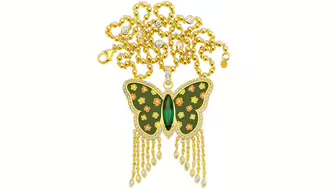
This Buddha Mama butterfly is our Piece of the Week honoring the legend, who embraced the beautiful insect as her symbol.

The former De Beers CEO, and perhaps its next owner, will be a featured speaker at the event, slated for Sept. 4-7 in Italy.

The second iteration of the jewelry collection was inspired by the zodiac and the four elements: earth, water, air and fire.
Submit your pieces for a chance to win in this year's competition.


General License 104B supersedes General License 104A, which was set to expire on Sept. 1.


The package, intercepted in Indianapolis, contained fake Cartier, Tiffany & Co., and Van Cleef and Arpels jewelry.

The fashion watch category was once threatened by the Apple Watch, but consumers are now opting for new wearables, said Movado’s CEO.

Retailers are seeking new ways to attract customers, increase traffic, and create revenue – Estate buying events are a popular solution.

The report delves into trending styles, the most popular jewelry brands by city, and why Belle Époque jewelry could be the next big thing.

The association added the requirement to its revised "Code of Ethics" and released the 17th edition of its “Gemstone Information Manual.”

Respondents were concerned about the future of the labor market and their income as well as the rising prices of gas and groceries.

The campaign highlights the asymmetrical high jewelry necklace style that the jeweler first created in 1879.

It will explore the life of “The King of Diamonds” and showcase more than 165 creations from the brand.

Two suspects have been arrested in connection with the complex phone scam.

In her first column for National Jeweler, Jennifer Shaheen asks jewelers if they know how to connect with the next generation of consumers.

The annual awards cover tuition for an on-site educational course at the Swiss lab, as well as flights and lodging.
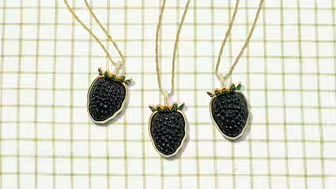
The jeweler partnered with the Tennessee resort to honor its 50th anniversary with limited-edition blackberry pendants and earrings.

The third-generation jeweler shared how the North Carolina retailer is celebrating this milestone and the love story that started it all.

The class, led by renowned metalsmith Cynthia Eid, highlighted Argentium silver as an alternative to gold amid high prices.

The show is slated for Oct. 16-19 at the Miami Beach Convention Center.

The “Empresses” capsule uses 19th-century medals depicting Napoleon, Joséphine, and Marie-Louise across five one-of-a-kind pieces.

The retailers at the top of the list offer affordable products and fun, discovery-fueled experiences.

Daniel Bing was formerly the marketing director for the Americas at Vacheron Constantin.
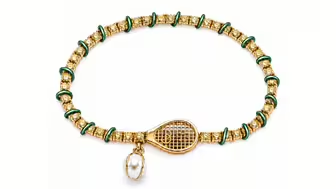
In our Piece of the Week, the designers reimagine the tennis bracelet with green enamel wrapped around a strand of “Desert Diamonds.”


The industry veterans join the podcast to discuss diamond marketing, the FTC Jewelry Guides, and lobbying for lower tariffs.

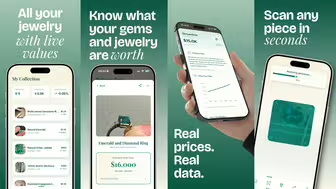
Founder Vik Westermann said the app is a “starting point” to inspire people to work with appraisers and gem labs, not replace them.
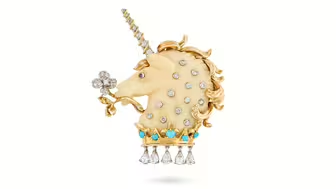
The Verdura brooch, which belonged to the late Virginia Fortune Ryan Ogilvy, was sold to a private collector in Asia.



This site uses cookies to give you the best online experience. By continuing to use & browse this site, we assume you agree to our Privacy Policy