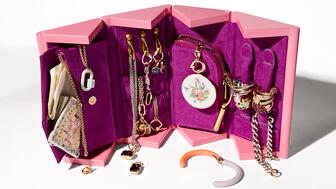




The recent high jewelry auction, which also featured the sale of a 10-carat blue diamond, was “a celebration of color.”
5 Things the Latest JBT Data Tells Us
Jewelers Board of Trade President Erich Jacobs put the number of Q2 store closures in perspective, and gives predictions for the remainder of 2020.

On Wednesday, National Jeweler connected with JBT President Erich Jacobs to talk store closures, consolidations, credit ratings, and where the industry is headed in 2020 based on what JBT has seen and recorded so far this year.
Here are five highlights from that conversation.
1) We will know a lot more about which stores are reopening, and which are not, starting in Q3.
JBT’s report released July 16 showed that in the United States, 56 retail jewelers closed in Q2, down from the 105 that permanently shuttered in the same period last year.
The number of closings among wholesalers and manufacturers decreased by a similar amount year-over-year. Ten wholesalers closed, down from 24 last year, while five manufacturers called it quits, down from 9 in 2019.
So in Q2 2020, the number of retailers that closed fell by almost half year-over-year. But, that doesn’t necessarily mean as much in this environment, Jacobs said.
These include sending mail to see if it’s returned, contacting nearby businesses, asking other board members if a particular business has paid them recently, and keeping an eye out for going-out-of-business sales.
Normally, “when we say somebody is closed, they are closed with a capital ‘C’,” Jacobs said.
Now, a lot of businesses aren’t paying, keeping their normal opening hours or having going-out-of-business sales, even if it’s obvious to the owner that one is going to be necessary. This makes it difficult to ascertain if a business is closed temporarily or permanently.
“There’s no data flowing,” Jacobs said. “It’s just a sort of an artificial environment that we’re in.”
He said the JBT’s sense is that the number of jewelry businesses closures is going to rise as the year goes on and it becomes more obvious which businesses are coming back, and which aren’t.
2) Consolidations are likely to slow down.
Business consolidations, meaning sales and mergers, also were down in the second quarter.
There were a total of 12 consolidations in Q2, JBT data shows, all among retailers, down from a total of 40 in Q2 2019: 24 among retailers, 11 with wholesalers and five among manufacturers.
Jacobs said he expects consolidations to remain slow because of the uncertainty surrounding the virus, specifically its impact on brick-and-mortar retail, a prediction that’s already begun to play out across retail.
Sycamore Partners and L Brands Inc. announced in May they’d come to a “mutual agreement” to scrap Sycamore’s purchase of Victoria’s Secret.
In June, mall owner Simon Property Group said it’s looking to get out of the $3.6 billion deal to buy rival Taubman Centers, and there have been questions about whether the LVMH-Tiffany deal will go through, though the luxury conglomerate said recently that it’s just waiting on final regulatory approvals.
“In other recessions people might have said, ‘values are low, I can do some bargain consolidations,’ but you don’t know in this case,” Jacobs notes. “The uncertainty is really making things different.”
3) COVID-19 is starting to impact companies’ JBT ratings.
JBT assigns each of its member what it calls a pay score, with the scale going from 1 to 4.
A 1 means a business pays within the allotted timeframe all the time, the credit equivalent of being a straight-A student. On the other end of the spectrum, a 4 is assigned to businesses that are frequently late, like a student who gets a lot of Fs.
In the second quarter, 826 businesses saw their JBT rating increase while more than twice that amount, 1,705, had a rating decrease, for a ratio of 0.72, down from 1.05 at the same point last year.
Normally, the ratio of decreases to increases sits around a 1, meaning there’s a fairly equal amount of both.
Jacobs said in the last recession, the ratio fell below a 1 and in JBT’s most recently monthly report, which goes out to members only, “the ratio dropped precipitously.”
He said JBT knew this was going to happen, which is why it altered its credit reports earlier this year to indicate the company’s current rating as well as its pre-COVID-19 rating in the same-size font.
4) JBT has no firm date for reverting to its “normal” rating system.
The two ratings—now and pre-coronavirus—will remain on JBT credit reports for the foreseeable future.
Jacobs said the organization will go back to its standard single rating system when “governmental intervention”—increases in unemployment insurance, legislation like the Paycheck Protection Program, eviction moratoriums, etc.—are no longer required and/or when JBT’s own data shows the jewelry business is returning to “normal,” though he acknowledged there’s internal debate over what constitutes normal.
How long that might take—six months, a year, more—Jacobs can’t say.
5) The overall trajectory of industry remains the same.
More jewelry businesses are closing than opening, according to JBT data, and the number of businesses listed with JBT continues to shrink slowly.
In the second quarter, the JBT listed 24,233 jewelry businesses in the U.S., down 4 percent from the 25,217 listed at the same time last year.
The Latest

She wore the “Le Cauri Endiamanté” earrings, our Piece of the Week, in the Obamas’ first dual portrait for the Obama Presidential Center.

Couture’s Michelle Orman joins Amanda Gizzi and Michelle Graff for this special post-Market Week episode of My Next Question.

Colored gemstones, artisan finishes, mixed metals, and meaningful details are shaping demand in bridal jewelry.

The lab is seeing emeralds with filler added post-testing enter the market, accompanied by reports that indicate little to no treatment.


The third generation of the Stern family to head Patek Philippe, he navigated the “quartz crisis” and preserved the brand’s independence.

The Texas-based jeweler is gradually rolling out a new experience-forward layout in its stores.

DCA is preparing the next generation of professionals by supporting workforce development, leadership growth, and career advancement.

The Super Bowl LX champions were honored with diamond and blue sapphire rings by Jason of Beverly Hills.

Marianna Smirnova previously spent a decade working with the Responsible Minerals Initiative, in addition to other relevant roles.

The New York Knicks took home the Larry O'Brien Trophy crafted by Tiffany & Co.

Associate Editor Natalie Francisco lists the trends she spotted during Jewelry Market Week that will dominate the second half of 2026.

Its app now reflects increased prices for Mozambique ruby, as well as changes to its Burma ruby charts.

The manufacturer has tapped Alicia Arnold, the former director of custom design at Tiny Jewel Box.

The revamped, elevated space will feature a two-story Patek Philippe atelier and a rooftop patio for parties.

The special-edition piece marks the 140th anniversary of the iconic beverage brand.

Here are 13 small charms to inspire your layered looks this summer.

Found by a metal detectorist, the ring likely belonged to a wealthy, possibly royal, owner, said Noonans.

Our Pride Month Piece of the Week, the “Margaux” ring, is part of the wife-and-wife team’s new “Lovestoned” collection.

The group has named the keynote speaker and announced a new pavilion for its next event, which is slated for September.

From lions and hippos to snails and fish, Senior Editor Lenore Fedow wrangles her picks for cutest jewelry critters in Las Vegas.

The big stone will be fashioned into a 20.26-carat diamond in celebration of the retailer’s 100th anniversary this year.

Marie-Laure Cérède will join Chanel as the new director of its jewelry creation studio, starting in October.

At the JCK show, the lab-grown diamond brand teamed up with Jewelers for Children to support Make-A-Wish India.

Ilana McCabe is Signet’s vice president of public relations and brand communications.

It was a banner day for blue gemstones, with another blue diamond topping $8 million and a 41-carat sapphire going for $2.3 million.

The approval means the retailer is on track to exit bankruptcy proceedings this summer.