






AuctionsAug 03, 2022
Elvis and Colonel Tom Parker’s ‘Lost’ Jewelry Coming to AuctionAuctionsAug 11, 2022
Sotheby’s Is Preparing its First Art Jewelry Auction This Fall
“Art as Jewelry as Art” features works from artists like Salvador Dalí, Alexander Calder, and Max Ernst.


Claude Lalanne for Zolotas’ “Two Lip Necklaces” are part of Sotheby’s New York’s “Art as Jewelry as Art” sale this fall. (Image courtesy of Jordan Doner)
New York—Whether predominantly recognized for painting or sculpting, photography or film, many great modern and contemporary artists have dabbled in several mediums, including jewelry.
A new exhibition will now bring together the jewelry musings of such artists.
This fall, Sotheby’s will present “Art as Jewelry as Art” from Sept. 24-Oct. 4. Bidding will be online, and works will be on view at Sotheby’s New York alongside the “Contemporary Curated” exhibition.
Artists featured in the sale include Alexander Calder, Claude Lalanne, Ettore Sottsass, Pablo Picasso, Kiki Smith, and Salvador Dalí, among many others.
“Art as Jewelry as Art” marks the first time Sotheby’s has presented an art jewelry sale.
“This selection of artists’ jewelry aims to reintroduce these works to the discerning collector in a new context and as a defined category of art for a collection that is not only intended for adornment, but also as a means of personal expression,” explained the exhibition’s head of sale and Sotheby’s Artist Jewelry Specialist Tiffany Dubin.
“These works were not made to be squirreled away in a drawer, vanity, or safe. They were meant to be celebrated on the body in a vibrant, interactive fashion. The way we define ourselves and the art we connect with are integral parts of who we are and is what ultimately defines us as creative beings.”
The sale is split into nine sections, categorized by artistic movements.
“Chapter 1: Jewelry as Kineticism” delves into the movement of the same name prevalent in the 1950s and 1960s. It encompasses art that often features geometric shapes and presents a sense of movement.
A new exhibition will now bring together the jewelry musings of such artists.
This fall, Sotheby’s will present “Art as Jewelry as Art” from Sept. 24-Oct. 4. Bidding will be online, and works will be on view at Sotheby’s New York alongside the “Contemporary Curated” exhibition.
Artists featured in the sale include Alexander Calder, Claude Lalanne, Ettore Sottsass, Pablo Picasso, Kiki Smith, and Salvador Dalí, among many others.
“Art as Jewelry as Art” marks the first time Sotheby’s has presented an art jewelry sale.
“This selection of artists’ jewelry aims to reintroduce these works to the discerning collector in a new context and as a defined category of art for a collection that is not only intended for adornment, but also as a means of personal expression,” explained the exhibition’s head of sale and Sotheby’s Artist Jewelry Specialist Tiffany Dubin.
“These works were not made to be squirreled away in a drawer, vanity, or safe. They were meant to be celebrated on the body in a vibrant, interactive fashion. The way we define ourselves and the art we connect with are integral parts of who we are and is what ultimately defines us as creative beings.”
The sale is split into nine sections, categorized by artistic movements.
“Chapter 1: Jewelry as Kineticism” delves into the movement of the same name prevalent in the 1950s and 1960s. It encompasses art that often features geometric shapes and presents a sense of movement.

Alexander Calder’s “Lady Kenneth Clark Tiara” will be offered for sale at Sotheby’s “Art as Jewelry as Art” online auction this fall. (Image courtesy of Jordan Doner)
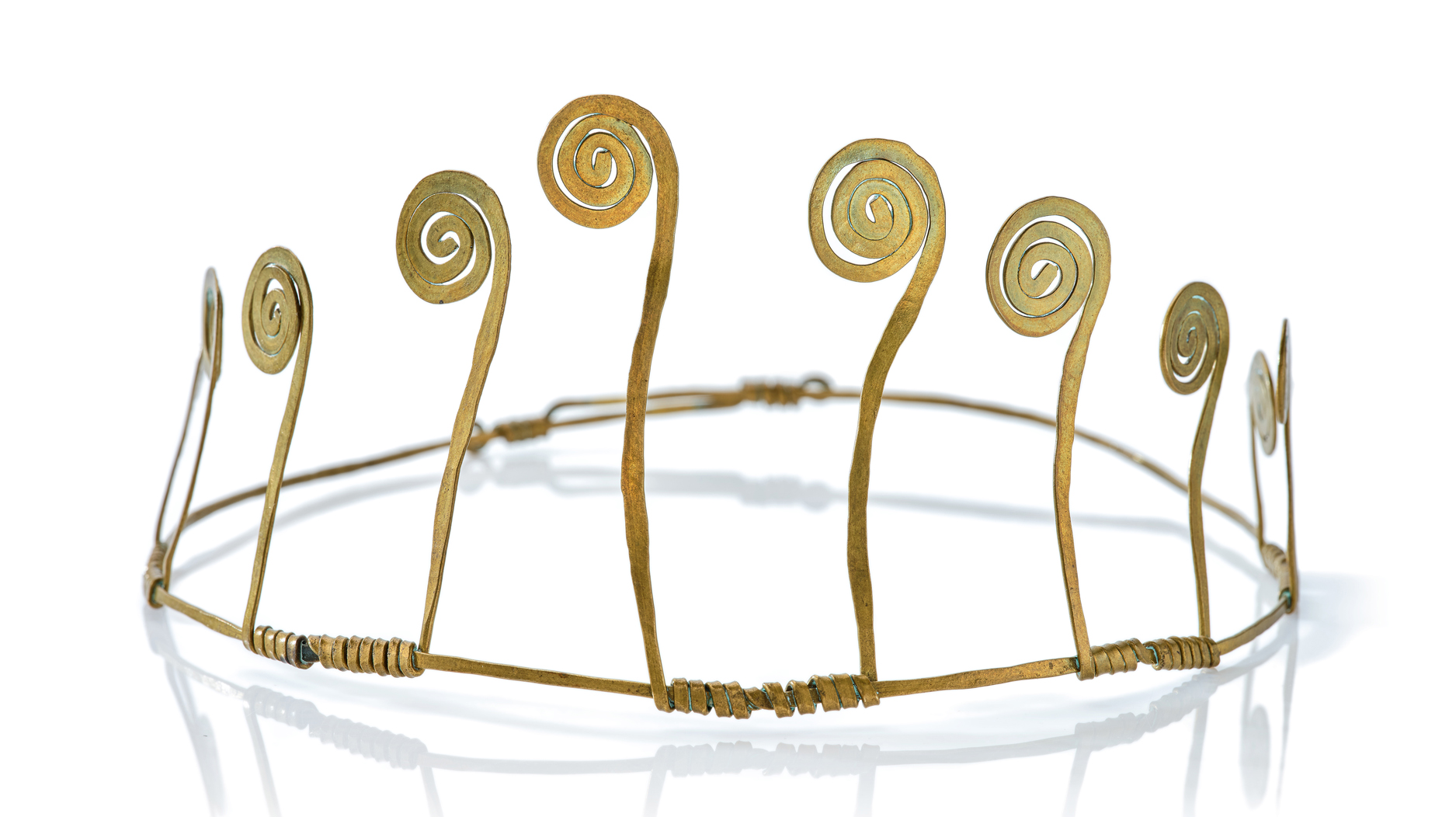
He crafted the tiara in 1937 or 1938 from brass. (Image courtesy of Sotheby’s)
Alexander Calder is a shining example of kinetic art with his mobiles and sculptures. He’s also well-known for his roughly 1,800 pieces of jewelry.
Eight Calder jewels are included in the Sotheby’s sale, including the brass tiara pictured above and at top of article, created in 1937 or 1938 and named for its first owner, Lady Kenneth Clark. The piece is estimated to sell for between $200,000 and $300,000.

Franco Cannilla gold link bracelet for Masenza Roma (Image courtesy of Sotheby’s)
Art collector and third-generation jeweler Mario Masenza frequently collaborated with artists of his time, utilizing his goldsmiths to create jewelry. These artists included the Abstract Expressionists known as the “School of Rome,” active from the 1930s to 1950s.
Several works from this partnership will be on offer at the sale under the “Chapter 2: Jewelry as Abstract Expressionism” umbrella. One work is the circa 1965 gold link bracelet by Franco Cannilla seen above, estimated to fetch between $18,000 and $25,000.
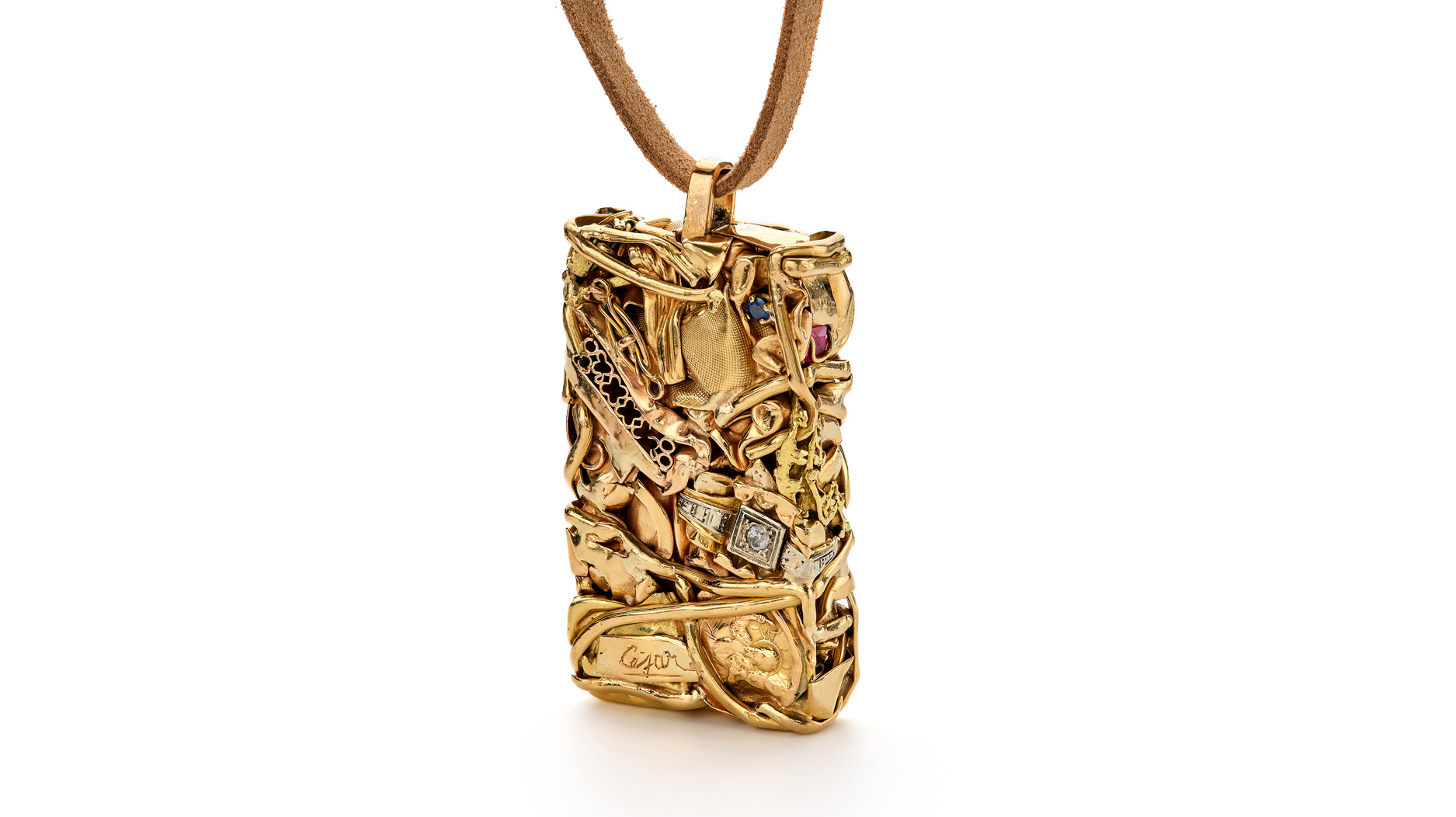
César Baldaccini “Compression Pendant” (Image courtesy of Sotheby’s)
Sculpture is the fine art form most similar to jewelry making, as seen in the section of the sale called “Chapter 3: Jewelry as Sculpture.”
Still, works from sculptors like the French artist César Baldaccini show that they bring an entirely unique point-of-view to the jewelry world.
Baldaccini’s signed “Compression Pendant” is a smaller version of his large-scale sculptures. It is expected to earn between $40,000 and $60,000.
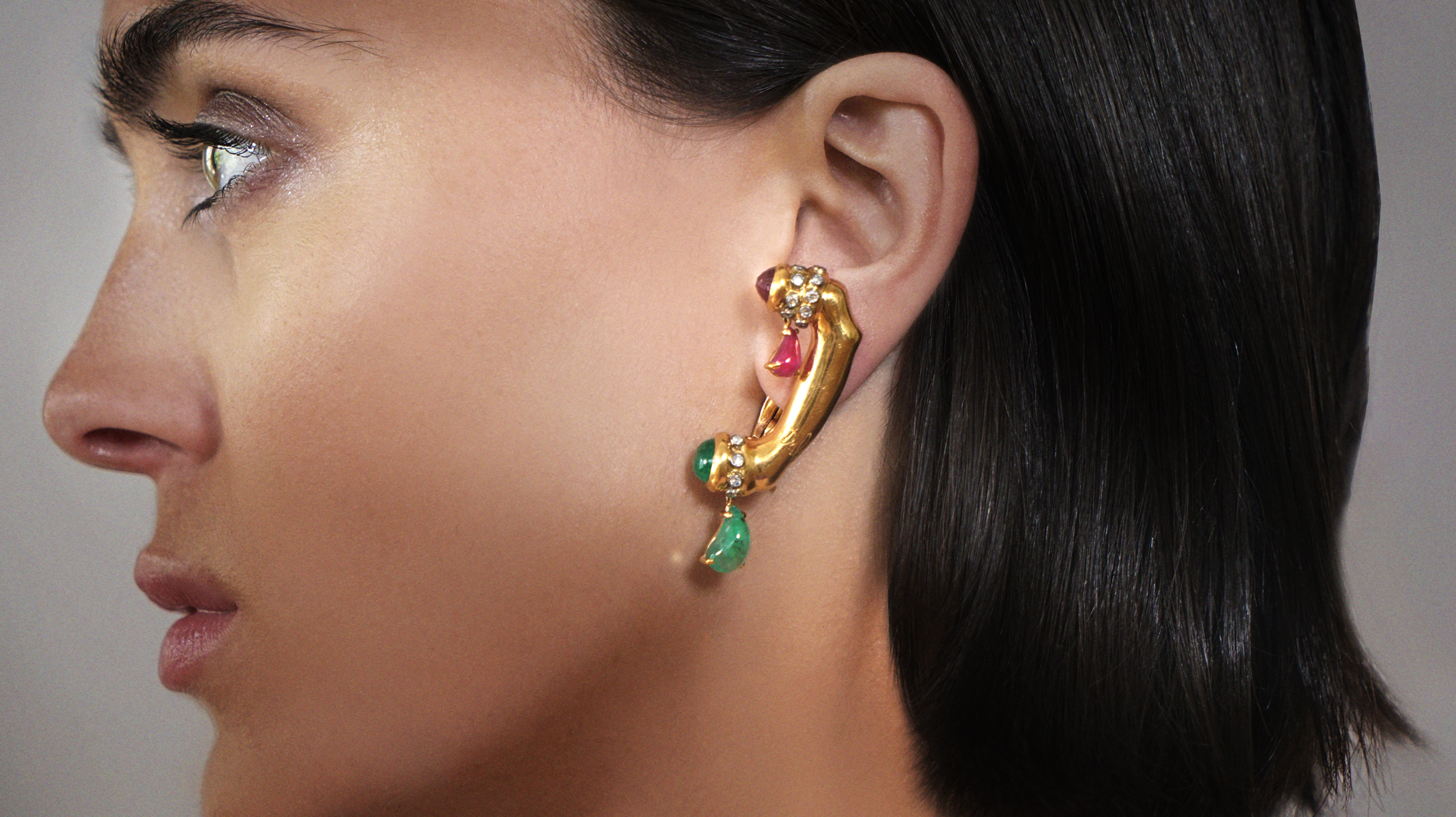
Salvador Dalí “Persistence of Sound” earrings (Image courtesy of Sotheby’s)

The earrings are crafted with 18-karat gold and gemstones.
Salvador Dalí created not only paintings but sculptures, fashion, films, and jewelry.
Featured in “Chapter 4: Jewelry as Surrealism,” the iconic artist created 18-karat gold and gemstone earrings meant to resemble melting telephone receivers in 1949.
Dubbed the “Persistence of Sound” earrings, the pair is estimated to sell for $150,000-$200,000.
Other artists included in this section of the sale are Man Ray, Louise Bourgeois, Méret Oppenheim, and Claude Lalanne.
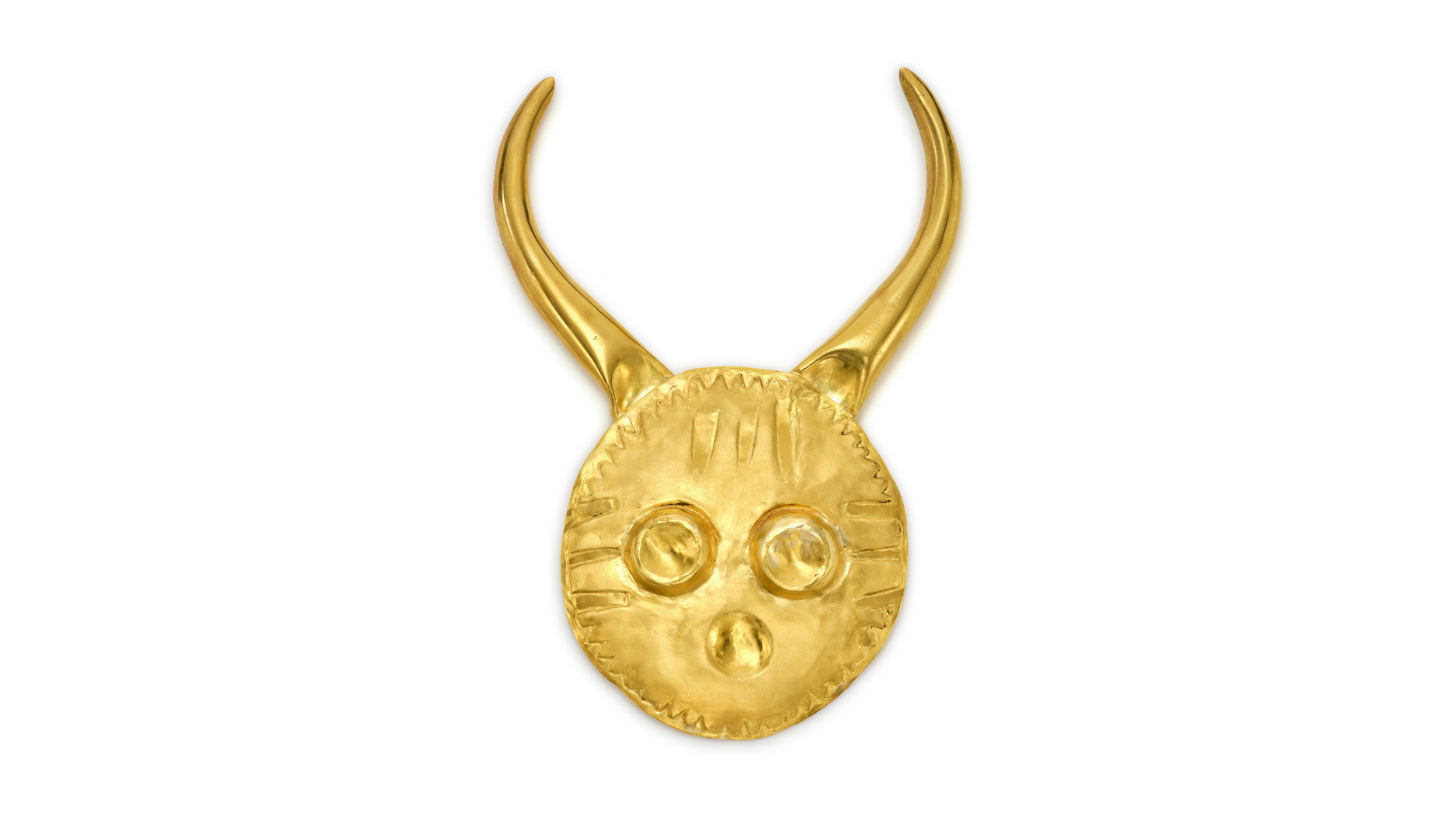
Max Ernst “Tête à Cornes” pendant (Image courtesy of Sotheby’s)
Jean Cocteau, Pablo Picasso, and Max Ernst are some of the artists included in the section “Chapter 5: Jewelry as Avant-Garde,” showcasing artists who defied norms and upended expectations with their work.
Two gold pendants by Ernst are offered for the first time, directly from the artist’s family.
This includes the “Tête à Cornes” pendant crafted in collaboration with goldsmith Francois Hugo in the late 1950s. It is expected to sell for $20,000 to $30,000.

Ettore Sottsass “Double-Barreled Ring” in gold with diamond and onyx (Image courtesy of Sotheby’s)
According to Sotheby’s, “Chapter 6: Jewelry as Maverick” describes artists who aimed to work entirely outside of tradition.
Featured in this assortment is the Italian architect and designer Ettore Sottsass, who headed the influential “Memphis Group” and whose objects, furniture, and sculpture are the core of the current rage for all things postmodern in interior design.
Sottsass’ gold, diamond, and onyx ring ($30,000-$40,000) was crafted in the 1980s via a partnership with Cleto Munari.
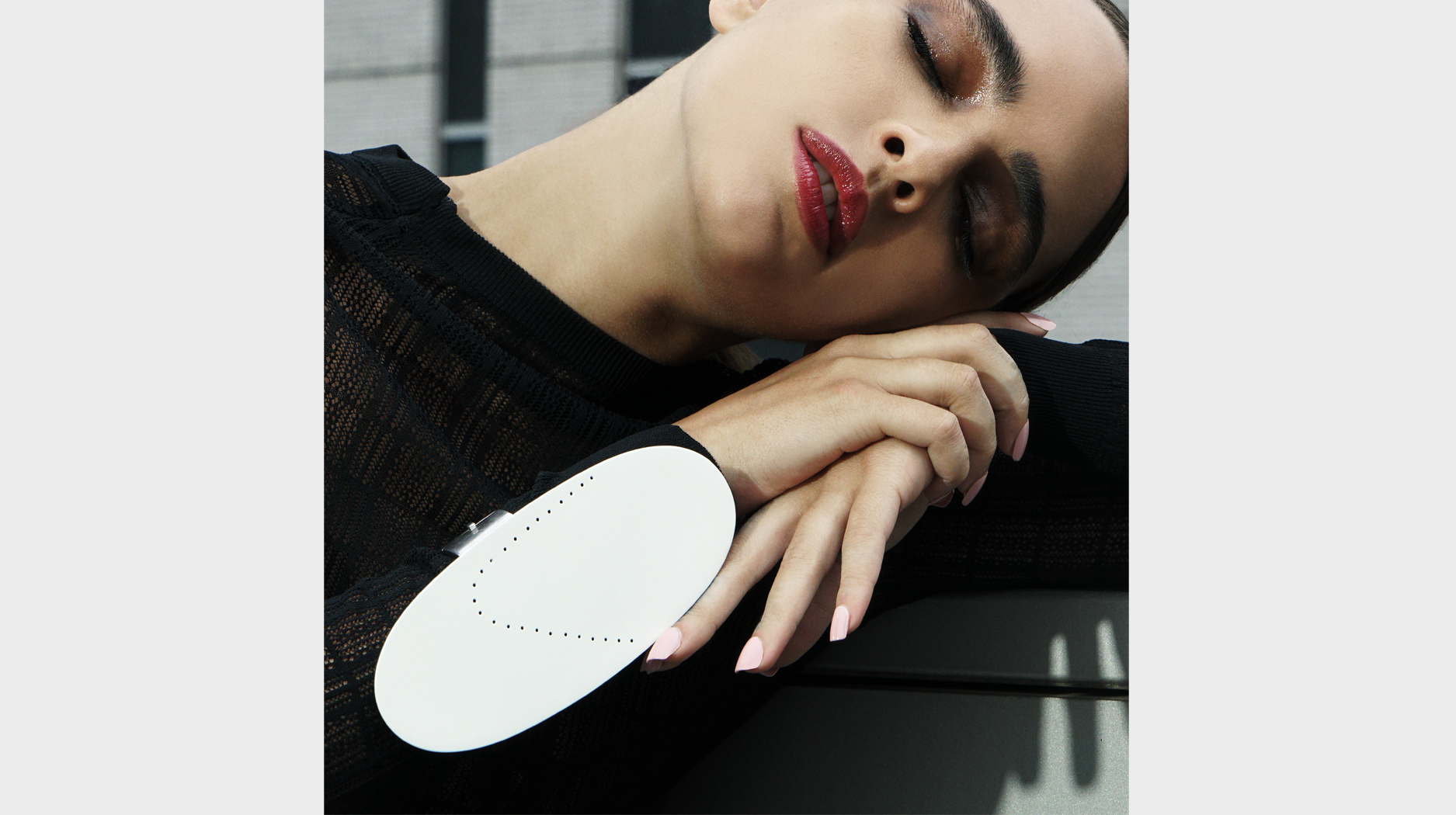
Lucio Fontana “Ellipse with Holes (Spatial Concept)” bracelet (Image courtesy of Jordan Doner)
In the 1960s and 1970s, Minimalism emerged as an antidote to the excess of Abstract Expressionism.
Featured in “Chapter 7: Jewelry as Minimalism” are works by Carmen Herrera, Hiroshi Sugimoto, and Anish Kapoor.
One highlight is Lucio Fontana’s “Ellipse with Holes (Spatial Concept)” bracelet, estimated to earn between $80,000 and $100,000.
“Chapter 8: Jewelry as Modernism” explores the look of post-war jewelry, contrasted with heavy jewelry styles from the 1940s.
In the post-war period, jewelry designers opted for a cleaner aesthetic and experimented with materials like wood, plastic, and enamel, combining them with gold, silver, and gemstones.
In this section of the “Jewelry as Art” sale, there will be pieces by designers like Andrew Grima, Alan Gard, Charles de Temple, and Jean Vendome.
Finally, “Chapter 9: Jewelry as Visionaries” highlights forces in jewelry who set new standards for the designers after them, crafting entirely new aesthetics.
Designers included in the “Visionary” category are Suzanne Belperron and current designer James Taffin de Givenchy.
Sotheby’s noted that some current talents created work expressly for this portion of the sale. Luna Benaï created a rhombicuboctahedron-shaped wooden jewelry box featuring Amazigh symbols from the Amazigh ethnic group indigenous to north Africa.
Designer Metagolden created a gold and emerald ring resembling a geodesic dome that comes with a matching NFT. It’s expected to sell for $7,000 to $10,000.
More information about the “Art as Jewelry as Art” sale is available online.
Designers included in the “Visionary” category are Suzanne Belperron and current designer James Taffin de Givenchy.
Sotheby’s noted that some current talents created work expressly for this portion of the sale. Luna Benaï created a rhombicuboctahedron-shaped wooden jewelry box featuring Amazigh symbols from the Amazigh ethnic group indigenous to north Africa.
Designer Metagolden created a gold and emerald ring resembling a geodesic dome that comes with a matching NFT. It’s expected to sell for $7,000 to $10,000.
More information about the “Art as Jewelry as Art” sale is available online.


More on Auctions
The Latest

Events & AwardsMay 22, 2026
Instore Buys JA New York ShowThe deal closed this week, which means Instore will produce the JA NY show slated to take place this fall.


FinancialsMay 22, 2026
Richemont’s Jewelry Brands Lead the Charge in Q4The company’s jewelry sales were up in Q4 and the fiscal year, with Richemont raising prices in part because of the cost of gold.


CollectionsMay 22, 2026
Leigh Maxwell Celebrates 5 Years at Couture With ‘Bauble’ CollectionThe “Bauble” capsule collection of colorful one-of-a-kinds includes our Piece of the Week, the “Bauble” earrings, featuring rose zircon.


Brought to you by
All Eyes on Gold Prices. Alternatives to Look For. And What to BEWARE of in VegasAs gold prices rise, today’s retailers are looking for alternatives at prices that will appeal to wider audiences.


MajorsMay 22, 2026
Stuller’s New Packaging, Display Catalog Is Out The updated catalog has a newly dedicated section for gift wrapping.
Weekly QuizMay 21, 2026
This Week’s QuizTest your jewelry news knowledge by answering these questions.



PodcastsMay 21, 2026
Episode 5: Sotheby’s Frank Everett Puts the Auction Market in PerspectiveEverett covers colored stones’ surging popularity, the mellow return of the “Mellon Blue,” and his “The Devil Wears Prada” doppelgänger.


IndependentsMay 21, 2026
Springer’s Jewelers’ New Flagship Will Serve Next-Gen Luxury ShoppersFourth-generation CEO Lilly Mullen wants to emphasize experience, connection, and personalized service.

Brought to you by
How Modern Training Is Becoming a Competitive Advantage for Jewelry RetailersWith the trade and customer trust in mind, GIA® developed NextGem™ – on-demand training designed specifically for retail.


Events & AwardsMay 21, 2026
JA Announces Nina Pugliese Memorial ScholarshipThe new award, created in partnership with Henne Jewelers, honors the late designer’s legacy through supporting jewelry education.


SourcingMay 21, 2026
Botswana, Angola Join WFDBThe addition of the diamond-producing countries as nation affiliated members broadens the federation’s global representation, WFDB said.

CrimeMay 20, 2026
NYPD Warns of Jewelry Swap Scams Targeting SeniorsThe NYPD is warning elderly New Yorkers to keep their jewelry hidden when walking outside to avoid being a target.

IndependentsMay 20, 2026
Adornment & Theory’s New Store Feels Like Home Designer Viviana Langhoff has realized her dream of owning a space for her Chicago jewelry store that looks and feels like her brand.

Events & AwardsMay 20, 2026
Here Is Couture’s 2026 Education Lineup The sessions will run from Friday, May 29, to Sunday, May 31, with one being a live taping of an episode of Couture’s podcast.

Lab-GrownMay 20, 2026
Savannah Friedkin Jewelry Names New CEOFormer Stephanie Gottlieb Fine Jewelry executive Morgan P. Richardson is joining the lab-grown diamond jewelry brand.


WatchesMay 19, 2026
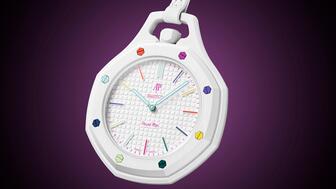
Here’s the AP x Swatch Pocket Watch That Caused PandemoniumThe $400 pocket watch is a blend of Audemars Piguet’s iconic eight-sided Royal Oak and Swatch’s unserious Pop watches from the ‘80s.

CollectionsMay 19, 2026
Chris Ploof’s New Collection Makes an Ancient Metal ModernWith gold prices on the rise, the “Modern Electrum” collection uses an alternative, non-tarnishing metal alloy composed of gold and silver.

IndependentsMay 19, 2026
Ellen and Michael Fruchtman Retire, Sell Marketing Agency Fruchtman Marketing has new owners, Erin Moyer-Carballea and Manuel Carballea, and will relocate to Miami.

ColumnistsMay 19, 2026
Peter Smith: The (Mostly) Immutable Sales TruthsIn a column for the 2026 State of the Majors issue, Smith lists 10 time-tested principles about sales that still ring true.


ColumnistsMay 18, 2026
Edahn Golan: What a K-Shaped Economy Means for Fine JewelryIn a column for the 2026 State of the Majors issue, Golan spells out how the growing economic divide in the U.S. is reshaping the market.


CollectionsMay 18, 2026
Foundrae’s New Collection Taps Into JoyThe “Limitless Expansion of Joy and Hope” collection evokes summer through colored gemstones and motifs of butterflies and florals.

CollectionsMay 18, 2026
Hancocks London Acquires Historic ‘Inchiquin’ EmeraldThe jewel, circa 1890, is from the late Victorian era and was owned by descendants of the last high king of Ireland.

Events & AwardsMay 18, 2026
Here Are the 2026 JCK Industry Fund Grant Recipients This is what the nine recipients plan to do with the funds.

Events & AwardsMay 15, 2026
JA, MJSA To Sponsor Roundtable at TJSThe discussion, "Rebuilding the Jewelry Workforce," will take place on Saturday, May 16, in Troy, Michigan.

SourcingMay 15, 2026
State of Diamonds: The Way Forward for Natural DiamondsThe jewelry industry is reassessing its positioning as Gen Z reshapes the retail landscape and lab grown continues to gain market share.


Supplier BulletinMay 14, 2026
A Diamond Is Forever Continues Desert Diamonds – Bridal ReinvigoratedSponsored by A Diamond Is Forever

SourcingMay 14, 2026
State of Colored Stones: The Spirit of Young American Gemstone CuttersThe next generation of lapidarists are entrepreneurial, engaged online, and see the craft as a means for artistic expression.

AuctionsMay 14, 2026
‘Ocean Dream’ Makes Waves at Christie’s, Fetching $17MIt was the second auction appearance for the fancy vivid blue-green diamond, which sold for $7.8 million at Christie’s Geneva 12 years ago.