





SourcingMar 25, 2026
Rob Bates Steps Down as JCK News Director EditorsMar 30, 2026
Tom Moses Looks Back on His Decades at GIA
Moses, who will leave the lab in May after nearly 50 years, discusses his start in the business, gemstones that stand out, and what’s next.


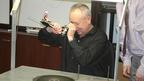
Tom Moses examining the 2,488-carat “Motswedi” diamond at GIA’s laboratory in Gaborone, Botswana, in July 2025. GIA announced earlier this month that Moses will be leaving the lab in May. Earlier this month, he sat down for an exit interview with Editor-in-Chief Michelle Graff. (Image courtesy of GIA; Photo credit: Wuyi Wang)
When I sat down to talk with Tom Moses early on a Friday morning a couple weeks ago, I learned something that I either had never known or (just as likely) forgot.
Like me, Tom is a fellow former Pittsburgher. He grew up in Butler County, Pennsylvania, less than an hour from my home in neighboring Beaver County.
His introduction to the jewelry industry came via his family.
In 1949, after serving in World War II, Tom’s father, Merril Moses, used the G.I. Bill to attend a watchmaking school in Pittsburgh and then started in the jewelry business as a watchmaker.
“As with most family businesses, [when] I was 13 or something, I was called upon in the evening and on weekends and summers to come to work and do odds and ends,” Tom recalled.
This meant cleaning a lot of glass and vacuuming—or “running the sweeper,” as they say in Western PA—as well as learning how to engrave and repair jewelry.
Along the way, Tom became interested in gemstones and in a little section of GIA’s Gems & Gemology that he remembers as “Notes from New York,” the forerunner to the “Lab Notes” section in the journal today.
Authored by two men now considered legends in gemology, Richard T. Liddicoat and G. Robert Crowningshield, the section consisted of one- or two-paragraph blurbs about gemstones, explaining, for instance, the chemical composition of an emerald.
After college, Tom attended GIA, then in Santa Monica, California, earning his Graduate Gemologist diploma in 1976.
What followed was about a decade of alternating between working at GIA—he was in the Santa Monica lab for a few years in the late ‘70s/early ’80s—and at his family’s jewelry store, Moses Jewelers.
Tom said though his father probably would have preferred he stay with the family business, he never outright asked him to do so. He allowed his son to follow his own path, something Tom came to understand and appreciate when he became a father.
In 1986, he left the family business for the last time to take a job at the GIA lab in New York, working alongside Crowningshield.
“That kind of started the journey. It was a great opportunity to learn and be mentored.”
Related stories will be right here …
Like me, Tom is a fellow former Pittsburgher. He grew up in Butler County, Pennsylvania, less than an hour from my home in neighboring Beaver County.
His introduction to the jewelry industry came via his family.
In 1949, after serving in World War II, Tom’s father, Merril Moses, used the G.I. Bill to attend a watchmaking school in Pittsburgh and then started in the jewelry business as a watchmaker.
“As with most family businesses, [when] I was 13 or something, I was called upon in the evening and on weekends and summers to come to work and do odds and ends,” Tom recalled.
This meant cleaning a lot of glass and vacuuming—or “running the sweeper,” as they say in Western PA—as well as learning how to engrave and repair jewelry.
Along the way, Tom became interested in gemstones and in a little section of GIA’s Gems & Gemology that he remembers as “Notes from New York,” the forerunner to the “Lab Notes” section in the journal today.
Authored by two men now considered legends in gemology, Richard T. Liddicoat and G. Robert Crowningshield, the section consisted of one- or two-paragraph blurbs about gemstones, explaining, for instance, the chemical composition of an emerald.
After college, Tom attended GIA, then in Santa Monica, California, earning his Graduate Gemologist diploma in 1976.
What followed was about a decade of alternating between working at GIA—he was in the Santa Monica lab for a few years in the late ‘70s/early ’80s—and at his family’s jewelry store, Moses Jewelers.
Tom said though his father probably would have preferred he stay with the family business, he never outright asked him to do so. He allowed his son to follow his own path, something Tom came to understand and appreciate when he became a father.
In 1986, he left the family business for the last time to take a job at the GIA lab in New York, working alongside Crowningshield.
“That kind of started the journey. It was a great opportunity to learn and be mentored.”
All told, Tom’s been at GIA for about 45 years, a long stretch by any standard but in his mind, not long enough.
Tom said just a couple years ago, he told a few colleagues that he’s “running out of time” and will never feel like he accomplished enough.
“My mentors were just so good; they were just incredible. I had hoped to get to that level and I just didn’t,” he said.
That seems like an insane statement for somebody as well regarded and respected as Tom, who won the Richard T. Liddicoat Award for Distinguished Achievement in 2002, was elected to the GIA Board of Governors in 2013, and will leave GIA in May with the title chief of gemological research, emeritus.
He also has co-authored more than 100 technical articles for Gems & Gemology and other peer-reviewed journals over the years.
Looking back, though, Tom said he would have liked to have done even more writing and research, but he got involved with the business side of the lab’s operations, helping it to expand internationally.
GIA opened about half a dozen labs overseas between 2005 and 2010.
It was a worthy pursuit but one that took time away from pursuing his passion, gemology, a conflict many professionals face as they ascend in their careers.
The day-to-day responsibilities of running a business eat up much of the day, and more creative pursuits, like designing jewelry or (in my case) writing long-form stories, get pushed to the side.
Still, next to Tom’s computer at his desk at GIA’s New York lab on 47th Street is a microscope. He’s had this instrument for about 20 years so it’s not “the latest or the greatest” but it gives him the opportunity to become “hypnotized” by a gemstone.
“It takes me to a peaceful place where I can focus on the gemstones. I’m still as fascinated [by gemstones] as I was 50 years ago, which is a lucky feeling.”

GIA Executive Vice President and Chief Laboratory and Research Officer Tom Moses examining a rough diamond. Moses said he’s never lost his passion for gemstones. “They quit asking me to take vacation because they know I won’t. I’m afraid I’ll miss something.” (Photo credit: Jian Xin (Jae) Liao, © GIA)
The first question that came to mind when I thought about my exit interview with Tom was, what is the most interesting stone you’ve had the opportunity to examine? It’s not a terribly original question, I realize, but this inquiring mind wanted to know.
“That question comes up a lot and I answer differently,” he said.
He mentioned the “La Peregrina” pearl, part of Elizabeth Taylor’s incomparable jewelry collection, which set records when Christie’s auctioned it in 2011.
The pearl had one or two not insignificant scratches on its surface, which Tom believes were from her dog.
There was also the time he got to handle and examine the 2,488-carat stone unearthed in Botswana in August 2024, the “Motswedi” diamond, pictured at the top of the article.
It is the second largest rough diamond ever found and weighs more than a pound.
“The thought about using a pound to talk about a diamond ... it was amazing. It was an incredible diamond,” he said.
“I'm hoping tomorrow I'll [be able to] tell you another story about something that equally impressed me.”
Tom said he first began having conversations with the GIA Board of Governors about transitioning a couple of years ago. It, he acknowledged, is time to move on.
He recalled a conversation he had with GIA founder Robert Shipley more than 40 years ago, who relayed how the board had to kind of “encourage” him to retire when he stepped down in 1952.
He doesn’t want to reach the encouragement stage.
“I don’t ever want to be in a situation where someone really kind of reminds you, it’s time to go. I don’t think I reached that stage, but I think it’s the right time.”
Tom said he’s not retiring but doesn’t have plans to go anywhere else right now. He said he will take a little time away—which for Tom, means a few weeks—before he decides what’s next.
As for that microscope next to his desk, he said he might try to take it with him when he goes.
I won’t tell anyone, Tom. Best of luck.
More on Editors
The Latest

Events & AwardsMay 22, 2026
Instore Buys JA New York ShowThe deal closed this week, which means Instore will produce the JA NY show slated to take place this fall.

FinancialsMay 22, 2026
Richemont’s Jewelry Brands Lead the Charge in Q4The company’s jewelry sales were up in Q4 and the fiscal year, with Richemont raising prices in part because of the cost of gold.


CollectionsMay 22, 2026
Leigh Maxwell Celebrates 5 Years at Couture With ‘Bauble’ CollectionThe “Bauble” capsule collection of colorful one-of-a-kinds includes our Piece of the Week, the “Bauble” earrings, featuring rose zircon.


Brought to you by
All Eyes on Gold Prices. Alternatives to Look For. And What to BEWARE of in VegasAs gold prices rise, today’s retailers are looking for alternatives at prices that will appeal to wider audiences.


MajorsMay 22, 2026
Stuller’s New Packaging, Display Catalog Is Out The updated catalog has a newly dedicated section for gift wrapping.
Weekly QuizMay 21, 2026
This Week’s QuizTest your jewelry news knowledge by answering these questions.



PodcastsMay 21, 2026
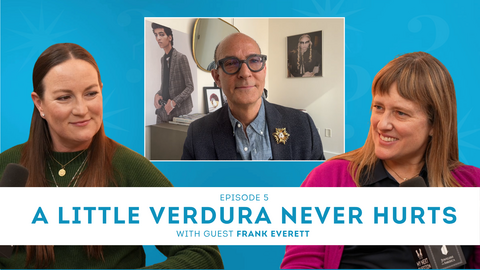
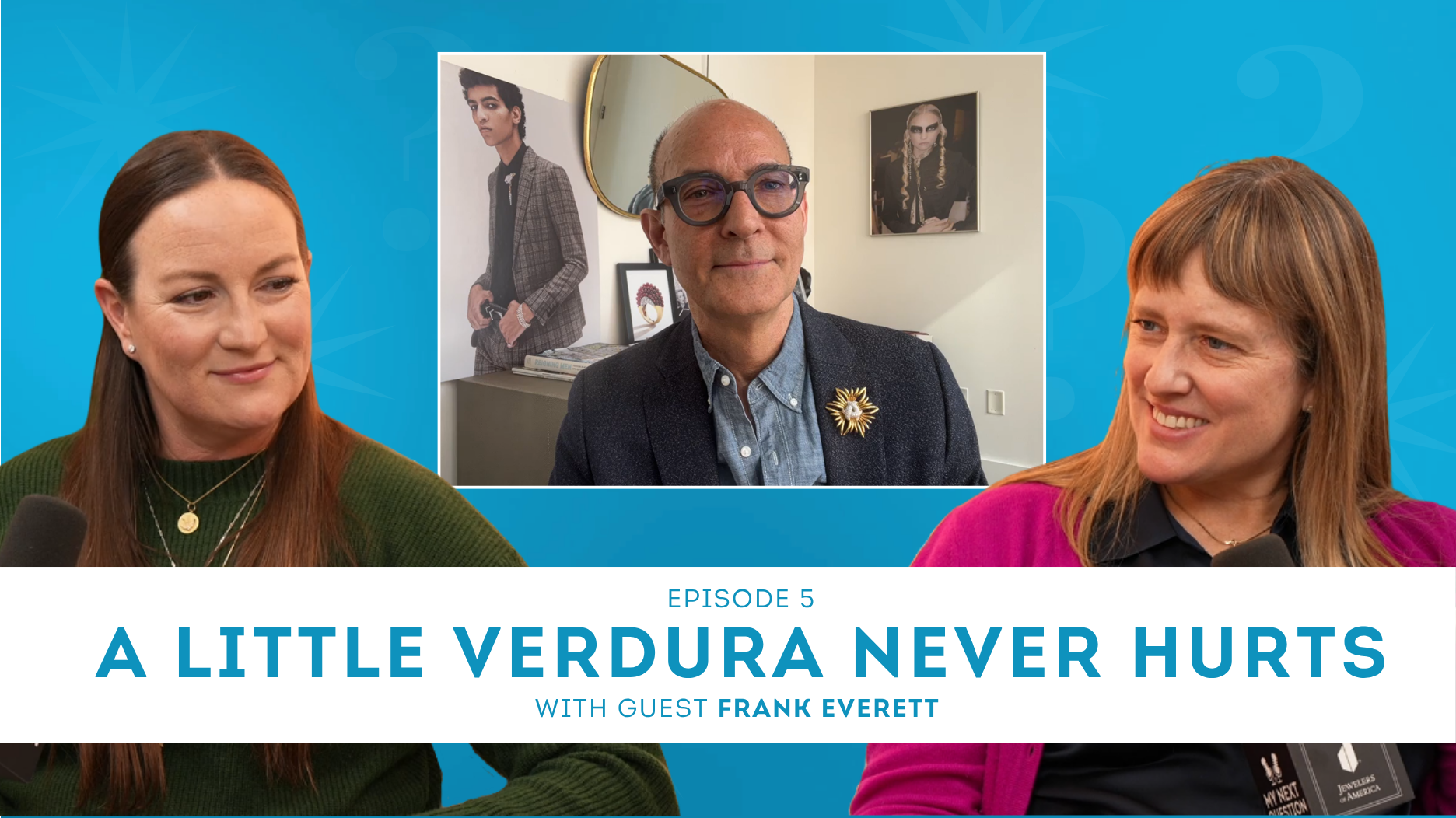
Episode 5: Sotheby’s Frank Everett Puts the Auction Market in PerspectiveEverett covers colored stones’ surging popularity, the mellow return of the “Mellon Blue,” and his “The Devil Wears Prada” doppelgänger.


IndependentsMay 21, 2026
Springer’s Jewelers’ New Flagship Will Serve Next-Gen Luxury ShoppersFourth-generation CEO Lilly Mullen wants to emphasize experience, connection, and personalized service.

Brought to you by
How Modern Training Is Becoming a Competitive Advantage for Jewelry RetailersWith the trade and customer trust in mind, GIA® developed NextGem™ – on-demand training designed specifically for retail.


Events & AwardsMay 21, 2026
JA Announces Nina Pugliese Memorial ScholarshipThe new award, created in partnership with Henne Jewelers, honors the late designer’s legacy through supporting jewelry education.


SourcingMay 21, 2026
Botswana, Angola Join WFDBThe addition of the diamond-producing countries as nation affiliated members broadens the federation’s global representation, WFDB said.

CrimeMay 20, 2026
NYPD Warns of Jewelry Swap Scams Targeting SeniorsThe NYPD is warning elderly New Yorkers to keep their jewelry hidden when walking outside to avoid being a target.

IndependentsMay 20, 2026
Adornment & Theory’s New Store Feels Like Home Designer Viviana Langhoff has realized her dream of owning a space for her Chicago jewelry store that looks and feels like her brand.

Events & AwardsMay 20, 2026
Here Is Couture’s 2026 Education Lineup The sessions will run from Friday, May 29, to Sunday, May 31, with one being a live taping of an episode of Couture’s podcast.

Lab-GrownMay 20, 2026
Savannah Friedkin Jewelry Names New CEOFormer Stephanie Gottlieb Fine Jewelry executive Morgan P. Richardson is joining the lab-grown diamond jewelry brand.


WatchesMay 19, 2026
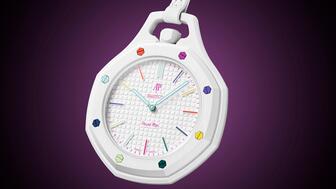
Here’s the AP x Swatch Pocket Watch That Caused PandemoniumThe $400 pocket watch is a blend of Audemars Piguet’s iconic eight-sided Royal Oak and Swatch’s unserious Pop watches from the ‘80s.

CollectionsMay 19, 2026
Chris Ploof’s New Collection Makes an Ancient Metal ModernWith gold prices on the rise, the “Modern Electrum” collection uses an alternative, non-tarnishing metal alloy composed of gold and silver.

IndependentsMay 19, 2026
Ellen and Michael Fruchtman Retire, Sell Marketing Agency Fruchtman Marketing has new owners, Erin Moyer-Carballea and Manuel Carballea, and will relocate to Miami.

ColumnistsMay 19, 2026
Peter Smith: The (Mostly) Immutable Sales TruthsIn a column for the 2026 State of the Majors issue, Smith lists 10 time-tested principles about sales that still ring true.


ColumnistsMay 18, 2026
Edahn Golan: What a K-Shaped Economy Means for Fine JewelryIn a column for the 2026 State of the Majors issue, Golan spells out how the growing economic divide in the U.S. is reshaping the market.


CollectionsMay 18, 2026
Foundrae’s New Collection Taps Into JoyThe “Limitless Expansion of Joy and Hope” collection evokes summer through colored gemstones and motifs of butterflies and florals.

CollectionsMay 18, 2026
Hancocks London Acquires Historic ‘Inchiquin’ EmeraldThe jewel, circa 1890, is from the late Victorian era and was owned by descendants of the last high king of Ireland.

Events & AwardsMay 18, 2026
Here Are the 2026 JCK Industry Fund Grant Recipients This is what the nine recipients plan to do with the funds.

AuctionsMay 15, 2026
American Collector Ponies Up Almost $17K for John Wayne’s RingThe Western star’s 14-karat gold signet ring sold for six times its low estimate following a bidding war at U.K. auction house Elmwood’s.

Events & AwardsMay 15, 2026
JA, MJSA To Sponsor Roundtable at TJSThe discussion, "Rebuilding the Jewelry Workforce," will take place on Saturday, May 16, in Troy, Michigan.

SourcingMay 15, 2026
State of Diamonds: The Way Forward for Natural DiamondsThe jewelry industry is reassessing its positioning as Gen Z reshapes the retail landscape and lab grown continues to gain market share.


AuctionsMay 14, 2026
White Diamonds Lead Sotheby’s Auction, Blue Diamond Does Not SellA matching pair of 18.38-carat, D-color diamonds from Botswana’s Jwaneng mine sold for $3.3 million, the top lot of the jewelry auction.

Supplier BulletinMay 14, 2026
A Diamond Is Forever Continues Desert Diamonds – Bridal ReinvigoratedSponsored by A Diamond Is Forever