






FinancialsSep 09, 2026
Signet Jewelers to ‘Double Down’ on Blue Nile Amid Strong SalesThe jewelry retailer said it sees opportunity at higher price points, particularly in natural diamonds for bridal and fashion.


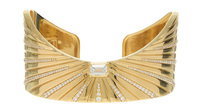



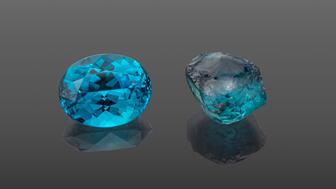
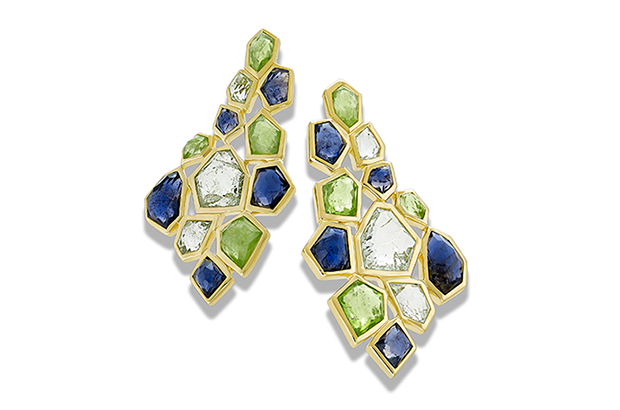
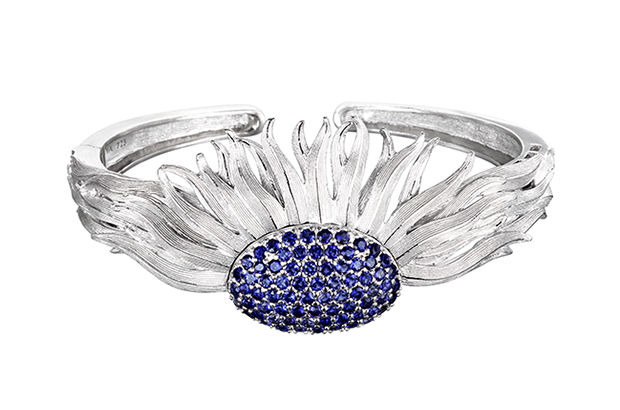
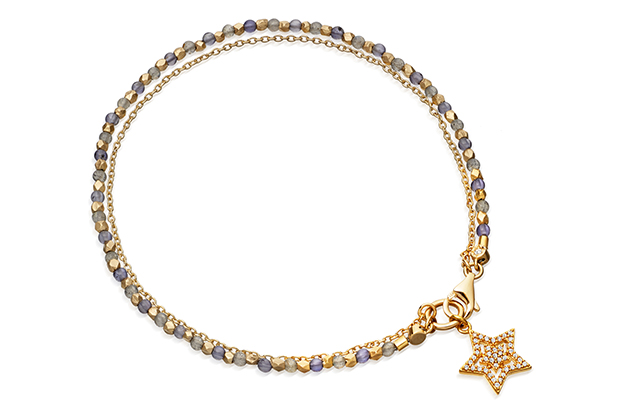
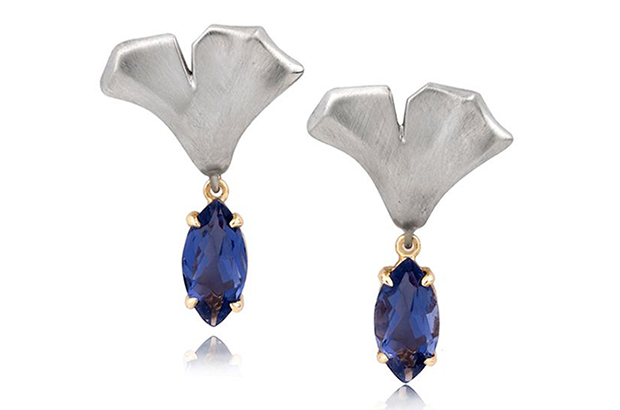
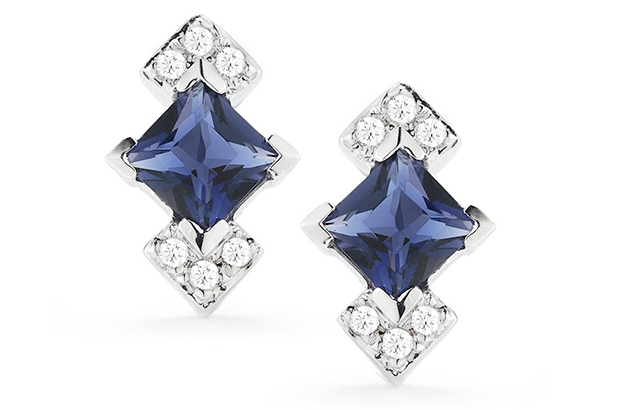
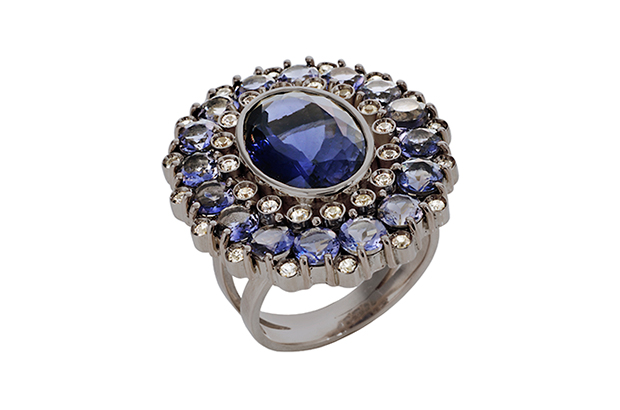
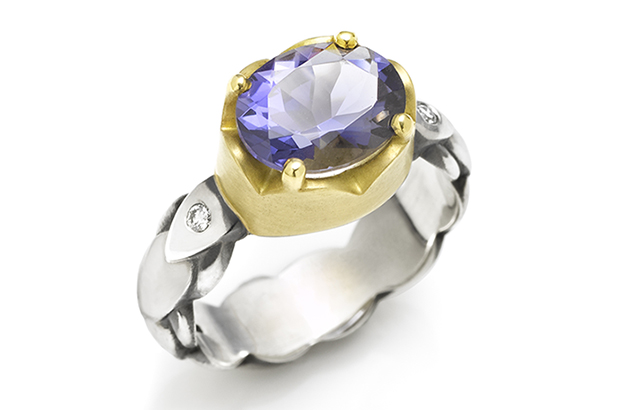
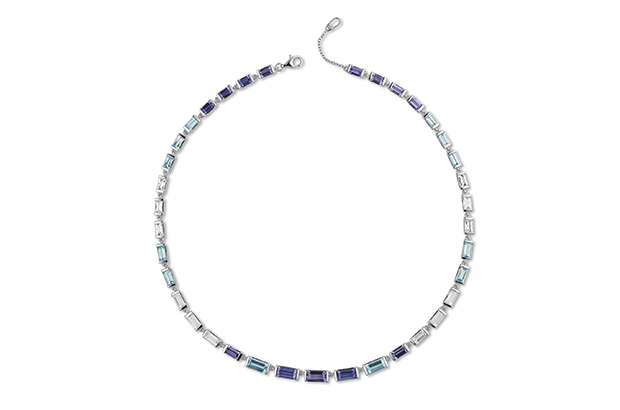
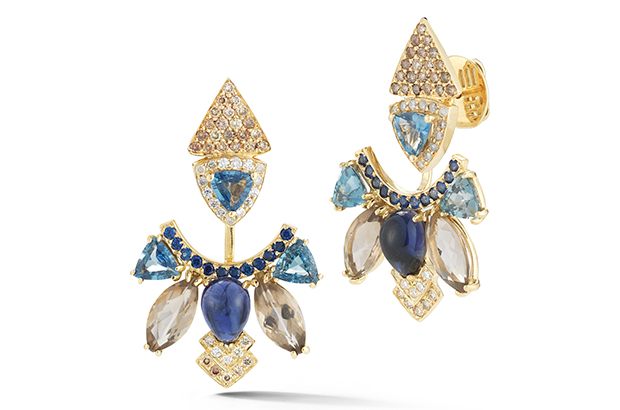
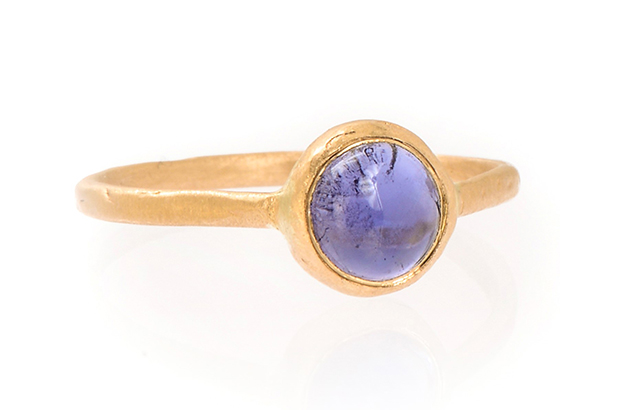
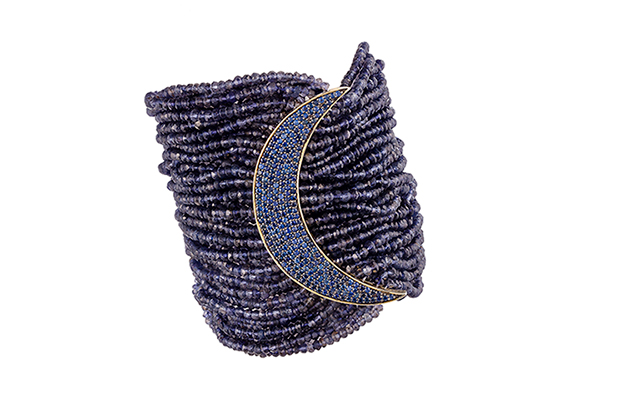
Though iolite is not as well-known as similar gems as supply of fine quality material remains an issue, a slight uptick in demand and its affordability could mean good things for the colored stone.


New York--It is said that iolite dates back to the time of the Vikings, who would use the stone to guide them on their journeys.
Using thin slices of iolite could help them determine the exact location of the sun when they were out exploring, helping them travel safely to the new world and back again.
Despite its long history, the gem, valued for its vivid, saturated hues ranging from violet to blue, is still less well-known than stones like tanzanite and sapphires.
According to the Gemological Institute of America’s Gem Encyclopedia, gem experts believe that this could be because designers and retailers haven’t seen a consistent enough supply in a uniform fine quality to consider investing in large quantities for themselves.
Stuart Robertson, research director for Gemworld International, Inc., said that it’s difference in popularity from tanzanite “really comes down to quality of color. Even in the lighter tones and saturations, tanzanite exhibits a brightness to its color. However, iolite usually doesn’t. It exhibits a color that often has some degree of grey masking it.”
Roger Dery, gem cutter and precision faceter at Spectral Gems, said that quality often also is an issue when he’s looking for iolite. Having been to Africa two to four times a year since 2009, he said that while he does see iolite almost every trip, “frequently it is not of a quality that we can use as a custom faceter.”
The gemstone also has strong pleochroism--which means different colors can be seen depending on the direction that the gem is turned--making it a tricky stone to cut for the best color. This can pose challenges to producers and buyers interested in promoting the gem to retailers as an affordable alternative to other similar stones.
But, iolite has been increasing in use a bit over the past few years and could be slightly on the upswing.
“I believe iolite to be a beautiful gem that is grossly underrated,” Dery said.
An open opportunity
Jewelers who have the ability to do custom pieces often may look for gems that aren’t mainstream to set at the center of these designs, and iolite fits into that category very well.
At the same time, the strong color direction in iolite also can be an obstacle for creativity when it comes to cutting the stone in unique designs. With something like a garnet, where the
However with iolite, due to its unique characteristic, a faceter is lucky to get a 15 percent yield, Dery said.
Yet there remains another area in the chemistry of the stone that could be a positive--it is rarely treated, according to the GIA.
Interestingly, the deep blue hues of some iolite stones are thought to be caused by the same factors that creates the blues in sapphires. Unlike its blue companion, however, iolite can’t be heat treated to help intensify the blue color of the stone since its low melting point won’t allow for the high temperatures needed for the process, the GIA said.
This means that an exceptionally colored iolite likely has the selling point for today’s mindful consumer that it came that way naturally. It also means that pieces that aren’t of fine quality can’t be heat treated to improve their color, limiting supply largely to gem-quality stones that come straight from the earth.
Additionally, iolite is one of the few gemstones that has exceptions when it comes to inclusions and value. Certain types of inclusions in the right orientation can create phenomenal iolite. This is rare and therefore, naturally, coveted by collectors.
One of these is cat’s eye iolite.
The gem also can sometimes contain flat, metallic inclusions, causing a glittery, aventurescent effect in the stone. When the inclusions causing this phenomenon appear in an orange or reddish hue, it can be called “bloodshot” iolite.
Pricing obstacles
In terms of the colored gemstone market, the price of iolite is relatively low, and this affordable price point should help bump its demand.
“Once you get outside of the big three (ruby, sapphire and emerald) and some of the rarities like Paraiba tourmaline, market consumption is not driven by the wealthy, but instead by the middle class,” Robertson said. “This segment is still reactive to price points, which has resulted in a lot of color-substitution based gem purchases in more recent years.”
Dery said that, at trade cost, a dealer can find 3- to 4-carat stones in nicer colors for somewhere in the range of $50 to $75 per carat when it comes from “established cutting centers around the world.” Comparatively, these 3- to 4-carat stones would have sold for about $40 to $55 per carat nearly a decade ago.
North American faceters, however, sell with higher prices because of more exacting standards and a desire for their gems to stand out from the commercial cutting.
Dery said he expects prices to rise another 10 to 15 percent per year in the future.
In his travels to Africa, he said that he has yet to see an iolite mine that had been industrialized. Rather, they are all worked by artisanal miners in groups of anywhere from two to 12.
“These mines are alluvial in nature, and once they hit a certain depth, they are no longer viable to be worked by hand, which will, without any intervention, cause prices to escalate over time.”
In addition to the mining issues that can arise, there also is an increasing interest among a few government mining ministries in Africa to require that gems mined in the country also be cut in the country, instead of exporting the rough at a lower value.
(In 2010, Tanzania implemented such a ban on exporting facetable rough tanzanite weighing more than 1 gram, or roughly 5 carats).
If these movements do come to fruition in the next few years, prices of these gemstones would be greatly affected.
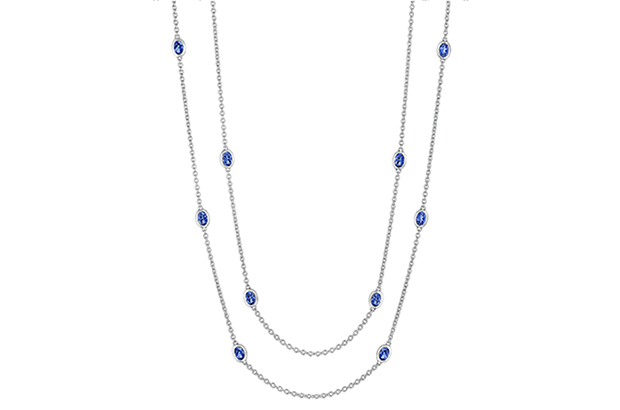

The jewelry retailer said it sees opportunity at higher price points, particularly in natural diamonds for bridal and fashion.

The Los Angeles-based, family-owned jeweler was founded by Lenny and Sunny Friedman in 1946.

Fine Jewelry 2027-2028 has more than 900 new styles, including silver, gold-filled, gold-plated sterling silver, and vermeil jewelry.
Submit your pieces for a chance to win in this year's competition.


Learn more about the new terms for lab-grown diamonds and composite gemstones, and the major changes in store for precious metals jewelry.


Bromberg is remembered as a Southern gentleman who always wore a suit and tie and treated others with kindness.

With high durability and a wide range of colors to choose from, sapphires may be the ultimate birthstone, Gizzi claims.

Retailers are seeking new ways to attract customers, increase traffic, and create revenue – Estate buying events are a popular solution.


Laughter is often considered a distraction in the workplace, but it has benefits for both staff and management, Peter Smith writes.

Gretchen Koback Pursel is the new chief people officer at the company formerly known as Saks Global.

The California jeweler is renovating its store in Fresno, with plans to show off the new space in December.

A lifelong practitioner of Pilates, Gabrielle looked to the springs’ tension and suspension when creating this ring, our Piece of the Week.

The deadline to apply is Nov. 13.

The auction house has promoted Remi Guillemin, formerly its head of watches for the Americas and EMEA, to the role.

Zaven Ghanimian discussed the value of human craftsmanship and where the implementation of artificial intelligence does work.

Jewelers of America also revealed the recipients of the Seymour & Evelyn Holtzman Bench Scholarship and its own scholarship programs.

The British actor, known for his roles in “Twilight” and “The Odyssey,” will star in a campaign for the Master Control Chronometre.

The “Confetti Disco,” “Champagne Cheers,” “Tuxedo,” and “Classic Punk” jewelry collections each capture a distinct spirit of celebration.

Nelson Holdo of Newport Beach pleaded guilty to multiple counts of felony grand theft and writing bad checks and was sentenced Monday.

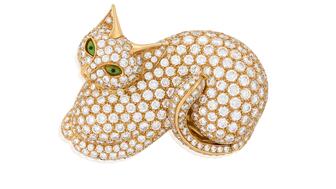
Cat ladies of the jewelry world, unite. Sandy Lerner’s “significant” collection of cat jewelry and other objects is going up for auction.

Arnaud Michon, the former Omega USA President, will now lead Messika’s Americas region during its international development.

The branding references the back-to-back jewelry shows that new parent company Forge will host in Miami's Coconut Grove this November.
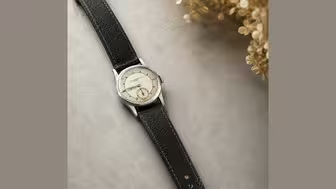
The stainless steel Patek Philippe “Calatrava” watch from the 1930s sold for nearly $80,000 at a recent Hansons Cornwall auction.

Engagement rings are important but don’t ignore the customers who are buying jewelry “just because,” Emmanuel Raheb writes.

Former Pomellato CEO Sabina Belli has been named president of Kering Italia amid a shakeup of Kering's new Jewelry division.

The veteran luxury packaging executive was appointed to help the company grow its North American business.


Once the property of an Egyptian queen, the necklace was part of a larger exhibition of VCA jewelry at the Museum of Applied Arts (MAK).



This site uses cookies to give you the best online experience. By continuing to use & browse this site, we assume you agree to our Privacy Policy