




MajorsOct 23, 2026
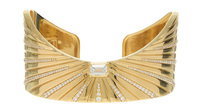
PGI USA Set to Close at Year’s EndThe closure is part of a global restructuring that also includes PGI winding down its operations in Japan, South Korea, and Hong Kong.






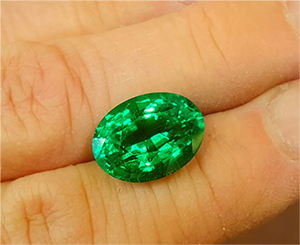
Senior Editor Brecken Branstrator shares five facts about the emeralds now originating from a source about 300 miles south of Addis Ababa.


It’s always kind of exciting when a new source for gemstones pops up and everyone starts wondering how big and important it will be for the colored stone market.
In Tucson, word started floating around about a new deposit of emeralds in Ethiopia. Since I wasn’t able to get much information there or see a stone in person, I decided to take some time to gather more information and give it a dedicated blog once I was back.
Ethiopia is, of course, already known for being a source of high quality opals, and while this isn’t the first time that the country has produced emeralds--even if it was in very small amounts--around last August, a new deposit started turning out some fine quality gems.
This new source is located about a little more than 300 miles south of the country’s capital, Addis Ababa.
It’s still pretty early days with this deposit, and there’s no telling how long or short the supply will run.
For now, though, here’s a little about what we know.
(One side note: I did reach out to Dr. Girma Woldetinsae, the director of research and development at the Ministry of Mines, Petroleum & Natural Gas in Ethiopia to get their take on the development, but he was not able to contribute to this blog post by press time.)
1. The new deposit is located in the Seba Boru district of the country.
The closest town to the mining area is called Shakiso, where the rough generally goes to market first after being sorted, according to a recent Gems & Gemology article. It then normally goes to be sold to dealers in the capital city of Addis Ababa, which is about a 12-hour drive north of the mining activity.
2. Mining done in the area still is done the traditional way, by hand and without heavy machinery.
According to Michael Nemeth of MLN Gems, who has traveled to the area, mining is being done by small-scale miners, and the area is divided into “associations,” with each featuring a manager and several members who control the mining and distribution of the rough.
While I wasn’t able to get a more recent number on production, a source in Ethiopia’s Ministry of Mines, Petroleum and Natural Gas told Nemeth that as of the end of January, more than 100 kilograms of emerald rough (about 500,000 carats) had been produced.
Gemstone

The closure is part of a global restructuring that also includes PGI winding down its operations in Japan, South Korea, and Hong Kong.

The ring, our Piece of the Week, was designed by eight-year breast cancer survivor Rachel Chalchinsky of Color Source Gems.

The website offers enhanced member benefit access, industry directories, educational resources, a job board, and access to the MJSA Journal.
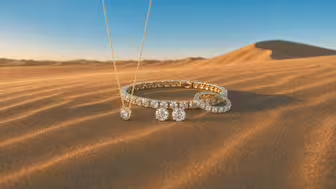
A Diamond Is Forever's holiday campaign reimagines natural diamond icons for a new generation celebrating individuality.


Boucheron and Pomellato had a strong third quarter, with Kering looking at jewelry as an increasingly important part of its portfolio.


Tara Sinchuri was the owner of Everest Jewels in Fairfield, Ohio, and a father of three. He was found dead in his store on Tuesday.

Bespoke experiences from Buccellati and Verdura are on the retailer’s 2026 “Fantasy Gifts” list.

Built on Relationships. Refined by Craft.


The number of participants at the fall show was up 12 percent.

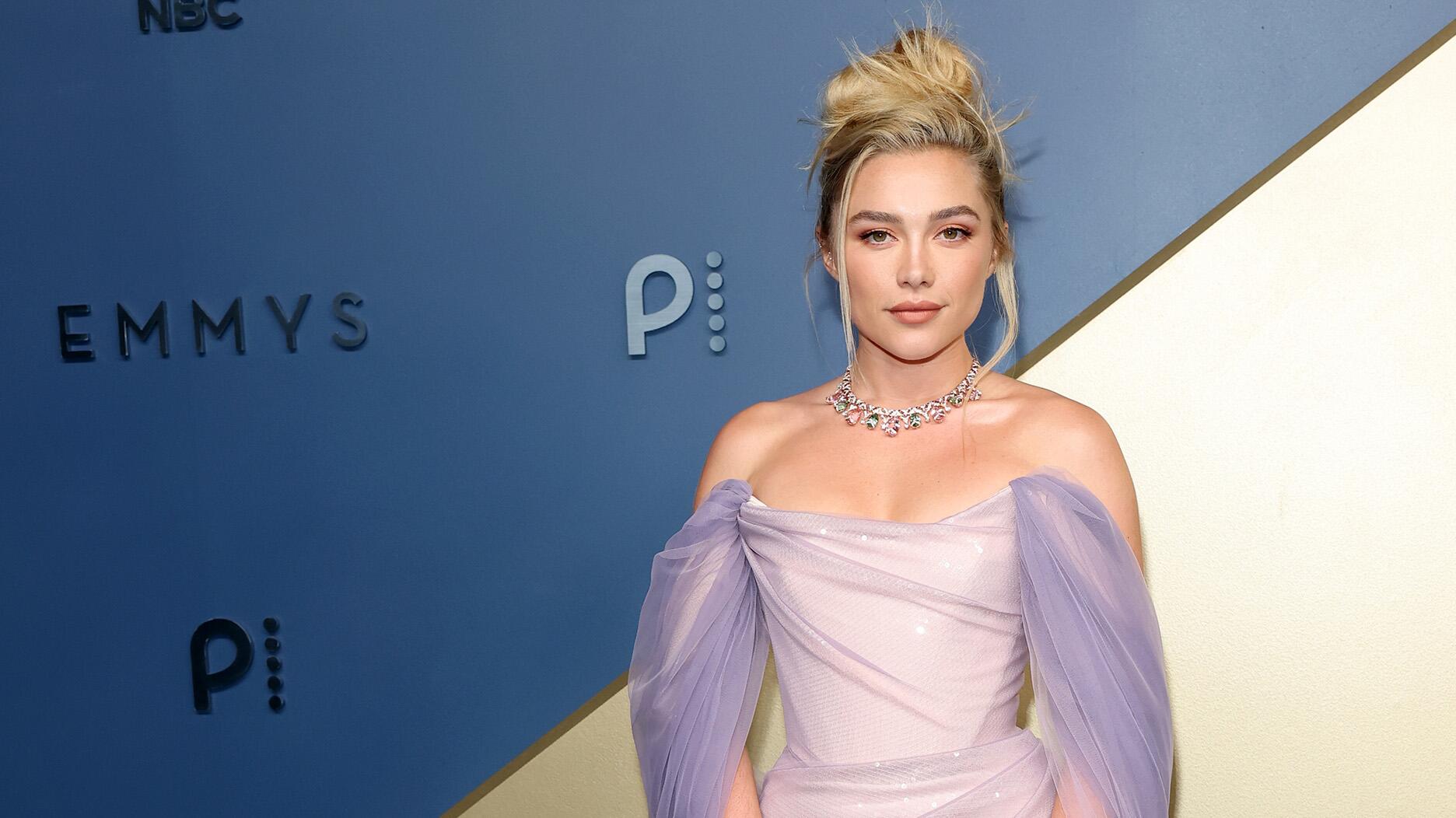
The Academy and Grammy award-winning siblings have collaborated with John Hardy on a new jewelry line inspired by their personal style.


Diana Singer shared the stories of two “cursed” diamonds on this month’s podcast, which was inexplicably riddled with technical issues.

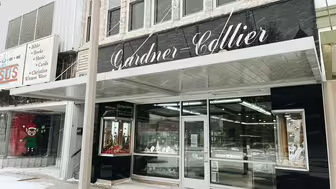
The family-owned jeweler has three locations across Missouri and Iowa.

The De Beers-owned diamond mine in South Africa is being put on ice as part of a round of previously announced cost-cutting measures.

The collection centers designs with clean geometric lines, chunky sculptural pieces, and recognizable details from the luxury fashion brand.
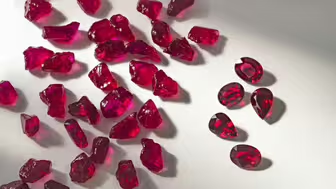
The miner said it saw particularly strong prices for larger, fine-quality rubies at the sale.

The guard opened fire on a man who was smashing a jewelry display case at La Gran Plaza in Fort Worth last week, police said.
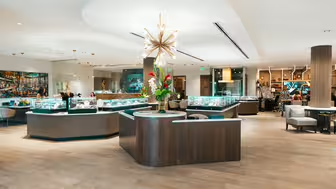
The Texas jeweler added 2,000 square feet to its reimagined showroom, complete with a new design studio and an event space.

Jacob & Co.'s diamond masterpiece is the most expensive Fantasy Bra ever worn on the Victoria’s Secret Fashion Show runway.

The “Atelier” collection was inspired by the tools, rituals, and objects in an artist’s studio as a quiet rebuttal to an automated world.
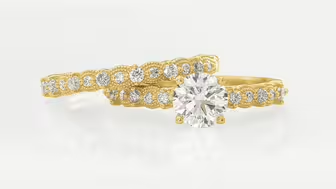
The pending acquisition is an “exciting opportunity” for wedding vendors to grow their business, said The Knot Worldwide’s CEO.

"The Secret Gems" features eight Thai jewelry brands paired with a team of young craftspeople who create jewelry together to win challenges.

The brand’s “Modern Talisman” capsule collection introduces pendants inspired by the mythology, natural world, and spiritual ethos of Bali.

Independent jewelers from New Mexico to New Jersey answer the question: What has kept your store in business for 100 years?

The NRF is expecting holiday sales to increase this year, but consumers and retailers alike are facing Grinch-like headwinds.
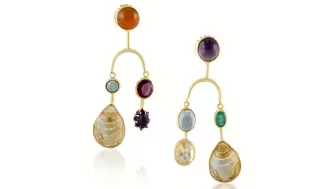
Our Piece of the Week gathers the planets, represented by a variety of colored gemstones, in a pair of 14-karat yellow gold earrings.
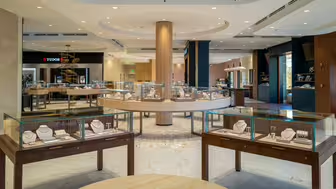
The New York-based jeweler is moving its Amherst flagship store to a larger location in nearby Snyder.

Chen, who worked at Cartier and Tiffany & Co., will lead retail sales and operations for the luxury jeweler’s 11 U.S. stores.



This site uses cookies to give you the best online experience. By continuing to use & browse this site, we assume you agree to our Privacy Policy