








AuctionsSep 18, 2026
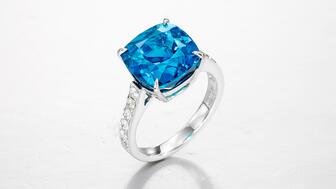
7.52-Carat Unheated Paraíba Tourmaline Sells for $1.3M at Sotheby’s The top lot of the auction house’s Hong Kong jewelry sale was an Art Deco Mauboussin necklace with ruby beads, which sold for $2 million.





Our editor-in-chief recaps the recent Kimberley Process meeting and looks at where the process goes from here.


The biggest decision that came out of the Kimberley Process’s biggest meeting of the year was this: All participants voted to form an Ad Hoc Committee on Review and Reform, which will begin looking at ways to evolve the process next year.
The committee is chaired by India, with Angola as vice chair, and, according to a copy of the administrative decision on its creation, will present its conclusions and any draft decisions at next year’s plenary.
The biggest news was this: Impact, the NGO formerly known as PAC, decided to leave the process, citing a lack of progress on pressing issues--specifically, meaningful reform in a process it says is becoming “irrelevant”--and an increasingly hostile environment for members of the KP’s Civil Society Coalition.
It is the second NGO to exit the process, following the 2011 departure of Global Witness.
Impact’s decision to leave the process did not entirely shock me (and it didn’t shock many who are directly involved with the KP either, I’m told); it has been at least 12 months in the making.
Last year, Impact, along with the other 10 members of the Civil Society Coalition, boycotted the process over their objections to the chairmanship of the United Arab Emirates.
This year, Impact returned but made it clear what they wanted: reform in a reform year. (The KP is set up so that it, in theory, it overhauls itself every five years; the last reform cycle was from 2011 to 2013.)
Impact Executive Director Joanne Lebert told me in a post-plenary interview that they wanted to see the KP change the definition of what constitutes a “conflict” diamond to include diamonds tied to abuses by governments and/or security firms, not just those used by rebel groups to overthrow governments.
There also needs to be a strengthening of the KP’s internal controls, and more timely completion and release of reports from review missions, which are currently delayed by as much as two to three years, she said.
What they got was the formation of “another working group,” she said, meaning the aforementioned Ad Hoc Committee on Review and Reform.
During closing remarks Dec. 14 at the plenary in Brisbane, Lebert told KP members that her organization, in simplest terms, was done with the Kimberley Process, though it will remain engaged on the issues facing diamond-producing countries.
“They’re just making themselves irrelevant,” she said in the interview. “(The KP) keeps saying, ‘we’ve eliminated


The top lot of the auction house’s Hong Kong jewelry sale was an Art Deco Mauboussin necklace with ruby beads, which sold for $2 million.

Retailers and manufacturers headed to the Capitol this week to discuss tariff exemptions for diamonds and gemstones, among other issues.

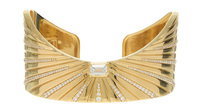
Our Piece of the Week is a pair of drop earrings from the “Sway” collection featuring Nanis’ first use of mirror-polished gold.

Experience gemstones with greater precision and comfort than ever before.


SynthDetect 2 can scan a full tray in less than five minutes, De Beers said, making it six times faster than its predecessors.


Two metal detectorists discovered the ring, which may have belonged to English noblewoman Matilda of Lancaster, in Suffolk.

The bill has a provision that allows the president to raise tariffs on countries that import Russian oil and gas to as much as 100 percent.
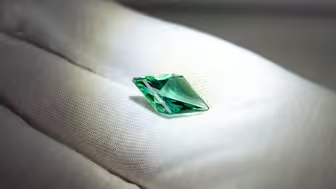
Submit your pieces for a chance to win in this year's competition.


The American Gem Society presented the annual award to a former president of its board.

The “Chrysalis” capsule centers butterfly motifs representing growth, transformation, and the unfolding of who you are.

Jewelers of Louisiana presented Patton, the third-generation president of Pattons Fine Jewelry, with the award at its annual convention.


Two special guests join the podcast to commemorate the 10th anniversary of the designer advocate, mentor, and author’s untimely passing.


McCormack brings sea-inspired motifs from her “Beaches” collection to L’Objet’s tableware, vanity pieces, and first-ever cutlery set.

Nine New Jersey jewelers have been victims of smash-and-grab robberies this year, prompting JSA to circulate a list of recommendations.

Marlin “Brian” Hood, who has been with the store for 20 years, will succeed Ricky Bromberg, who died earlier this month.

The new bridal catalog features the latest jewelry collections and designs from timeless classics to modern silhouettes.

Jennifer Shaheen compares this new era of AI-powered SEO to a video game: your website must clear one level before advancing to the next.

The program highlights “Made in Italy” fine jewelry with digital merchandising, sales education, and local marketing support.

The stores that have a great December are the ones that made good decisions in August, September, and October, Sherry Smith writes.

The 22.09-carat fancy yellow “Pragnell Kimberley Sunshine Diamond” is part of the fall jewelry sale at Heritage Auctions.

“Adornos: Jewelry, Memory & What We Pass Down” honors the jewelry’s importance to New York City’s Latine communities.

The company’s managing director of sales said the results demonstrate “continued strong demand for commercial-quality emeralds.”

The nonprofit awarded a grant to the Gift of Sight initiative spearheaded by South African musician Black Coffee.

The Latine-owned New York jeweler is marking two milestones this year: its 50th anniversary and the 25th anniversary of the 9/11 attacks.

The jewelry retail broadcast network has sponsored a new space for Make-A-Wish East Tennessee on its campus in Knoxville.

The recipients were recognized at the 24 Karat Club of the Southeastern United States’ annual banquet.

Keith Rolfe, CFO and COO of Lagos, is now at the jewelry brand’s helm while Steven takes on the role of executive chairman.



This site uses cookies to give you the best online experience. By continuing to use & browse this site, we assume you agree to our Privacy Policy