




Lab-GrownSep 21, 2022
An Updated Look at the Lab-Grown Diamond Market: Size, Pricing, and More Lab-GrownSep 21, 2022
Looking Ahead: 4 Factors That Could Shape Lab-Grown Diamonds’ Future
Growing supply and falling prices likely will make differentiation a necessity and a reality, according to analyst Paul Zimnisky.


A worker at the Lightbox factory in Gresham, Oregon, where De Beers Group grows diamonds. Consumer demand for lab-grown diamonds is increasing, begging the question, what will the market look like in 10 to 15 years? Analyst Paul Zimnisky shared his viewpoints in a new report. (Photo courtesy of Lightbox/De Beers Group)
New York—Lab-grown diamonds are the category currently sparking the most conversation in the industry, from the debate over stocking the stones, to the questions of who is buying them, and who might be selling them in the near future.
But in his latest report, industry analyst Paul Zimnisky is taking a more long-term view of the market, telling National Jeweler, “I think the key is to really take a step back and [ask], where is this going to go longer term?”
Published in early August, “What a Mature Lab-Grown Diamond Jewelry Market Could Look Like” outlines the four primary factors Zimnisky believes could shape the lab-grown diamond jewelry market in the next 10 to 15 years.
The first is limitless supply.
According to Zimnisky’s data, the volume of rough diamonds grown for use in jewelry really began to take off around 2018, the same year De Beers Group launched its lab-grown diamond jewelry brand, Lightbox.
He predicts production will continue to climb through the end of the decade, nearing 25 million carats (excluding melee) by 2030, a substantial increase for the category but still just a fraction of global natural diamond production, which reached 120 million carats last year.
China and India, where multiple longtime manufacturers of natural diamonds have gotten into the lab-grown business, are expected to be the top producers.
As production of lab-grown diamonds continues to increase, so will the quality of the stones, which lays the groundwork for the second characteristic Zimnisky believes will shape a mature lab-grown diamond market—the stones likely will be high quality across the board.
The development, the industry analyst contends, could render the grading of lab-grown diamonds unnecessary.
Related stories will be right here …
But in his latest report, industry analyst Paul Zimnisky is taking a more long-term view of the market, telling National Jeweler, “I think the key is to really take a step back and [ask], where is this going to go longer term?”
Published in early August, “What a Mature Lab-Grown Diamond Jewelry Market Could Look Like” outlines the four primary factors Zimnisky believes could shape the lab-grown diamond jewelry market in the next 10 to 15 years.
The first is limitless supply.
According to Zimnisky’s data, the volume of rough diamonds grown for use in jewelry really began to take off around 2018, the same year De Beers Group launched its lab-grown diamond jewelry brand, Lightbox.
He predicts production will continue to climb through the end of the decade, nearing 25 million carats (excluding melee) by 2030, a substantial increase for the category but still just a fraction of global natural diamond production, which reached 120 million carats last year.
China and India, where multiple longtime manufacturers of natural diamonds have gotten into the lab-grown business, are expected to be the top producers.
As production of lab-grown diamonds continues to increase, so will the quality of the stones, which lays the groundwork for the second characteristic Zimnisky believes will shape a mature lab-grown diamond market—the stones likely will be high quality across the board.
The development, the industry analyst contends, could render the grading of lab-grown diamonds unnecessary.
The lack of grading reports, coupled with an increased supply, will further drive down the price of lab-grown diamonds, which already are significantly cheaper than natural diamonds.
According to Zimnisky, in mid-2018, a generic (non-branded) 1-carat, G VS1 lab-grown diamond retailed for $3,625, compared with $6,600 for a natural diamond of the same size and quality.
Today, that same lab-grown diamond retails for $1,615 while the natural is $6,705.
“Longer-term, it will likely be higher-priced lab-grown diamond jewelry that competes the most with natural diamonds.” — Paul Zimnisky, industry analyst
The expectation that prices will continue to drop sets the stage for the final two factors to come into play—branding and proprietary design, and custom shapes and colors.
There are existing jewelry companies positioned to pull off a “luxurious” version of lab-grown diamonds by leveraging existing brand value, with Zimnisky noting in his report, “A product does not necessarily need to be limited by nature for it to be rare or luxurious.”
He points to the Hermès Birkin bag as an example.
Hermès deliberately limits the supply to drive up value, and it works, with the coveted handbag trading hands for tens of thousands of dollars, at least, on the secondhand market.
“Theoretically, if Hermès came out with an exclusive, limited-edition lab-grown diamond ring, it would likely be perceived by consumers as an Hermès ring first, and a lab-grown diamond ring second,” Zimnisky writes.
“Longer-term, it will likely be higher-priced lab-grown diamond jewelry that competes the most with natural diamonds.”

Two pieces in “Pandora Brilliance,” the popular jewelry brand’s new collection of lab-grown diamond jewelry. The line launched in the United States in August following a test in the U.K.
He does, however, see the opportunity for a “bridge” category of lab-grown diamond jewelry to emerge, lines that are lower-priced but affiliated with “premium” brands.
He points to “Pandora Brilliance,” the popular charm brand’s lab-grown diamond line that arrived in the United States late last month, as a current example.
Tested in the U.K. and proven to be more popular for gift-giving than for self-purchase, the line seems poised to take off in the U.S., with 33 styles to choose from in sterling silver or 14-karat gold and prices starting at $300.
“Pandora will be successful,” Zimnisky said. “They already have the right customer, distribution lined up, the right price point. It fits their business model better than anyone [else’s], in my opinion.”
Like branding, the fourth factor expected to shape the future of the lab-grown market—custom shapes and colors—will be a path diamond growers pursue in order to set themselves apart as prices fall and quality equalizes across the board.
Growers will take advantage of the stones’ lower prices to experiment in ways not possible or financially feasible with natural diamonds, Zimnisky said.
Indeed, some shape and color experimentation has popped up in the market already.
In 2018, Apple’s Jony Ive and design partner Marc Newson partnered with diamond grower Diamond Foundry in 2018 to create a ring entirely made out of diamond, while Swarovski rolled out of a line of imaginatively named lab-grown diamonds in a wide variety of colors in early 2020.
“People will eventually be able to go to a website and get a diamond cut into whatever shape they want,” Zimnisky predicts, whether it’s a Star of David, a cross, or a cat.
“What a Mature Lab-Grown Diamond Jewelry Market Could Look Like” is available in its entirety on Zimnisky’s website.


More on Lab-Grown
The Latest

MajorsOct 23, 2026
PGI USA Set to Close at Year’s EndThe closure is part of a global restructuring that also includes PGI winding down its operations in Japan, South Korea, and Hong Kong.

SourcingOct 23, 2026
Rachel Chalchinsky’s ‘Survivor Tribute’ RingThe ring, our Piece of the Week, was designed by eight-year breast cancer survivor Rachel Chalchinsky of Color Source Gems.


TechnologyOct 23, 2026
JA Unveils New Website, LogoThe website offers enhanced member benefit access, industry directories, educational resources, a job board, and access to the MJSA Journal.

Brought to you by
A Diamond Is Forever Launches 2026 Holiday Campaign Championing Natural DiamondsA Diamond Is Forever's holiday campaign reimagines natural diamond icons for a new generation celebrating individuality.


FinancialsOct 23, 2026
Kering’s Jewelry Sales Up Double Digits in Q3Boucheron and Pomellato had a strong third quarter, with Kering looking at jewelry as an increasingly important part of its portfolio.

Weekly QuizOct 22, 2026
This Week’s QuizTest your jewelry news knowledge by answering these questions.


CrimeOct 22, 2026
Jeweler Shot and Killed in His Suburban Cincinnati Store Tara Sinchuri was the owner of Everest Jewels in Fairfield, Ohio, and a father of three. He was found dead in his store on Tuesday.

MajorsOct 22, 2026
Neiman Marcus Has Gifts for the Jewelry Lover Who Has EverythingBespoke experiences from Buccellati and Verdura are on the retailer’s 2026 “Fantasy Gifts” list.
Brought to you by
Open an Account, Get $50 Off Your First Order. No Code Needed.Built on Relationships. Refined by Craft.


Events & AwardsOct 22, 2026
JIS Fall 2026 Reports Record-Breaking Attendance The number of participants at the fall show was up 12 percent.

CollectionsOct 22, 2026
Billie Eilish, Finneas Co-Design Collection for John HardyThe Academy and Grammy award-winning siblings have collaborated with John Hardy on a new jewelry line inspired by their personal style.

PodcastsOct 21, 2026
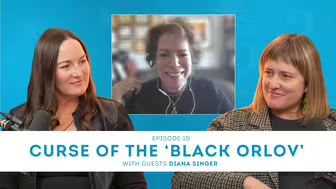
Episode 10: This Episode Is Haunted Diana Singer shared the stories of two “cursed” diamonds on this month’s podcast, which was inexplicably riddled with technical issues.

IndependentsOct 21, 2026
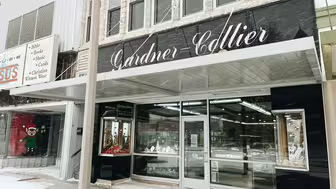
Gardner-Collier Jewelry to Close After 9 Decades in BusinessThe family-owned jeweler has three locations across Missouri and Iowa.

SourcingOct 21, 2026
Venetia Mines Final Carats Ahead of 2-Year ShutdownThe De Beers-owned diamond mine in South Africa is being put on ice as part of a round of previously announced cost-cutting measures.

CollectionsOct 21, 2026
Helzberg, Nordstrom Carrying New Jewelry Collection From Off-WhiteThe collection centers designs with clean geometric lines, chunky sculptural pieces, and recognizable details from the luxury fashion brand.
SourcingOct 21, 2026
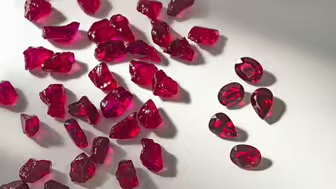
Gemfields’ Mixed-Quality Ruby Auction Earns $52MThe miner said it saw particularly strong prices for larger, fine-quality rubies at the sale.

CrimeOct 20, 2026
Security Guard Charged With Murder in Shooting at Texas MallThe guard opened fire on a man who was smashing a jewelry display case at La Gran Plaza in Fort Worth last week, police said.
IndependentsOct 20, 2026
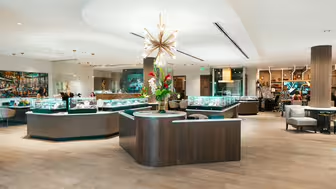
David Gardner’s Jewelers Unveils Newly Expanded, Revamped ShowroomThe Texas jeweler added 2,000 square feet to its reimagined showroom, complete with a new design studio and an event space.
SourcingOct 20, 2026
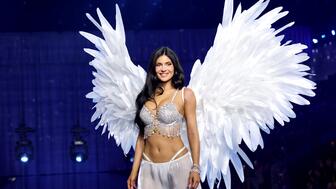
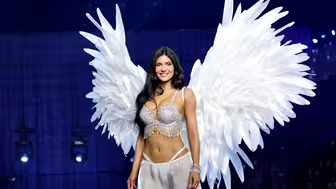
The $50M Victoria’s Secret ‘Fantasy Bra’ By The NumbersJacob & Co.'s diamond masterpiece is the most expensive Fantasy Bra ever worn on the Victoria’s Secret Fashion Show runway.

CollectionsOct 20, 2026
Mignon Faget’s Collection Chooses Handmade Over AIThe “Atelier” collection was inspired by the tools, rituals, and objects in an artist’s studio as a quiet rebuttal to an automated world.
MajorsOct 19, 2026
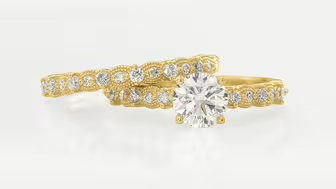
The Knot to Acquire Rival Wedding Planning Platform ZolaThe pending acquisition is an “exciting opportunity” for wedding vendors to grow their business, said The Knot Worldwide’s CEO.
SourcingOct 19, 2026
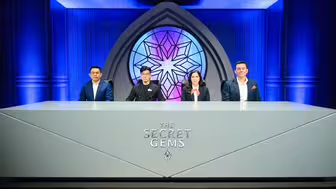
Jewelry Design Competition Show Airs in Thailand"The Secret Gems" features eight Thai jewelry brands paired with a team of young craftspeople who create jewelry together to win challenges.

CollectionsOct 19, 2026
John Hardy Enters the Medallion Chat With Talisman Collection The brand’s “Modern Talisman” capsule collection introduces pendants inspired by the mythology, natural world, and spiritual ethos of Bali.
IndependentsOct 19, 2026
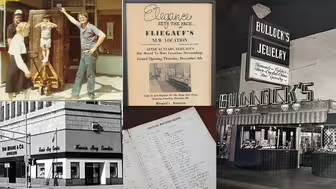
The Stories of 5 Jewelers Celebrating Their Centennials in 2026Independent jewelers from New Mexico to New Jersey answer the question: What has kept your store in business for 100 years?
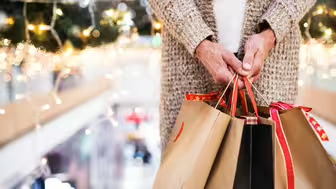
SurveysOct 16, 2026
How Inflation, Gas Prices Will Affect Holiday Sales The NRF is expecting holiday sales to increase this year, but consumers and retailers alike are facing Grinch-like headwinds.
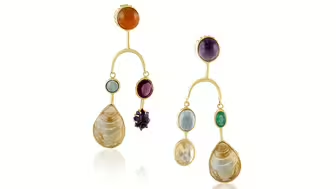
CollectionsOct 16, 2026
Christina Puchi’s Earrings Hold the UniverseOur Piece of the Week gathers the planets, represented by a variety of colored gemstones, in a pair of 14-karat yellow gold earrings.
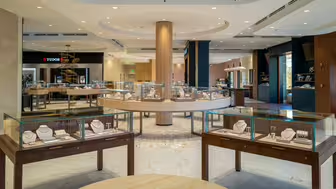
IndependentsOct 16, 2026
Reeds Jewelers Expands, Relocates FlagshipThe New York-based jeweler is moving its Amherst flagship store to a larger location in nearby Snyder.
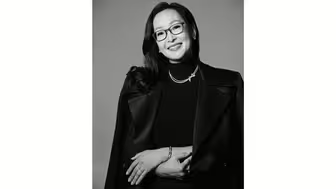
MajorsOct 16, 2026
Katy Chen Appointed Executive Vice President of Graff USA Chen, who worked at Cartier and Tiffany & Co., will lead retail sales and operations for the luxury jeweler’s 11 U.S. stores.


