The new year opened
with a familiar and increasingly pronounced dynamic at independently owned and operated jewelry retailers—strong dollar growth paired with continued unit softness.
While total sales and average retail value rose meaningfully in January, overall unit volume declined for the ninth consecutive month, reinforcing a pattern that has now persisted long enough to be considered structural rather than temporary.
This divergence between dollars and units is not unique to jewelry, but it carries implications for a category where price, product mix, and raw material costs are intertwined.
Category Performance: Mix Matters More Than EverJanuary’s data highlights the importance of product mix in shaping results.
— Diamonds remain foundational to total sales dollars but were not the primary contributor to higher average retail values.
— Colored stones and pearls played a more meaningful role in lifting average transaction size, reflecting continued consumer interest in differentiated, design-forward pieces.
— Precious metal-driven categories delivered mixed results, with performance often influenced as much by underlying metal prices as by consumer demand.
Growth, in other words, is not evenly distributed.
Retailers that had a strong month were those whose assortments naturally support higher average tickets, whether through design, materials, or perceived uniqueness.
Diamond Performance: A Clear Split Between Lab Grown and NaturalWithin the diamond category, January data reveals a clear divergence between lab-grown and natural diamonds, with each segment contributing to overall performance in different ways.
Lab-grown diamonds delivered outsized year-over-year growth, driven almost entirely by unit expansion rather than price inflation.
— Total lab-grown diamond sales increased 23.7 percent.
— Units sold rose 22.4 percent.
— Average retail increased just 1 percent.
“Lab-grown diamonds are expanding accessibility and transaction volume, particularly in bridal, without materially lifting average price points.” — Sherry Smith
Growth in the category was concentrated in finished jewelry and bridal.
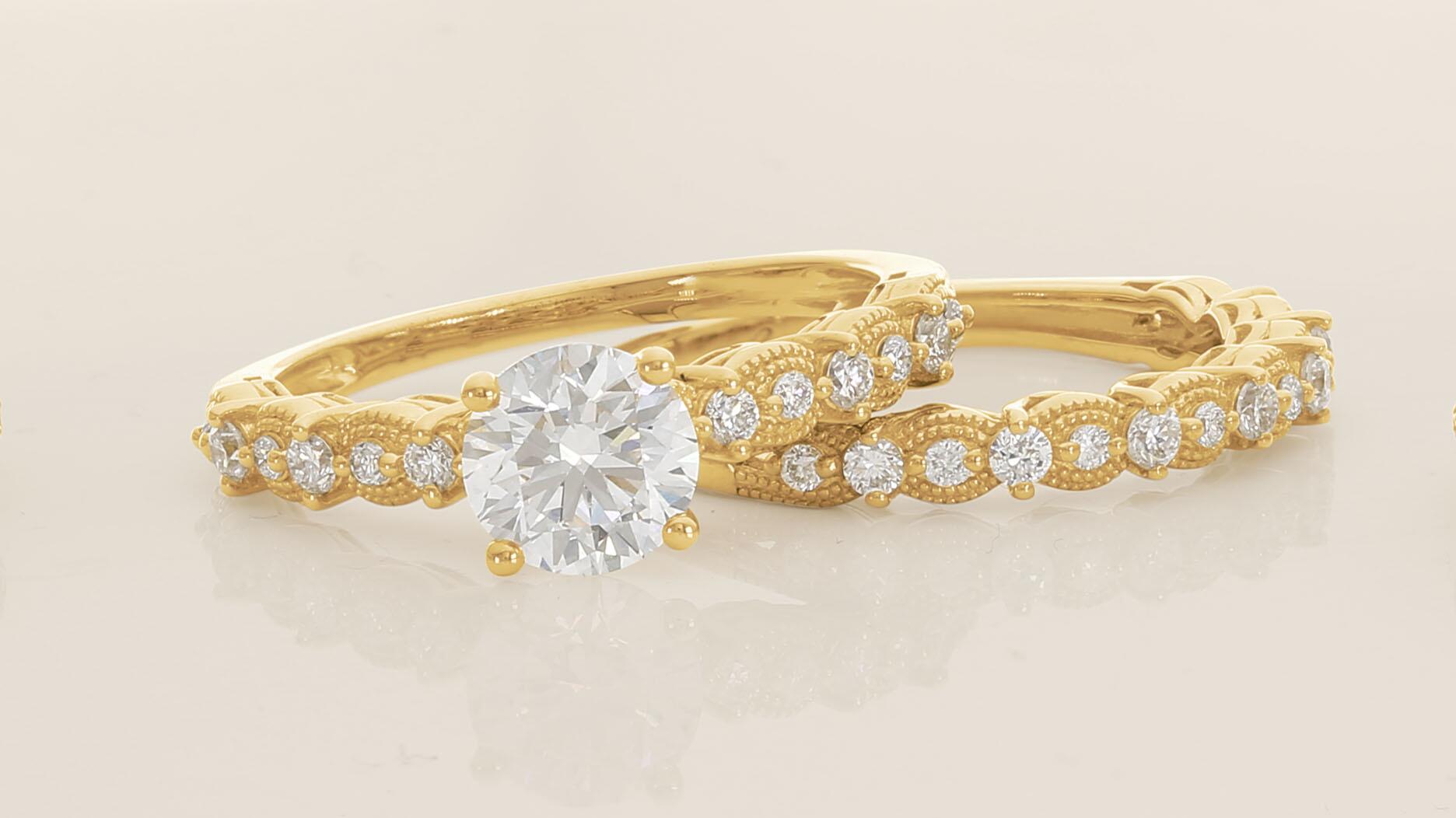
Lab-grown engagement ring sales were up 41 percent, number of units sold increased 34 percent, and average retail sale increased 5 percent.
Lab-grown wedding band sales were up 55 percent, units up 43 percent, and average retail was up 9 percent.
Lab-grown fashion rings sales more than doubled, increasing 147 percent, while units increased 80 and average retail grew 41 percent.
In contrast, lab-grown loose stones declined in popularity, with sales down 6.1 percent and units down 2.7 percent, reinforcing that growth is occurring at the finished jewelry level, not at the component level.
The takeaway is clear: Lab-grown diamonds are expanding accessibility and transaction volume, particularly in bridal, without materially lifting average price points.
Meanwhile, natural diamonds’ performance followed a different trajectory, with fewer transactions but a higher price per sale.
— Total natural diamond sales declined 4.3 percent year over year.
— Units fell 8.5 percent.
— Average retail increased 4.6 percent.
This pattern was consistent across core categories.
Sales of natural diamond engagement rings were down almost 14 percent and number of units sold slipped 7 percent while the average retail sale was up 10 percent.
Sales of loose natural diamonds fell 17 percent and units were down 11 percent, but average retail increased 8 percent.
While select categories of finished natural diamond jewelry, such as bracelets and earrings, showed modest sales growth, those gains were price-led rather than volume-driven.
Taken together, the data suggests natural diamonds continue to anchor price, margin, and value perception, but with meaningfully fewer transactions.
This divergence between lab-grown and natural diamonds materially explains why overall, diamond dollars can remain supported even as total diamond units decline.
“Fewer pieces are being sold, and each piece simply carries more cost.” — Sherry Smith
Nine Consecutive Months of Unit DeclinesNine months of declining unit volume is a data point that deserves careful interpretation.
While it would be tempting to view higher average tickets as evidence of more intentional or premium-driven consumer behavior, the data alone does not support that conclusion without qualification.
Higher average retail values are occurring alongside elevated precious metal prices, tariff-related cost pressures, and fewer total transactions.
In this environment, price inflation and product mix are doing much of the work, rather than an increase in the number of items consumers are choosing to buy.
Fewer pieces are being sold, and each piece simply carries more cost.
The Broader Retail Context: Slower Growth AheadThis pattern aligns closely with broader U.S. retail forecasts.
According to
Deloitte’s U.S. outlook, overall consumer spending growth is expected to slow to approximately 1.6 percent in 2026, restrained by lingering inflation, higher borrowing costs, and a more cautious consumer environment.
Importantly, Deloitte’s outlook also suggests that discretionary categories are unlikely to be the primary drivers of growth in the near term.
Jewelry, while resilient, is not forecast to be a leading growth category in a slow-growth retail environment, a reality that helps contextualize persistent unit declines even as dollar results remain positive.
Precious Metal Volatility and Its Retail ImpactLayered onto softer unit trends is volatility in precious metal markets.
Recent dip aside, the price of gold largely has remained elevated amid geopolitical uncertainty and safe-haven demand, while silver has experienced sharp swings that complicate pricing and inventory decisions.
Rising metal prices are increasing costs across the jewelry supply chain, influencing everything from manufacturing decisions to retail price points.
Tariffs further amplify these pressures, adding variability and uncertainty to landed costs.
For retailers, the impact is twofold: higher cost of goods, particularly in metal-heavy categories, and increased sensitivity around price adjustments at the showcase.
An Emerging Constraint: Refinery Scrap IntakeAnother under-discussed consequence of elevated metal prices is unfolding at the refinery level.
With gold and silver prices high, some refineries reportedly are limiting or delaying acceptance of additional scrap metal due to cash-flow constraints and the capital required to purchase secondary metal at current market values.
For retailers, this introduces new operational considerations. Scrap-buying programs may become less predictable, settlement timelines may lengthen, and margins tied to secondary metal flows may compress.
In periods of high metal prices, scrap activity typically increases, but refinery constraints can blunt that opportunity just as retailers look to offset margin pressure elsewhere.
“Consumers continue to prioritize value and experience, but discretionary spending remains selective.” — Sherry Smith
Selective Engagement, Not a Pullback
Taken together, January’s data does not suggest consumers have exited the jewelry market.
Rather, it reflects a more constrained environment where traffic is lighter, units remain under pressure, and spending is concentrated on fewer, higher-priced transactions.
As Reuters has noted in broader retail coverage, consumers continue to prioritize value and experience, but discretionary spending remains selective.
Jewelry continues to compete for consumer dollars, just not indiscriminately.
Related stories will be right here …
Implications for Independent Retailers
In a slow-growth retail environment marked by rising costs and declining units, several priorities rise to the surface; they are as follows.
— Conversion becomes critical. With fewer opportunities entering the store, maximizing each interaction matters more than ever.
— Assortment discipline is essential. Categories that naturally support higher average tickets, particularly colored stones, are helping offset unit pressure.
— Pricing strategy must be intentional and transparent. Metal volatility and tariffs necessitate careful communication of value, not reactive discounting.
— Service models may need re-evaluation. Scrap-based programs should be reviewed in light of refinery behavior and working capital realities.
Reading Data Clearly
January’s performance is neither overly optimistic nor overtly pessimistic. It is precise.
Independent jewelers are operating in an environment where price, cost, and conversion matter more than volume, and where external forces from metal markets to macroeconomic growth play an increasingly visible role in retail outcomes.
Those who align assortment, pricing, and sales strategy to these realities will be best positioned to navigate what remains a selective, cost-pressured retail landscape.